Full article about Canelas: Douro hamlet where vines outvote people
Schist terraces, 60-cent espresso and a custard tart worth the pilgrim detour
Hide article Read full article
Morning light on schist terraces
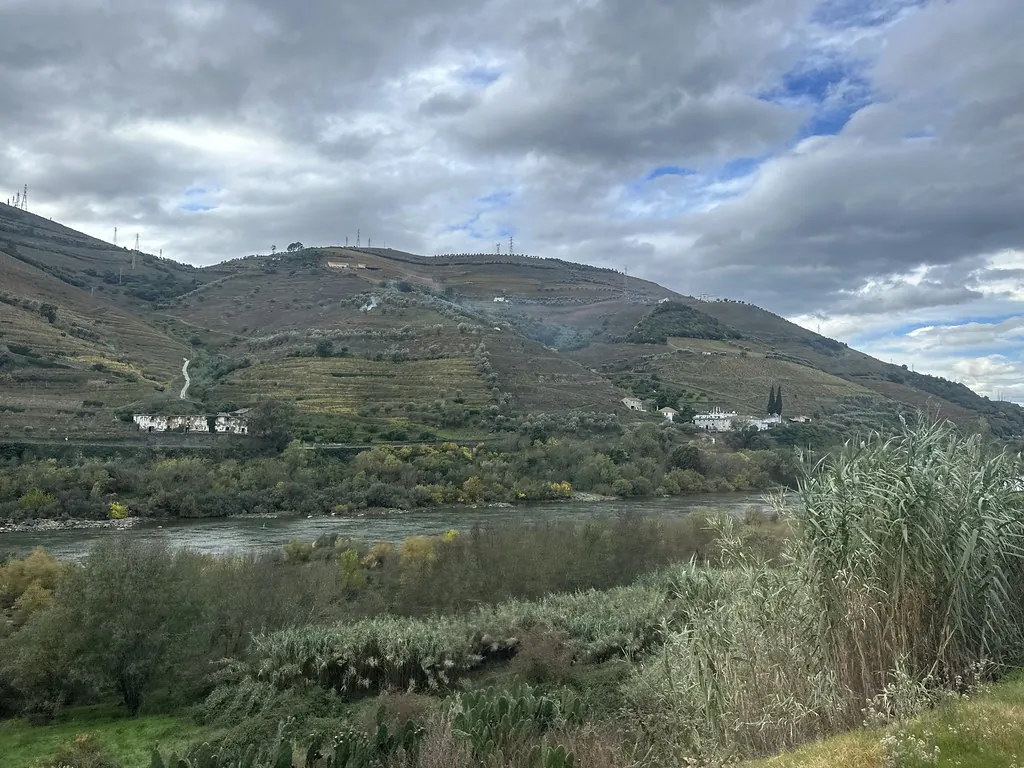
Sunlight slips sideways through the Douro valleys and strikes the terraces of Canelas at a calculated angle, the way a sommelier tilts a glass. The village perches at 442 metres, suspended between river and ridge in a natural amphitheatre where vines climb in shale steps. Silence here has mass, broken only by a distant dog or the groan of an ancient door. The census claims 596 residents, yet the only visible movement is António watering his vegetable plot and the café owner shaking crumbs from a tablecloth. Everywhere else: shuttered windows, locked gates, the impression that the entire settlement has lain down for an afternoon nap.
Stone, vine and footpath
Canelas sits inside the Alto Douro Wine Region UNESCO boundary, but don’t arrive expecting a tasting menu. Vines occupy whatever soil the schist walls have managed to trap before the next downpour washes everything further downhill. Donkeys outnumber humans – not a criticism; donkeys are agreeable company and never lecture you on politics.
Two listed monuments punctuate the landscape – or, more accurately, stain it like blotches of wine on linen: visible, immovable, ignored. The parish church has carried its thirteenth-century stones since the reign of Sancho II, old enough for a Portuguese state pension yet still clocking in every Sunday.
The village lies on the Inner Route of the Via Lusitana, the lesser-trodden pilgrim trail that shadows the Spanish border before bending west to Santiago. Walkers emerge from the maize fields asking the same question: “Does this actually lead anywhere?” It leads, inevitably, to Tia Amélia’s café where espresso costs 60 cents and the custard tart is not from Belém but is still worth the detour.
Festival and ham
The Festa de Nossa Senhora do Socorro in early September is the annual reboot. Emigrants return with French and Swiss number plates, unlocked houses exhale months of stale air, and the priest pretends not to notice communion wine being supplemented by rough red from plastic jugs. Procession, sung mass, then the socialising begins: platters of chouriço, slices of cured belly, gossip that will keep the parish fuelled until Christmas.
The ham has no PDO certificate, no glossy brochure. It is simply the pig that Zé Manel raised behind the house, slaughtered in January, smoked for three months over oak and bay. Sliced thick, eaten with rye bread and butter that tastes of the cow’s last meadow. Anyone hunting “balsamic-drizzled Bisarro charcuterie” should reroute to a boutique deli in Porto; here, the only accompaniment is more ham.
Numbers and echoes
Statistically: 596 inhabitants. Practically: 50 children, 198 pensioners, innumerable cats. Empty dwellings are so common you could run a lottery: guess which façade still has a pulse. Hope arrives in the form of four rural tourism cottages, €40 a night, where the owner – fuelled by a glass of aguardiente – will recount the entire village saga twice; by the third telling the plot frays.
What remains
Late afternoon, when the sun flares across the terraces and shadows pour down the slope like tawny port into a glass, Canelas reveals its assets: a handful of sound roofs, a bar where Tuesday night is Sueca card championship, a silence money can’t replicate. The church bell strikes the Angelus, the note ricocheting across the schist like a telegram: Still here, against the odds. In today’s Douro, that counts as victory.