Full article about Fontelas: Douro springs, schist vines & pilgrim trails
Stone-walled terraces, smoky presunto and 36 public springs 293 m above the Douro.
Hide article Read full article
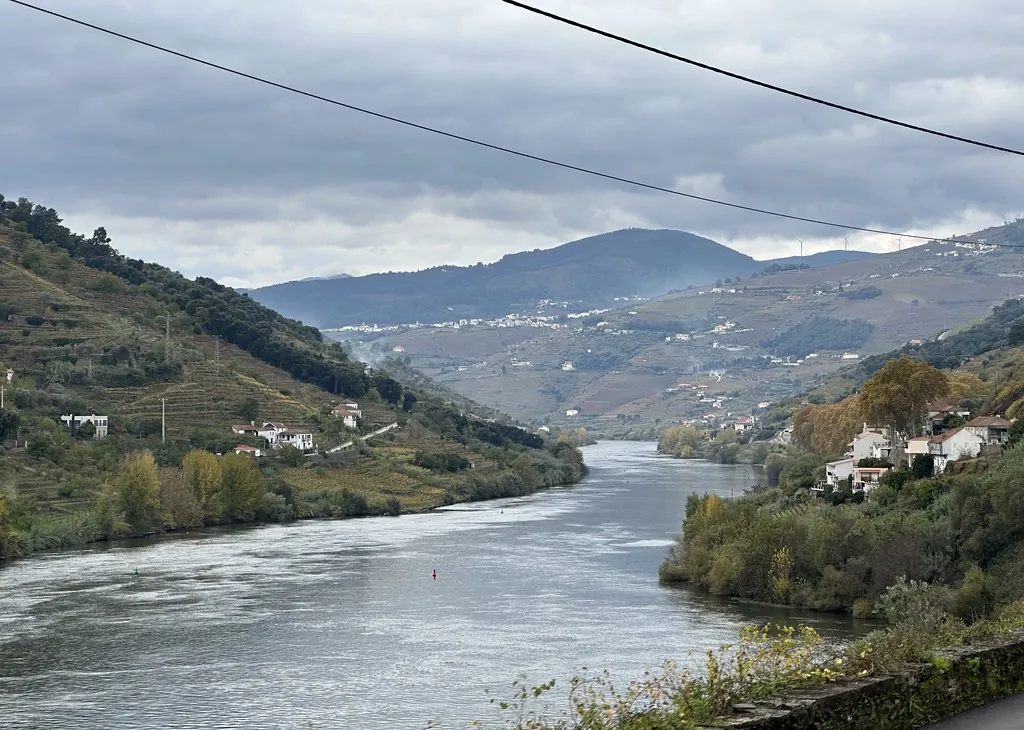
Woodsmoke drifts through the stone irrigation channels, meeting the scent of moss and running water that has cooled these terraces since 1516. Fontelas – literally, “little springs” – keeps its promise: three dozen public fountains still push out of schist, feeding vegetable plots and tempering August heat for 630 people who occupy barely three square kilometres 293 metres above the Douro. From the upper lanes you can sight the broad river yet still feel the Serra do Marão at your back.
Between slate and vine
When the Marquis of Pombal ring-fenced the world’s first wine appellation in 1756, these slopes were already under vine. Annexation to Peso da Régua in 1837 simply formalised what gravity had decided: that every south-facing rim should hold terraces. The naked schist absorbs noon heat and releases it after dusk, creating the thermal see-saw that concentrates sugar in Touriga Nacional and the other Port grapes. Walk the walled staircases and you tread a dry-stone library: each metre of terrace represents a day’s work, every vine hole hand-picked out of rock.
Pilgrims and panoramas
The Interior Way of the Portuguese Camino – medieval documents call it the Via Lusitana – slips through the village without fanfare. There are no souvenir stalls, only the slap of leather on granite as walkers climb towards the 630 m pass of Alto de Fontelas. From the crest the UNESCO-listed Douro valley unrolls like a 19th-century estate map: socalcos (contour walls) drawn with a ruler, olive green river far below, quartzite tops glittering in the distance. The next stamping post is a farm gate; the last was a granite fountain whose trough still carries the scallop-shell motif.
Trás-os-Montes on a Douro plate
Fontelas eats like a border town. Presunto de Vinhais IGP – haunches of Bisaro pork rubbed with rock salt and smoked over holm-oak for months – arrives in translucent petals, the fat already softening in the sun. Locals pair it with estate-bottled reds from Quinta da Pellada or Quinta das Tecedeiras: wines that demand decanting and a slow conversation about rainfall. Behind the houses cabbages the size of footballs grow through winter; potatoes and runner beans climb the same plots their grandparents kept, ensuring the parish still feeds itself between harvest and vintage.
Our Lady of Perpetual Help and the parish calendar
On the first Sunday of September the fountain squares echo with processional bells honouring Nossa Senhora do Socorro. Some 158 residents over the age of 70 lead the cortege, reciting rosaries that pre-date the 1837 boundary changes; 56 teenagers follow, WhatsApp pings muted for once. By dusk the churchyard becomes an outdoor kitchen: chouriça spit-roasted inside crusty papo seco, new wine poured from enamel jugs, accordion reels crossing three generations. When the last set finishes, embers glow against granite and the lowest terrace still murmurs with water – the sound Fontelas gives to every visitor who listens: an assurance that, somewhere, the land itself is still pouring a glass.