Full article about Peso da Régua’s River Perfume of Iron & Tannin
Schist terraces, azulejo station and rabelo echoes in Douro’s cradle village
Hide article Read full article
The River That Weighs the Wine
A train whistle ricochets through the gorge, skims the schist terraces and dissolves into the Douro’s syrupy surface. On the stone quay the morning sun is already warm enough to release a layered perfume: the iron sugars of old rails, the ghost of tannin drifting from nearby cellars, the flinty breath of the river itself. Peso da Régua wakes slowly, conscious that the only real hurry comes at harvest; the rest of the year is an exhalation between grapes.
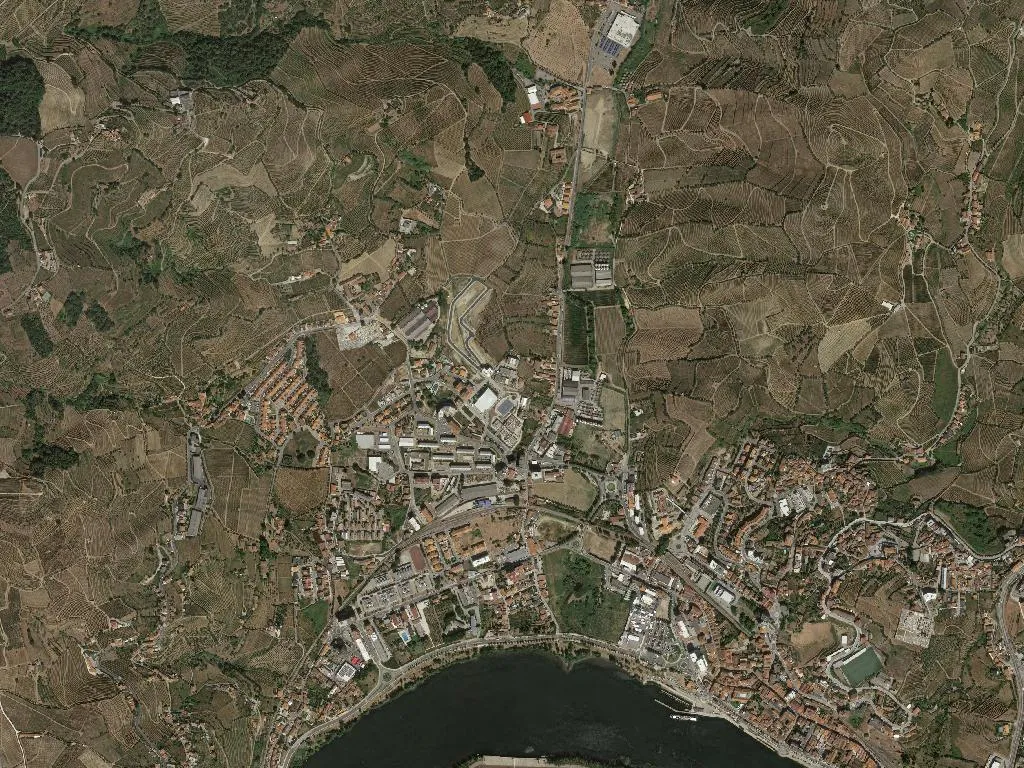
The riverside promenade threads the Parque Linear do Douro where cyclists and walkers share the smooth asphalt with a breeze that smells of damp shale. Above them the valley walls rise in disciplined steps – dry-stone walls stacked with a patience no longer taught, vineyard benches that UNESCO listed as World Heritage in 2001, absorbed within the Alto Douro wine region since 1996. Dawn light cuts each terrace with a geometry no architect drew: gravity, schist and four centuries of calloused hands.
Where the world was weighed in barrels
The name is almost an invoice. “Peso” – weight – marks the spot where wine and grain were once measured; “Régua” the rivulets that watered the riverside meadows. When the Marquês de Pombal created the Companhia Geral da Agricultura das Vinhas do Alto Douro on 10 September 1756, he fixed the official warehouse here, turning the village into the fulcrum of an entire economy. Every pipe of Port that left the quintas in rabelo boats paused on this quay before the final run to Vila Nova de Gaia.
On 4 February 1872 the first train steamed into Peso da Régua along the Linha do Norte. Local lore claims it carried forty Port pipes that were transferred directly onto waiting rabelos – iron meeting wood, modernity greeting tradition. The Victorian station, listed in 1983, still operates: iron window-frames, dressed-stone dressings, the click of heels across blue-and-white azulejos echoing beneath the glass roof.
Murals that keep the harvest
Uphill from the quay the Casa do Douro squats in 1940s municipal pride, headquarters of the institute that has regulated Port production since 1932. Inside, Júlio Resende’s vast panels swallow the walls – grape-pickers bent like brackets over wicker baskets, faces smoked to mahogany by the valley sun. Legend adds that the building’s predecessor, the old Relação jail, once held Camilo Castelo Branco after his 1861 duel over a Lamego love affair.
The Igreja Matriz, rebuilt 1823-35 after an 1809 fire, shelters a gilded baroque retable and eighteenth-century tiles where high windows paint cobalt puddles on the stone floor. Higher still, the seventeenth-century Capela de Nossa Senhora do Socorro overlooks the square where, every 15 August, a flotilla of rabelos carries the statue upstream and fireworks crack above the water – the Festa de Nossa Senhora do Socorro is the parish’s collective heartbeat for its 8,905 residents (2021 census).
Godim, beyond the Bagaúste
Cross the 1908 iron bridge over the Bagaúste – also listed – and you enter Godim, once a rural parish whose name survives from the Latin “Gaudinus”. The terraces narrow, the vines age, and botanists still visit a lone 1890 American vine planted to test phylloxera resistance – a vegetal family tree consulted by oenologists today.
The Trilho dos Socalcos begins on the Douro avenue and zig-zags five kilometres to Godim, skirting dry-stone walls and abandoned granite lagares stained amethyst by forgotten must. In November the Festa da Castanha warms the air with outdoor braziers, chestnut soup and mulled wine – smoke rising to meet the low mist that slips down from the Serra do Marão.
A table the Douro sits down to
Arroz de cabidela de pato arrives in a clay pot still bubbling. Beside it, translucent sheets of Presunto de Vinhais IGP, eighteen months cured, dissolve into sweet fat on the tongue. Bacalhau à Régua – cod baked with potatoes, onion and white wine – is domestic thrift elevated to liturgy. Finish with Douro almond tart and a nip of twenty-year Tawny that slides down like hot silk. DOC Douro wines – Touriga Nacional in the reds, Rabigato or Viosinho in the whites – accompany each course like a second, quieter conversation.
Pilgrims on the Portuguese inland route to Santiago break here naturally: 124 lodging options in 2023 (apartments, villas, rooms) and an urban density of 878 people per km² give the town services and street life without metropolitan crush.
The bandstand that sailed from Paris
Late afternoon, the Jardim da República fills with the latticed shade of a Parisian bandstand imported in 1892 – twin to the one in Porto. A five-minute climb to the Miradouro de São Domingos buys the clearest view: the broad river, the amphitheatre of terraces, and in September, during the Missa do Vinho that blesses the vineyards, the entire valley smells of crushed grapes and sun-baked schist.
That scent – dense, fruity, laced with hot rock – is what clings to the memory long after the train has pulled out. Not the river, not the view, not the wine in the glass, but the smell of the earth that makes it.