Full article about Sedielos: Douro hamlet inked in schist & Port wine
Novel-crowned terraces where António Guedes de Amorim’s eagles still circle above lagares
Hide article Read full article
Between Pages and Stone Terraces
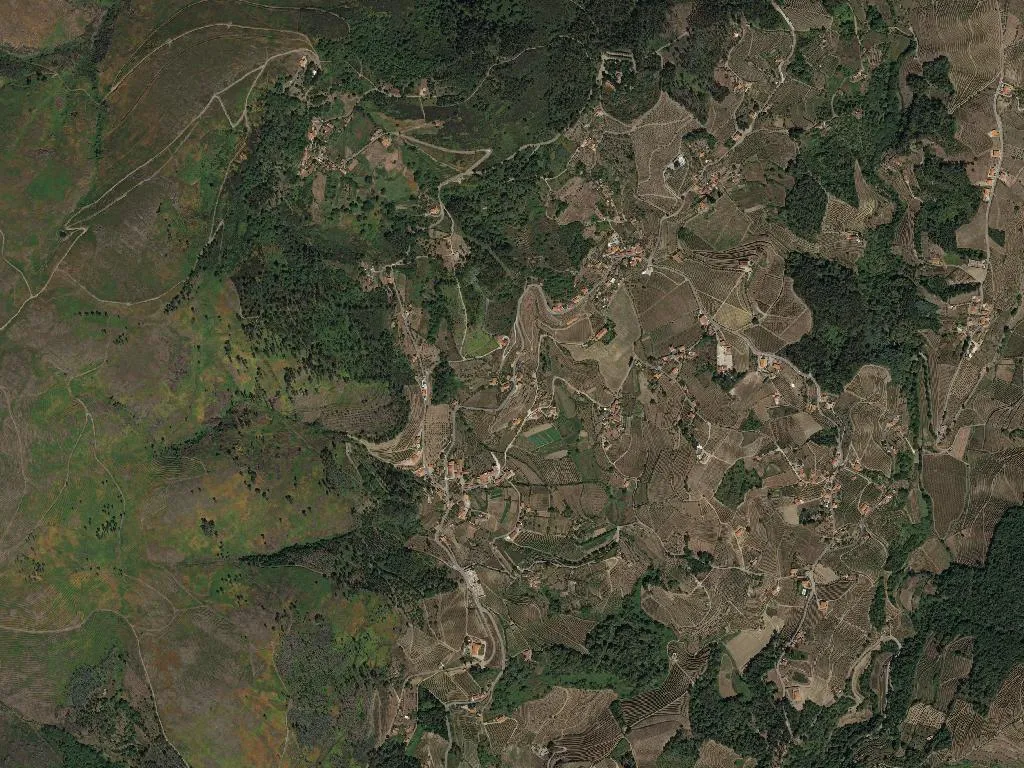
Sun ricochets off schist walls, throwing back a dry heat. In Sedielos’ crooked lanes the morning hush is slit by the parish bell and the slam of a single door. The hamlet balances at 470 m, its vineyards stitched into gravity-defying terraces that tumble towards the Corgo valley. New leaf-green spangles the dark stone canes.
A novelist’s village
António Guedes de Amorim was born here in 1901. His novel Aldeia das Águias (1939) turns Sedielos into an eagle-haunted microcosm of rural Portugal resisting the pull of Porto and Lisbon. Few Douro settlements can claim such a precise literary doppelgänger.
Records reach back to the thirteenth-century reign of Afonso III, who lured settlers with land grants. The Latin root sedilelos – “little seats” – hints at early stone huts. Until 1836 the parish belonged to Penaguião; it then shifted to Peso da Régua, shedding the satellite village of Vinhós in 1933. The modern map shows 1,263 hectares of walled terraces inside the Alto Douro Wine Region UNESCO site.
Stone, faith and the harvest
The sixteenth-century Igreja da Assunção anchors the square; inside, a gilded altarpiece glints above sober granite. Each August the Festa de Nossa Senhora do Socorro stitches processions, fireworks and a makeshift brass band through the streets. A granite crusado – a wayside cross carved in 1622 – keeps watch over the western ridge.
Vintage still follows the lunar calendar. At Quinta do Acipreste, grapes are foot-trodden in granite lagares; the free-run juice heads down-river to age as vintage Port.
Wood-smoke and wine
Order kid roasted in a wood-fired oven until the skin crackles like thin toffee, or chanfana – goat stewed for hours in red wine and served in a black clay pot. Smoked alheira sausage and mountain chouriça arrive on rough wooden boards, followed by airy pão de ló and queijinhos do céu, custardy “little heavens”.
Walking two worlds
Sedielos sits on the inland variant of the Caminho Português de Santiago, waymarked through rosemary-scented scrub where wild boar root and foxes freeze in the headlamp glow. The circular Rota do Vinho threads past three small quintas offering comparative tastings of Douro DOC and ruby Port.
There are only four places to sleep – three stone cottages and one private room – so book before the vine leaves turn. The solitary restaurant, O Batista, parks its tables on a granite ledge that surveys the valley’s stepped geology. When the sun drops, schist darkens to charcoal, wood-smoke sharpens the air, and you grasp how every row of vines was wrestled into place by hand.