Full article about Pruning shears echo through Vilarinho dos Freires' terraces
Where Franciscan friars carved 18th-century port estates into schist slopes
Hide article Read full article
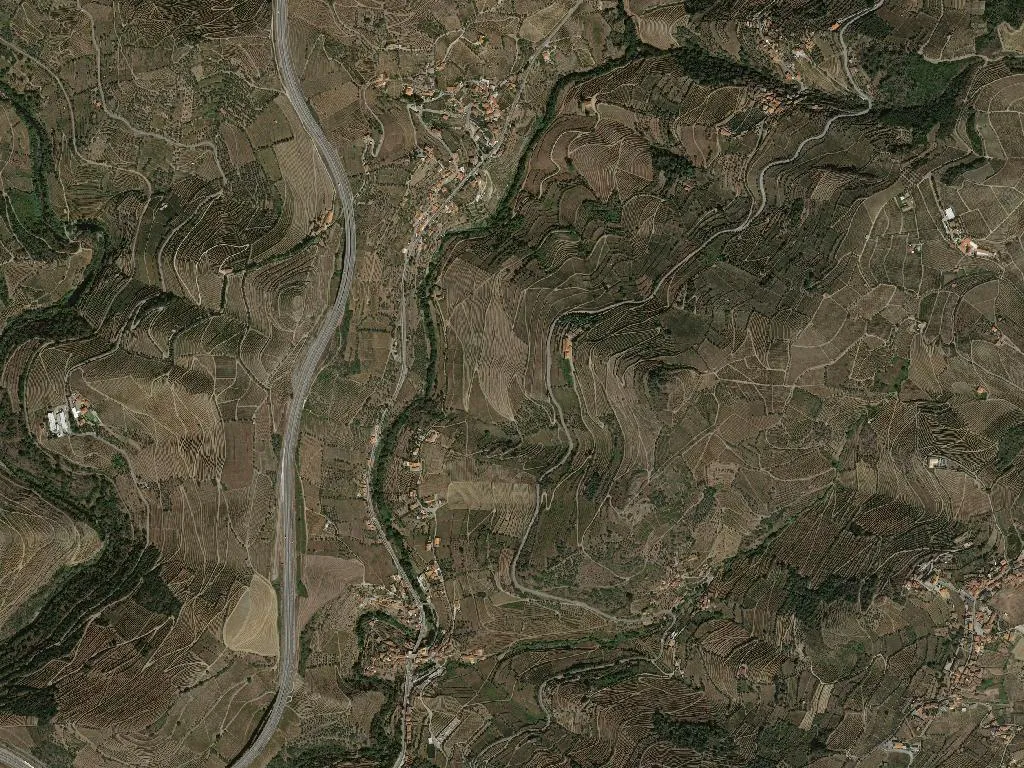
The metallic rasp of pruning shears travels uphill faster than any vehicle. In Vilarinho dos Freires, 233 m above the Douro’s slate-grey glide, September mornings begin with that sound – dozens of blades snapping cane in unison, a brittle percussion that ricochets off dry-stone walls. Between the river and the Corgo tributary, 737 people still harvest by hand, boots grinding the same schist that has underpinned these terraces since the early 1700s.
Written in schist
The parish name is the first clue: “Freires” records the Franciscan friars who, long before port became a British favourite, organised the slopes into a rational grid of walled plots, chapels and water channels. Eight buildings are now listed – manor houses with wrought-iron balconies, private oratories where candle-smoke has blackened 18th-century gilding, and the 1716 Quinta do Vallado, one of the first estates to ship vintage port to London under its own label. The quinta’s new winery, designed by Pritzker-winning architect Siza Vieira, sits beside the original dovecote, proof that continuity here is a living calculation, not a museum piece.
UNESCO added the entire Alto Douro to its World Heritage roster in 2001, yet locals treat the certificate as paperwork for what noses and knees already know: the summer furnace that ripens tinta roriz, the winter mist that saves roots from frost, and the impossible gradient that obliges every bunch to be carried out on a human back. A lattice of footpaths now links estate to estate; the only traffic is the Douro Way’s interior route to Santiago, whose way-markers appear like confessional plaques between the vines.
Territory on a plate
Geography dictates the menu. Kid goat is roasted over vine prunings that once grazed the same gradients; chanfena – goat stew – is darkened with wine from the neighbouring row. Maize bread cools on chestnut boards while smoke coils from alheira sausages, a crypto-kosher legacy from 15th-century conversos. Vinhais IGP ham, air-cured 600 m higher up the Marão, is sliced tissue-thin and laid on bread still warm from wood-fired ovens. Desserts are conventual memory: toucinho-do-céu – literally “bacon from heaven” – folds egg yolks and sugar into a slab that would make a French pâtissier blink.
Late-afternoon tastings on farmhouse terraces begin simply: chilled white made from rabigato, a disc of spicy chouriço, olives that still taste of last winter’s wood-smoke. Below, the valley stratifies into olive-green and ochre as the sun slips behind the Serra do Marão.
Pick, sip, walk
Nothing here is bundled into a single ticket. At Quinta do Vallado or Quinta do Romezal, tastings start in the vineyard: feel the difference between granite and schist with your fingers, then again in the glass. Sunset walks follow tractor-width tracks where the only interruption is a distracted ewe. During the first three weeks of September, guests can join the harvest – purple hands, a picnic lunch beneath a 300-year-old olive, and the right to initial the picking sheet.
On the last Sunday of September, the Romaria de Nossa Senhora do Socorro pulls in every neighbouring hamlet: procession, open-air mass, then an evening of call-and-response singing that predates the phonograph. Collective memory survives not in display cases but in refrains passed from grandmother to granddaughter while plates of sardinha assada circulate.
When the terraces finally fall silent and cicadas surrender to the chill rising off the stone, the lights of Peso da Régua flicker across the river like a distant fleet. The scent lingers longer than the view: fermenting must, a trace of burnt vine wood, earth that refuses to forget.