Full article about Alvadia: Where Granite Meets the Clouds
Above Ribeira de Pena, 955 m high, silence rings louder than church bells.
Hide article Read full article
Granite at a Thousand Metres
Granite arrives here as if by accident, heaved into benches almost a kilometre above sea level, and the hamlet’s houses clamp themselves to the slab with walls thick enough to blunt the wind that barrels down from the Spanish meseta. In Alvadia you push the front door inwards—not from politeness, but because the January corridor doubles as an air-lock against the cold that snaps at your shins. One-hundred-and-sixty-five souls are tallied from memory: ten children who have yet to question the wisdom of being born this high, and seventy pensioners who have stored so much mountain fog in their mental photo-albums they no longer bother with cameras.
The Arithmetic of Silence
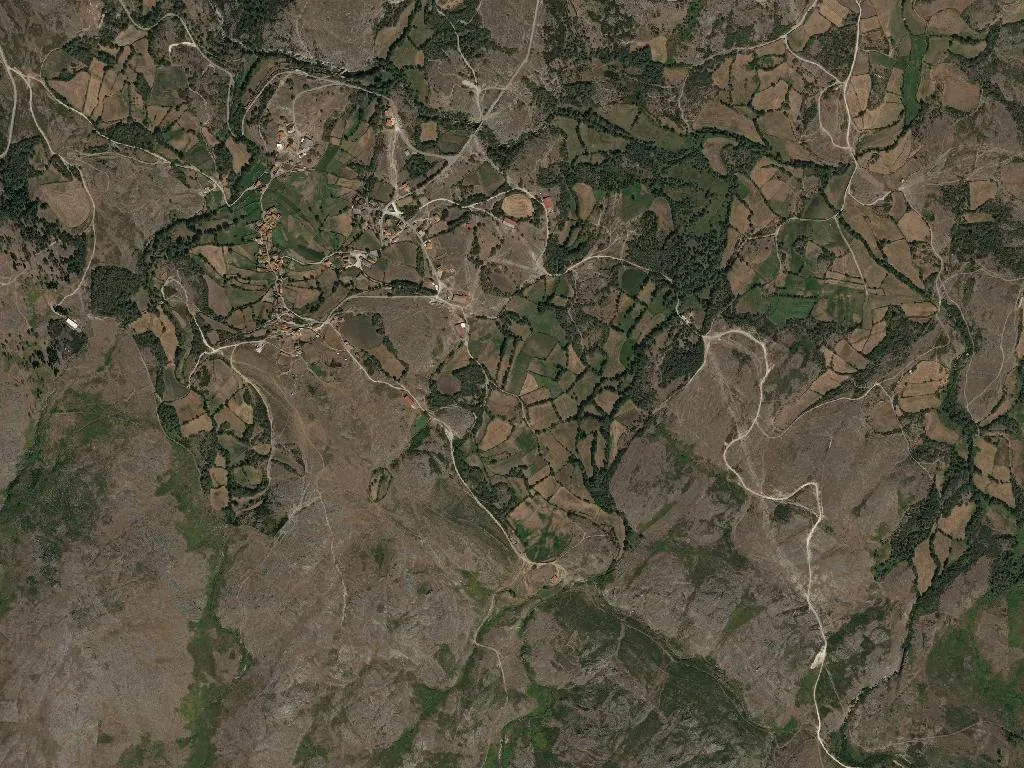
Three thousand hectares of schist and granite, five people per square kilometre: plenty of room to take solitude seriously. Tarmac narrows until it gives up altogether and becomes a mule-track where the hire-car judders and even atheists start negotiating with saints. At 955 m the mist can rise from the valley floor and, within five minutes, turn your neighbour into a disembodied voice. If that sounds like isolation, you haven’t tasted the silence that falls after the last dog stops barking.
Four Weekends that Count
The year is sliced into four festival weekends: Nossa Senhora da Guia (mid-August processions with brass bands and candlelit floats), Nossa Senhora de Fátima (May rosary marathons), São Pedro de Cerva (late-June bagpipes and fireworks), and Divino Salvador (early-October harvest thanksgiving). On those nights the head-count triples, cafés fill with French hikers reeking of après-rugby after-shave, and the village square dispenses vinho verde by the ladle—because glassware is a detail. The other 361 days the Maronesa cattle wander home unescorted and the only matinée is the sky shifting colour behind the Muradal ridge.
Smoke, Beef and Honey
Follow your nose: the scent of sweet chestnut smoke arrives before the house does. That’s Vinhais ham bronzing above a fireplace, dusted with scarlet pepper like blusher on a country dowager. Carne Maronesa DOP was born up here before it had a label—lean cows that graze wherever the pasture is more stone than grass, giving meat that tastes faintly of schist and iron. The local honey also carries a DOP—Terras Altas do Minho—but the beekeeper hands over the bottle like a foster parent: “Take it, but don’t open for a year or the promise will vanish.”
A Bedroom with No View
There is one guest-house: three rooms, sight-lines into absolute darkness, nearest human two compass points away. No brunch, no hot-stone massages, no Wi-Fi called “RebootYourSoul”. You get split pine, a spring 200 m down the lane, and a night sky still innocent of light pollution. Bring your own company; the schedule is immutable: wake to the cow’s bronchial greeting, watch dawn lift behind the sameiro, realise alarms were always redundant. At dusk smoke rises vertically, cows know their way home by heart, and windows light up like pages turned in a pop-up book. Sit, inhale warm earth, let the night practise its ancient craft.