Full article about Santa Marinha: River-Hush & 4,000-Year Rock Circles
Neolithic carvings, Roman bridge, chestnut silence—Santa Marinha keeps time in granite and echo.
Hide article Read full article
The River Speaks First
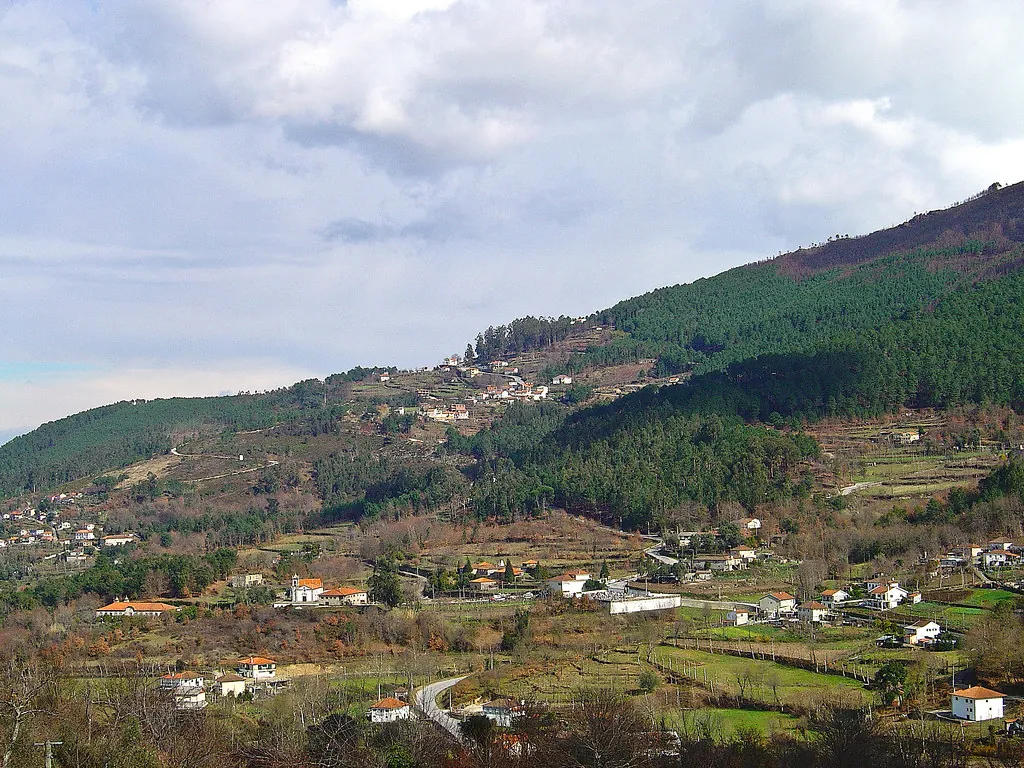
You hear Santa Marinha before you see it. The Poio River turns over granite boulders far below, a hush that rises through chestnut and oak like distant applause. Only 551 people share 34 square kilometres of ribbed hills between 300 and 800 metres, so the sound travels unobstructed, the acoustic equivalent of an empty cinema.
Granite walls catch the late sun and flare amber; a single thread of hearth-smoke unspools above slate roofs. The parish is statistically emptier than a Friday-evening queue for a Porto season ticket, yet the silence feels full—room enough to flex your elbows without apology.
Rock Art Older Than the Bridge
Above the river, the Lamelas rock-art station keeps a 4,000-year-old diary on schist. Concentric circles, cup-marks and geometry that would look at home on a Bauhaus textile were chipped by Neolithic hands; the four-kilometre Rock-Art Trail links them to a single-arch Roman bridge that still throws a 14-metre shadow over the Poio. Engineers argue about legionary workmanship; locals shrug and say whoever built it knew more than I ever will about crochet—yet the stones hold.
Back in the village centre, the eighteenth-century Igreja Matriz lifts its baroque pediment with provincial sobriety. Inside, gilded wood gleams like dark honey and eighteenth-century azulejos narrate miracles in cobalt. From the churchyard the view slides down to maize terraces and small, stubborn vineyards that refuse to concede altitude.
When the Accordion Replaces the Hammer
Festivity here is measured in processions and decibels. On the last Sunday of August, Nossa Senhora da Guia is carried through the lanes, canopy swaying, followed by an arraial that keeps the village awake until the maize leaves sag with dew. September brings the double bill of Divino Salvador and Senhora das Angústias—faith, brass bands and €3 veal sandwiches that reduce china plates to grease-polished moons.
St Peter’s Eve in Cerva, 29 June, trades Porto’s plastic hammers for concertinas. A bonfire the size of a haystack is lit; the square becomes an informal ballroom where you can whirl without bruising a neighbour’s ribs. In July the Linen Fair rethreads the lost art of spinning. Demonstrations run beside looms older than the Republic; I still use a table-bought towel that sheds no lint—three years on, it remains miraculously thread-loyal.
Tâmega Produce on a Plate
The region’s DOP Maronesa beef appears both grilled and stewed, the meat silkier than any continental import. Kid goat is wood-oven roasted until the skin crackles like a fresh loaf torn open. Oak-smoked charcuterie swings in kitchen fumados, scenting entire hamlets with campfire perfume. Milhos Esfuçados—fine cornmeal with greens and beans—recur in family notebooks as the dish that stretches the week before payday; “esfuçar” is the puffing ritual performed while watching evening television, cooling the spoonful before it scalds the tongue.
Poio trout, meanwhile, are fried within sight of their birthplace, served as simply as seven-a.m. bread. Dark rye broa absorbs High-Minho DOP honey in slow, viscous folds; spillage is never mopped—let it soak, the loaf will thank you later. Everything washes down with vinho verde from the Basto sub-region—an un-famous cousin who never appears in group photographs yet never lets the side down.
Grapes, Stars and River Beach Towels
Come September, Quinta do Paço treads grapes in stone lagares; visitors sip must straight from the vat—grape must still cloudy with skins, sweet enough to make adults momentarily eight years old again. Downstream, Cerva’s river beach offers chlorine-free swimming and shaded picnic tables. No five-euro sun-loungers, no sound system—just water clear enough to watch your own shadow glide over stones.
After dark, walk to Lugar do Poio, kill every light, and the Milky Way spills across the sky like scattered icing sugar. When the church bell tolls six, the note rolls through the valley, bouncing between schist shoulders until it dissolves into the river’s permanent hush. In that fragile pause—after the last bronze vibration and before ordinary silence resumes—Santa Marinha declares itself entirely. It is the travel equivalent of finishing a coffee outside a café that has just closed: final sip, empty cup, the street suddenly yours.