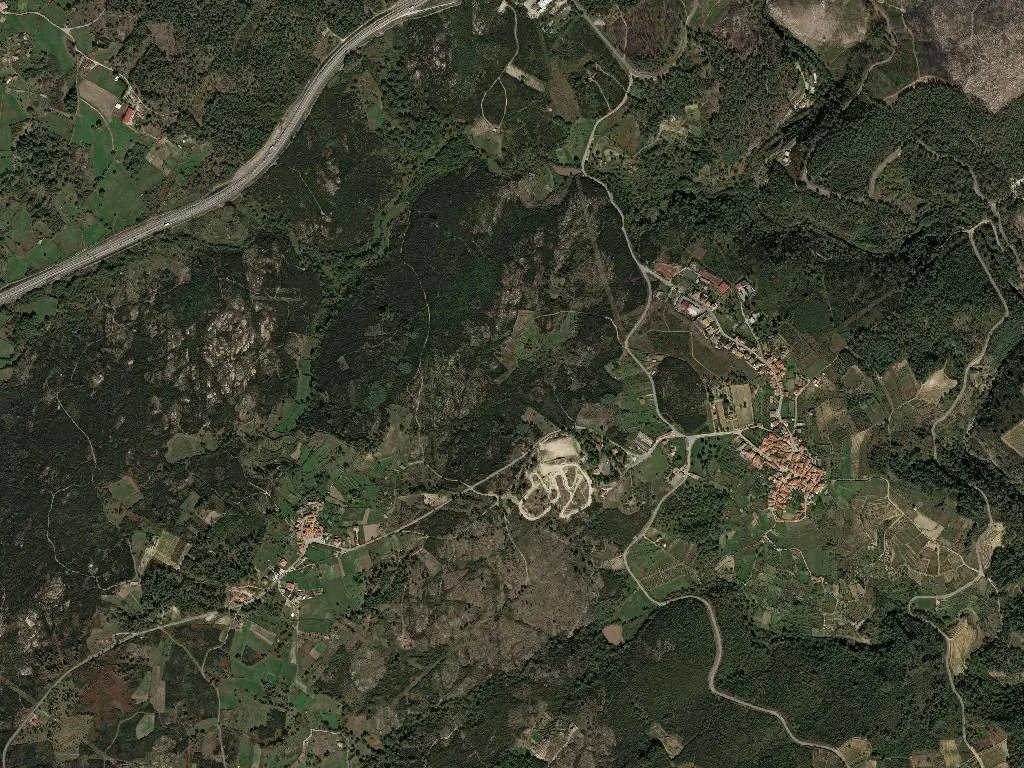
Full article about Parada de Pinhão: Vineyards Clinging to Schist Skies
Granite troughs steam, terraces soar 670 m above the Pinhão, scenting Touriga Nacional.
Hide article Read full article
The scent of fermenting must steams from granite troughs as the setting sun turns the schist terraces copper. In Parada de Pinhão, walls built before Queen Victoria’s reign still shoulder the vineyards, climbing 670 metres in flights so steep they look stitched to the mountain. Three kilometres below, the Pinhão river slips through a shale canyon where the shouts of 18th-century boatmen—who once poled barrels of young Port to Oporto—still seem to echo.
A halt that never moved on
The name tells its own story. When Afonso III granted the settlement its royal charter in 1256, this rib of north-eastern Portugal became a staging post for mule trains swapping between the Douro docks and the high plateaux of Trás-os-Montes. The 1758 Pombal wine-district survey fixed its vocation for good: the altitude softens summer heat, while midnight-blue schist forces the vines to struggle, yielding Touriga Nacional with a violet nose that persuaded UNESCO to list the entire valley. Traces of the old royal road survive as uneven cobbles polished by ox-carts hauling Port to the now-vanished river quay at Praia.
Granite, ink and grapes
The 18th-century parish church lifts its pediment above a forecourt of stone crosses, baroque gilding glinting through dusty glass. A short climb west, the open-air chapel of Senhor Jesus do Calvário doubles as a natural belvedere: from its balustrade the river incision and the snow-dusted shoulders of the Serra do Marão align like a school atlas relief. Inside the Casa Aires Torres, the desk lamp of republican poet and army officer Aires Torres (b. 1893) is still switched on for tours; his first edition of Inquietação (1925) sits beneath acid-free tissue, pages uncut.
Taste at height
Lunch is served on cold slabs at Casa do Adro. Lamb stewed in last year’s red arrives under a clay lid, chasing a wedge of warm maize bread and olive oil pressed from trees planted when Wellington was in Portugal. A posta mirandesa—veal haunch seared over vine prunings—leaves mahogany juices on porcelain while a 2016 Touriga Nacional from 80-year-old vines waits its turn. In colder months, chestnut soup thick with farinha de castanha is ladled from copper; Vinhais IGP ham, smoked over holly wood, is sliced so thin it folds like silk. Finish with cavacas de xisto, brittle almond biscuits that shatter into schist-coloured shards.
Between river and constellations
A seven-kilometre footpath drops from the village to Vilarinho e Balsa, contouring walled terraces, lone holm oaks and streams that once fed stone watermills. Kayaks put in at the river bridge, drifting three kilometres to the Douro confluence beneath red kite patrols. After dark, walk the chapel track without a torch: Parada registers some of Portugal’s lowest light pollution, and on moonless nights the Milky Way spills over the terraces like split cask wine while the river mutters its unending commentary below.
Come September, the village square floods with purple. Locals haul baskets of Alicante Bouschet to granite lagares where grandchildren stand knee-deep, treading grapes to a rhythm older than the steam engine. The juice—warm, almost black—runs between toes; the air thickens with tannin; someone starts a call-and-response whose chorus drifts uphill to the rows that supplied it. Stone, sap and song: three elements that keep 257 souls soldered to this incline.