Full article about Schist staircases of Provesende pour Douro wine into sky
Provesende, Gouvães & São Cristóvão do Douro: 633 m schist terraces, 14th-century wine, nicknamed locals, zero crowds.
Hide article Read full article
Where the Vine Writes its Name on the Slope in Schist
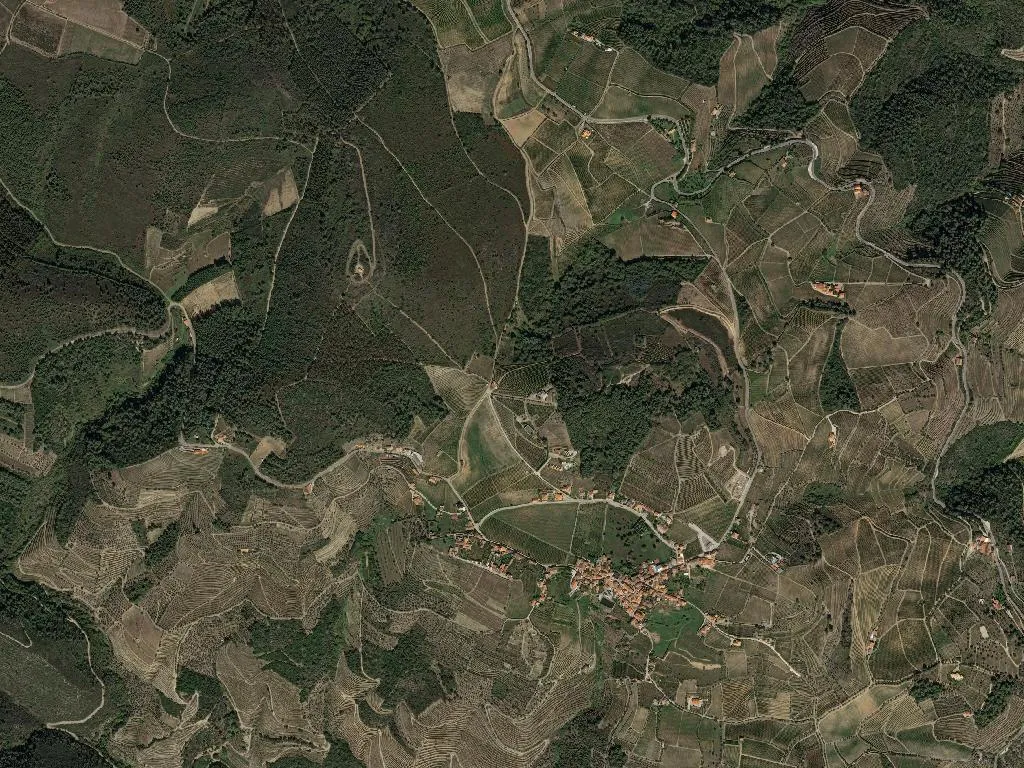
Silence arrives first. Then the wind—a dry exhalation that drags with it the sweet rot of grapes on the lower terraces and the scent of sun-warmed earth, almost like fresh bread, rising from the walled ledges. The road to Provesende coils in tight hairpins; after the final swerve the Douro bursts open below, a black-schist ocean cascading to the river. We are 633 m above sea level, and from here the vineyards look like a giant’s staircase, each step measured by the span of a grandparent’s hand—the same span that built them. Granite houses trap the morning sun and refuse to let it go; by late afternoon they are still glowing.
No one here ever says “União das freguesias de Provesende, Gouvães do Douro e São Cristóvão do Douro.” The parish union, 1,836 ha inside the municipality of Sabrosa, is simply “the village” to its 463 inhabitants, each known by a private nickname: Zé do Torto, Amélia da Fonte, the boy from Gato who emigrated to Porto and returns every August. They recognise every wall, every gate, every spot where a car’s wing-mirror grazes the outcrop.
A name that promised wine before it promised soil
Provesende probably derives from pro vincede—“for the vineyards.” The bishop’s archives already mentioned its wine in 1348. The landscape testifies: vines climb gradients so steep that pack-donkeys sidestep upwards. Retaining walls are dry-stacked schist, stone on stone, no mortar; two centuries later some still stand. The hamlet joined the official network of Wine Villages in 2021, but residents hardly need the plaque—open any window and the proof is there.
Streets are flanked by doors of iron-nailed oak whose hinges squeal like the wind itself. Houses rise to the height of one-and-a-half men; roofs drop sharply so winter rain cannot linger. Granite thresholds have been polished by centuries of soles. Window lace dries in the sun and smells of home-made soap.
Chapels that keep the echo of processions
Six churches and wayside chapels are listed, yet the unlisted ones dominate conversation: the granite chapel of St Anthony where grandchildren marry; St Benedict’s hermitage that releases its image every 15 August. Inside São Cristóvão a gilded altar ignites when the three-o’clock sun strikes the gilt. Processions have no brass band—only concertina and viola amarantina. The Azinheira pilgrimage begins at dawn with woodsmoke and coffee on the church porch and ends after midnight, dregs of borrachão in the glass and a rosary coiled round the hand.
Kid, bôla and the rubber-man’s pudding
Zé Mário lights his wood oven at four; by eleven the smell of kid goat dripping onto embers drifts through the lanes. Bôla de carne—a raised pie lined with January’s home-cured belly pork—bakes inside a clay pot sealed with bread dough. Borrachão follows granny’s script: melted butter, toasted flour, grandfather’s pipe-drawn Port, hot red wine, sugar, cinnamon. You eat it standing in the square, spoon in one hand, earthenware cup in the other.
On market days translucent slices of Vinhais smoked ham arrive—thin enough to read yesterday’s football scores through. Bread is mixed-grain with a armour-plated crust; wine is served in 200 ml tumblers filled to the brim. There is no list—simply “red or white?”—and the bottle lands on the table.
Footpaths between vines and the privilege of height
The track to Gouvães starts beside the spring where women still rinse tablecloths. Four and a half kilometres of loose schist, centenarian olives and a dog called Lobo who is plainly half retriever. Halfway up, the Carril lookout frames the Douro’s perfect ox-bow; a passenger ferry appears motionless in the current. The air smells of rock-rose and heather; the soundtrack is bees and the groan of a disused water-mill. Trails are unmarked—ask the first soul you meet and they will walk you to the right gate.
Sixteen beds are scattered through restored cottages: some are surplus family homes, others rescued by Tiago do Torto and let privately. There is no reception—your key sits under a lettuce pot or beneath the doormat.
The precise weight of an afternoon
When the sun drops behind the Marão ridge the schist still burns the soles of your feet. The scent of warm earth mingles with olive smoke from a tidy allotment bonfire. The neighbour’s dog barks three times—signal that the post-van has descended the hill. In the churchyard an empty wicker chair holds the ghost-shape of its last occupant. You pinch the stem of your glass—already emptied, the final drop drying on the rim. It is not a picture; it is a temperature in the palm, a weight that refuses the scales.