Full article about São Lourenço de Ribapinhão
Neolithic tombs, granite manors and smoke-cured presunto crown this Sabrosa perch
Hide article Read full article
Dawn on the schist terraces
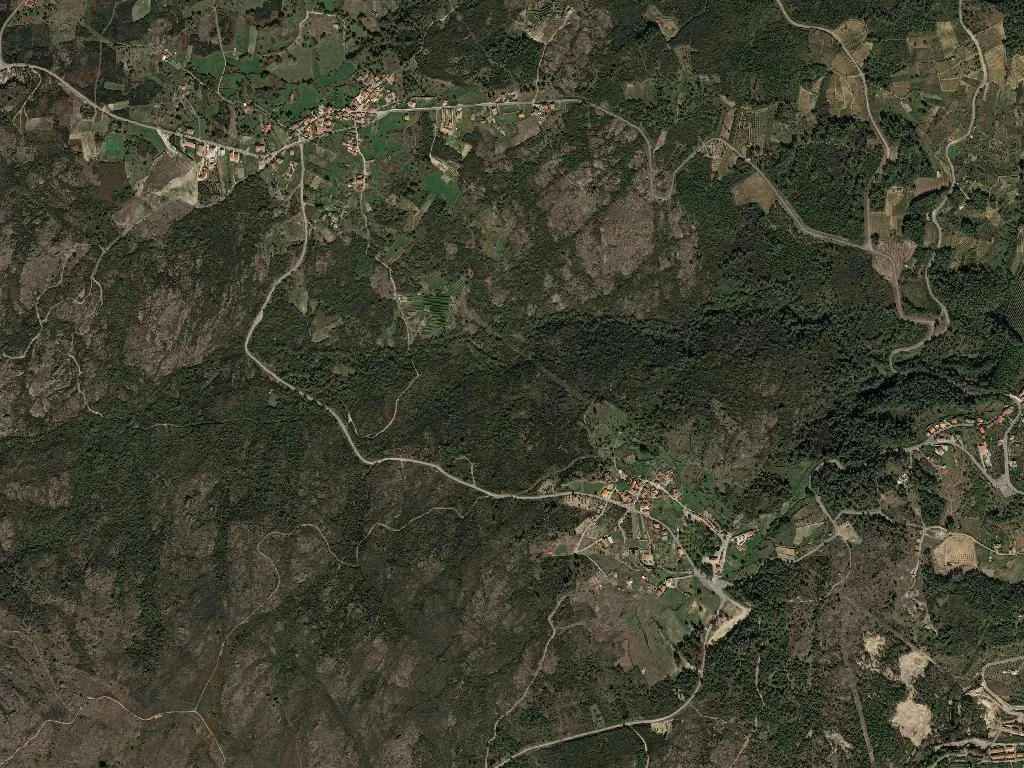
First light spills over the Pinhão valley and catches the terraces still jewelled with dew. Below, the river tightens into hair-pin bends between vineyards that climb until the eye gives up, and the schist flashes ochre and gun-metal as the sun inches higher. At 647 m, São Lourenço de Ribapinhão hovers between valley and ridge – a parish of old vines and older silences where every stone remembers who stayed.
Roots in the rock
The 1220 Inquiries already listed the settlement, then tied to the Land of Panóias and to the Sousões lords who had held sway since the ninth century. The name couples its patron saint to the river that stitches the valley floor – Ribeira do Pinhão – and the geography still dictates life. For centuries it answered to Vilar de Maçada, then Alijó, only slipping into Sabrosa’s jurisdiction in 1855. Fernão Sanches, bastard son of King Dinis, left his feudal imprint; armorial manors still punctuate the lanes, their granite portals weather-beaten but proud. The parish church rises at the centre, its stonework lichen-laced, while the hill-top shrine of Nossa Senhora da Saúde lures pilgrims through olive groves that smell of fennel and woodsmoke.
A Neolithic queen on the plateau
Walk ten minutes above the hamlet of Arcã and you meet the mamoa of Madorras I – a 25-m Neolithic burial mound excavated in 1981 and one of the largest in northern Portugal. Five millennia of wind have skimmed it smooth; knee-high gorse scratches at the base and the only soundtrack is a distant dog. From up here the valley reads like a palimpsest: prehistoric tombs, medieval solar towers, 18th-century stone-walled vineyards, all eventually topped by the UNESCO-listed terrace system of the Alto Douro Vinhateiro.
Presunto, reds and the long-cooked feast
Identity here arrives on a board: Vinhais IGP presunto sliced translucently thin, smoke-cured chouriço that stains the fingers paprika-red, alheira sausage crumbled into chickpea stew. Kid goat roasts until it sighs off the bone, while the legendary cozido transmontano burbles in clay pots for half a morning – beef, pork, chorizo, cabbage and potato in a single bronze liquor. Pumpkin jam and walnut cake follow, washed down with estate-bottled Douro DOC – tannic reds that carry the scent of sun-baked slate. Several quintas within the parish welcome drop-in tasters; glasses are heavy, pours generous, and the schist minerality lingers like struck flint.
Summer wakes for three Sundays
The calendar is ruled by romarias. On the first Sunday of May, Nossa Senhora da Azinheira brings a procession of brass bands and hawkers selling honeycomb. The last Sunday of August belongs to Nossa Senhora da Saúde: fireworks over the valley, dancing until the dew reforms. Mid-July adds the feast of Senhor Jesus de Santa Marinha – a shorter climb, but the same hymn-sung ascent. On 10 August São Lourenço himself is honoured; emigrants fly home from France and Switzerland, long tables appear in the square, and someone’s uncle is always persuaded to sing a moda antiga. For a night, the parish’s 318 souls feel like a city.
Between events, way-marked trails lace the vineyards, linking Arcã to the shrine via Paredes, Vale das Gatas and Vilar de Celas – hamlets of moss-dark granite and flaking painted doors. Late afternoon tilts the light sideways and the Pinhão valley becomes a copper basin. Scent of warm earth, river murmur, a bell tolling the hour without hurry: that is the souvenir you take away.