Full article about Souto Maior: granite hamlet above the Douro mist
Where wind tastes of bark & wine, 439 souls keep Sabrosa’s sky-high terraces alive
Hide article Read full article
The ridge wind arrives tasting of old vine bark and newly-turned earth. At 657 m the air is knife-clean, the sort that makes you squint when the sun ricochets off granite outcrops. Souto Maior, one of Sabrosa’s sky-high hamlets, still lets the liturgical calendar rule life: three romarias (pilgrim festivals) punctuate the year, coaxing scattered villagers home and sending wood-smoke signals above the rye terraces.
Only 439 souls remain, 156 of them over 65. It is the oldest who keep the vegetable plots immaculate, who climb the narrow socalcos (stone-walled terraces) to check the red grapes, who can name every cork oak in the parish’s 918 hectares. Forty-one children sprint between chapel porches during the festivals; the remaining months belong to distant dogs and the odd, metallic chime of a cowbell.
Three dates that redraw the map
Nossa Senhora da Azinheira (late April), Nossa Senhora da Saúde (early September) and Senhor Jesus de Santa Marinha (mid-August) are more than church feasts. Houses shuttered since Christmas open their windows; London, Paris and Zurich car plates reappear; bonfires flare at dusk, sketching orange geometry on the sky. Two of the three chapels are listed Buildings of Public Interest – one 17th-century, one 18th – their facades blistered by centuries of Trás-os-Montes weather and political regimes.
Architecture is altitude-adapted: single-storey granite cottages with timber balconies, slate-roofed haylofts, loose-stone walls that stitch property lines into the hillsides. Alleys bend abruptly, shielding walkers from the winter north wind that can strip paint off doors.
What arrives on the table
Souto Maior sits inside the Alto Douro UNESCO World Heritage belt, though the landscape here is subtler than the postcard vertigo around Pinhão. Small family plots—sometimes no more than 30 rows—produce wine for the house, foot-trodden in stone lagares and aged in chestnut barrels. Granite soils gift the reds a flinty austerity, more Puligny than Port.
Ham hangs in every fumeiro. The Presunto Bísaro de Vinhais IGP – from the dark-haired Bisaro pig fattened on chestnuts and acorns – cures for 24 months over slow oak-and-chestnut smoke, developing marbled crimson flesh that tastes of forest and peat.
Walking the silence
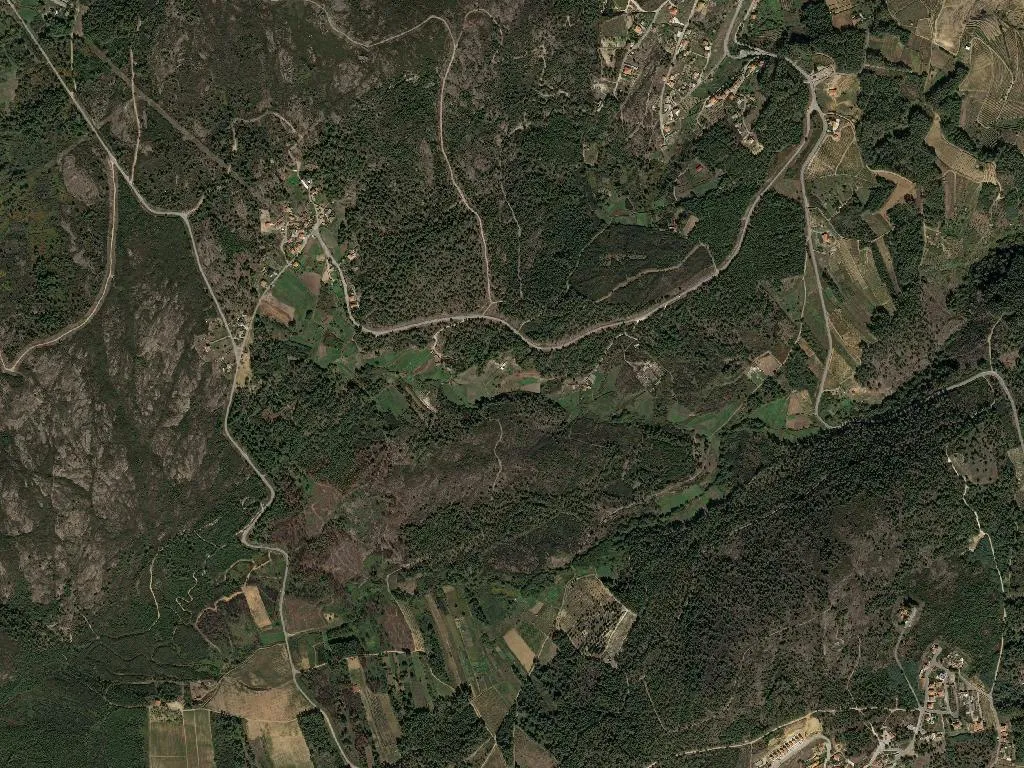
With 47 inhabitants per km², space is the main commodity. Trails link Souto Maior to neighbouring Covas do Douro and Celeirós, threading through successive ridges that fade from charcoal to lavender as distance dissolves. Sound is tactile: wind combing the chestnut groves that gave the village its name, a wooden gate’s drawn-out creak, the echo of a slamming door somewhere down the valley.