Full article about Vilarinho de São Romão: Where Douro Stone Breathes
Granite alleys, smoke-cured ham and three secret feast days in a 237-soul terraced village.
Hide article Read full article
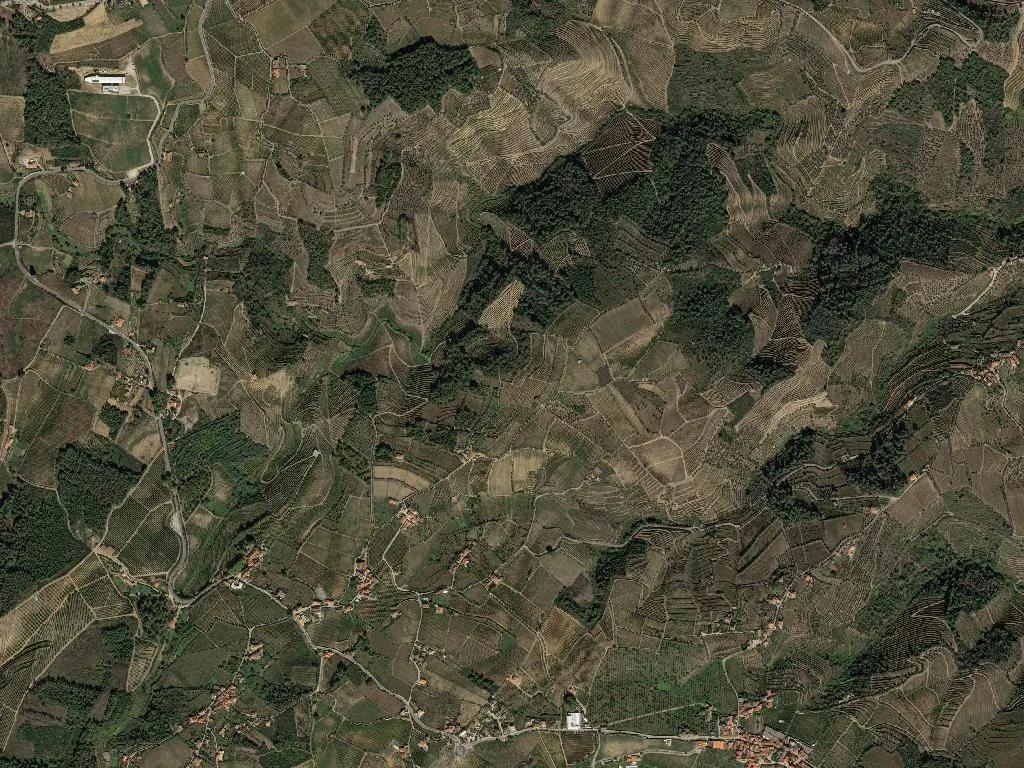
The cobbles rasp underfoot—uneven granite that has been counting centuries in every chipped edge. At just under 500 m, Vilarinho de São Romão spills down a fold of schist where the stone breaks through rows of vines stitched into terraces. The air carries the raw scent of newly-turned earth and the sweet rasp of oak smoke curling from low chimneys. Population 237: every face logged by memory, every doorway identifiable at a hundred paces.
Three feast days, three calendars
The year pivots on processions that tourists never hear about. On the first Sunday of May, villagers shoulder the image of Nossa Senhora da Azinheira to bless the rye; mid-August belongs to Nossa Senhora da Saúde, when fields are hushed and even the tractors rest; October brings Senhor Jesus de Santa Marinha, timed to coincide with the first press of grapes. The mother church and the hill-top chapel of Santa Marinha are classified monuments, yet you will search in vain for signposts—faith here predates signage.
What the land tastes like
This is the razor-edge of the Alto Douro, a UNESCO site where the steep gradients make mechanised viticulture impossible. Vines are hand-pruned on gradients that would daunt a mountain goat, the schist radiating heat back onto Touriga Nacional and Tinta Barroca. In stone outhouses, hams entitled to the Presunto de Vinhais IGP cure over smouldering oak for a minimum of twelve months; if the pig is of the indigenous Bísaro breed, the flavour carries a faint note of chestnut from the forests where it foraged.
Arithmetic of survival
Seventeen children under fourteen, seventy-six residents over sixty-five. The primary school still rings a hand-bell at nine; the café unlocks its shutters at seven for galão and gossip; Saturday means caldo verde ladled from a dented vat. There is one guest-room in the village—book by word of mouth—enough for travellers fleeing the river-cruise hubbub of Pinhão, 20 km south.
Silence you can weigh in the hand
No viewpoints, no tasting menus. Instead, century-old terraces you can walk among (mind the mastiffs). Mid-afternoon, the church bell drops a single note that lingers between granite walls; when it dies you hear only Zé’s tractor climbing through the vines and Joaquim’s dog answering from the opposite ridge. The place keeps its own quiet time—measured in pruning cuts, smoke cycles and the slow darkening of ham.