Full article about Fontes: Douro village where granite holds sunrise
Stone-walled vineyards cling to 640 m cliffs above silent schist cellars
Hide article Read full article
The granite keeps yesterday’s sun until dawn. A cat sleeps on the warm block, paws tucked, indifferent to the 640-metre drop that separates Fontes from the world. At this hour the village is an acoustic exercise: church bell, Zé’s tractor on the opposite ridge, Sr Américo’s dog giving one obligatory bark to prove he’s still on the payroll.
Six-hundred-and-sixty-two people live here, two-thirds collecting pensions, fifty-nine still in primary school. Do the arithmetic and you get two farmers for every child; that’s why doors stay closed but rarely locked, waiting for the Braga graduate to decide whether the family roof is worth coming home to or better sold to a Parisian in search of a view.
Mountain wine
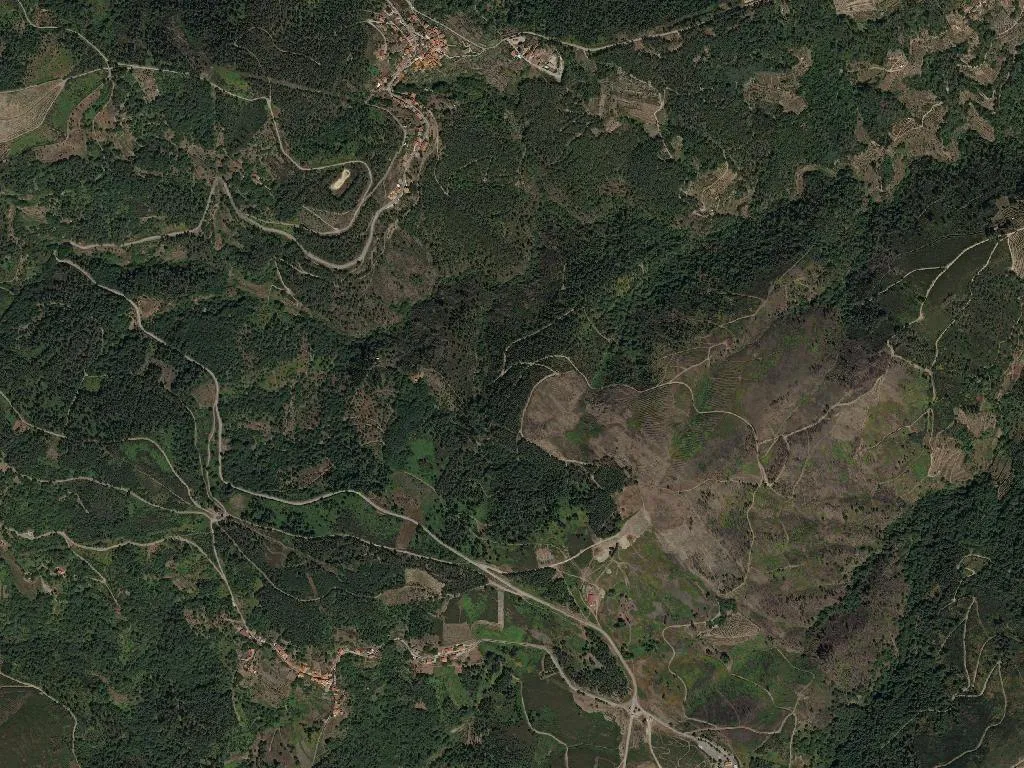
Fontes belongs to the Douro demarcation, yet the river’s tourist flotilla never reaches these terraces. Instead, hand-built stone walls rise like staircases to a private sky, narrow shelves where a tractor would sheer off the edge. Altitude postpones the harvest by three weeks; the grapes arrive with higher acids and a tannic spine sharp enough to slice through the region’s goat-and-paprika stew. In the communal cellar—a cave scooped out of schist where even the bats have right-of-way—fermenting must soaks into wool sweaters. There are no tastings, no gift shop. Turn up on Saturday with your own glass and Joaquim, 73, former student of Montpellier, will dip the pipette. Ask about Paris and he means the city where his daughter queues for the Métro.
Kitchen protocol
What you eat in Fontes never sees a menu. The ham hangs in Sr António’s smoke-blackened shed since December; it is only carved when the Lisbon daughter-in-law visits—any earlier and the journey spoils the joint. Bean soup borrows yesterday’s kale, the cornbread leaves the wood oven at six and is memory by eight. Refuse what is offered and you have a two-minute walk to the café—take coins, no card machine.
June population spike
The last weekend of June swells the head-count. Emigrants park French cars with Swiss plates, bedrooms glow after months of darkness, little girls who answer their mothers in français sprint barefoot as if they never left. There is mass, a procession, pork-and-marjoram sandwiches, rockets that make the rooster reconsider his timing. For forty-eight hours Fontes justifies a second espresso machine. Then the cars point north again, leaving only linen tea-towels on the line as evidence.
There are three rooms for hire, none marketed as “boutique”. They are grandmother houses with Wi-Fi. You wake to the cockerel, breakfast on milk still blood-warm, and the infinity element is not the pool but the terraces ribbing every slope until the sky—sky that has yet to be sub-divided by Ryanair routes. At dusk the schist turns honey, shadows stretch like satisfied diners. Between the finished day and the unlit evening you understand why those 662 souls keep climbing back up, even when the hypermarkets of the lowlands stay open until midnight.