Full article about Lobrigos: bell-clang, vineyard dust and granite heat
Sweat-salted terraces, a café that never locks, and São Pedro’s drifting smoke in tiny Lobrigos
Hide article Read full article
The granite scorches
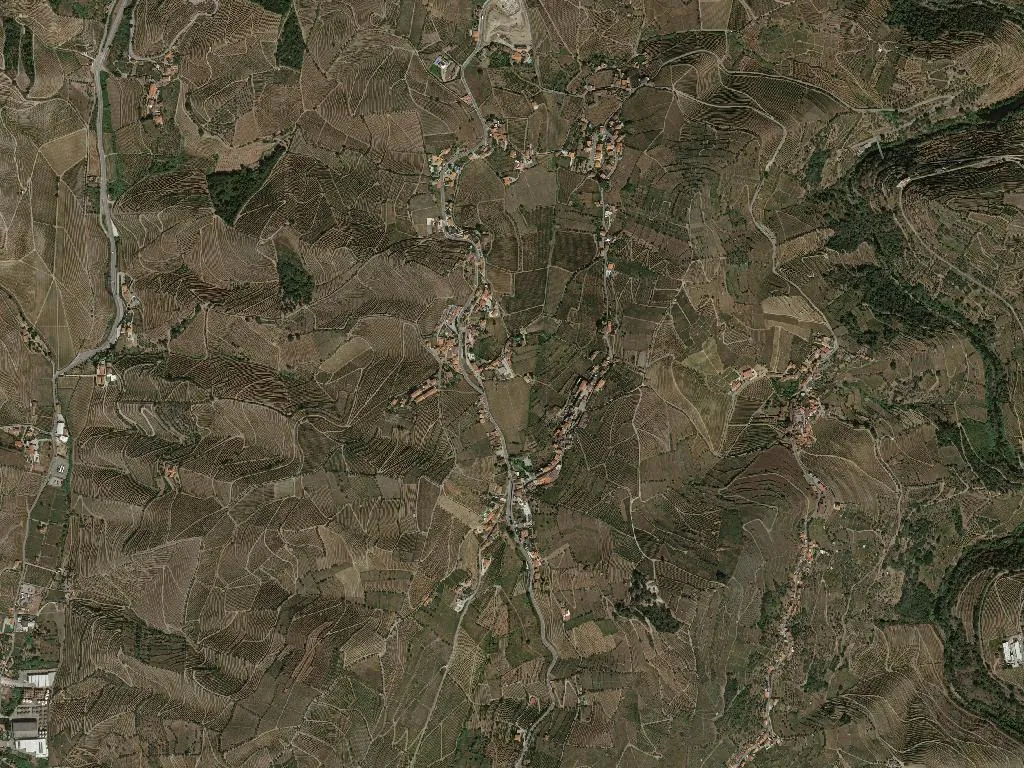
The granite scorches João’s shoulder-blades. Eleven years old, he climbs the hoof-printed track between the primary school and the chapel in his mother’s trainers—two sizes too big, the heels folding under like clam shells. Each footfall lifts a puff of dust that tastes of vineyard manure and yesterday’s olive husks still smouldering on a backyard brazier. Far below, the Douro knots itself through the schist like a dark ribbon; the terraces are not postcard stripes but shoulder-high walls of living stone that his grandfather laid before João’s father was born. When the church bell clangs three times he knows it is five o’clock without looking—third beat always sticks, timber of the tower giving a splintered yelp—and the priest’s voice is already echoing through the sacristy asking for an extra candle for the Blessed Sacrament.
There is no performance—only sweat tracing the spine of Emília, 78, who still scrambles down her walled plots to prune alone. She calls them “as minhas costas”—my own back—each terrace a vertebra. At half-past six, when the sun slips behind Monte do Farinha, the vine leaves do not “ignite”; they give a dry rustle, rice-paper tearing, and that is her signal to pocket the shears and half-hum “Coimbra” for no audience.
Zé-Lino’s café and the silence bench
The café unlocks at seven, yet the smell of galão lingers from six forty-five. Zé-Lino pours espresso into rinsed plastic cups—“It’s to take away, missus”—for the only outsider who has appeared all week. The grocery next door still weighs its cheese on a two-pan balance: Teresa’s queijo da serra is measured in grams, the conversation in decades. Facing the road, António, 87, stares at the N322 as if awaiting a brother who left for Paris in ’74. He isn’t, really; he knows the morning brings only an empty envelope of daylight, but the granite bench warms his kidneys and the tarmac supplies a moving picture.
St Peter, smoke and saudade
The Festa de São Pedro does not begin with fireworks; it begins at four a.m. on the 23rd when Carlos and Zé-Manel descend to the adega to draw last year’s wine for the soup kettle. By six the air is laced with garlic and the metallic snap of fireworks fuses. At nine the sardines are not “grilled”; they are blistered on an iron rack welded from a lorry spring, and the first fish is always claimed by Basílio’s dog, who never begs. When the duo “Os Amigos de Vila Real” strike up the schottische “Pica do 7”, blue plastic chairs reach all the way to the fire-station door and Maria Albertina, 82, dances with her cane in the air, remembering the husband who taught her the waltz step before the mine took him.
What is eaten (and what is politely ignored)
The ham swinging in Sr Domingos’s cellar has a name: Bísaro. Cured for two winters above the kitchen hearth, it releases walnut and pine-smoke when the knife glides in; the white fat is not “marbled” but beeswax melted to glue, forcing a gulp of burn-white wine down the throat. Rye loaves arrive in slabs too large for the hand—torn with a fist, they scatter crumbs the tavern dog licks clean. There is no “local” olive oil; there is Valdascal oil, lugged down in five-litre demijohns by D. Odete, tasting of fig leaf and sun-dried pimentão.
Where silence has weight
The three guest rooms are not “boutique”; they are painted bone-blue and dressed in cotton sheets that smell of Marseille soap. Wi-Fi is absent; there is a hammock in the orchard where dawn enters at four with blackbird song. Wake early and you will hear Zé-António’s tractor splitting the road’s stone, diesel and unfermented must drifting through the window. Beauty asks for no likes: the hill opposite is Carvalhal, rust-coloured in October; point a lens and Alfredo, pruning, waves and calls, “That for Instagram? Tell them I’m the one in the straw—my grandson will look.”
Evening falls. Fog climbs the valley like spilled milk, and the scent of dry earth mixes with manure Jorge has forked into his vegetable patch. Across the river the first lights of Fontes switch on—stars someone forgot to sweep into the sky. Lobrigos makes no promises; it simply lays the weight of silence on your chest, each terrace murmuring, “Stay a little longer—there’s still wine in the barrel and yesterday’s bread is soft.”