Full article about Lobrigos: where granite terraces breathe wine into dusk
Visit Lobrigos in Portugal’s Vila Real for hand-trod Port grapes, granite cottages, June São Pedro feasts and Adega tastings.
Hide article Read full article
Late-afternoon granite
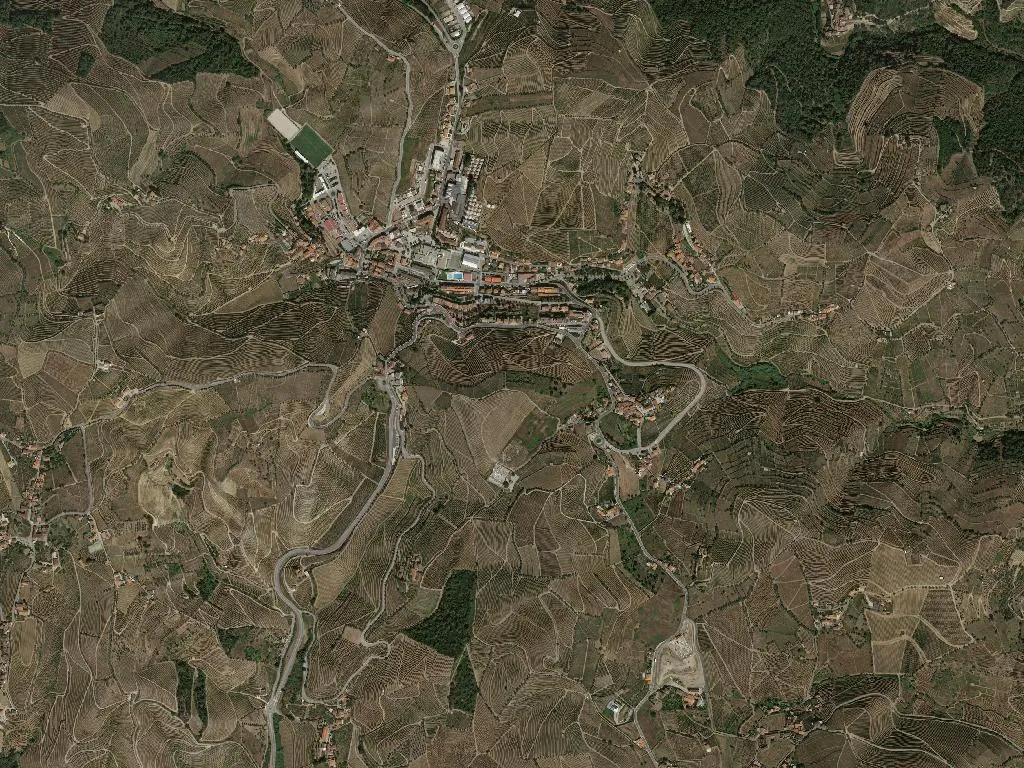
The flagstones drink in the heat of the day and give it back, slowly, like a sigh. On the slopes that tilt towards the invisible Corgo, century-old terraces stitch the hill in ruler-straight lines; the darker crowns of olive trees are the only full stops in a sentence written in schist. This is Lobrigos – São Miguel to the parish council – a settlement that negotiated every square metre with gravity and won, then asked for vines.
Stone that stays
Two buildings enjoy protected status, yet neither shouts. The eighteenth-century parish church keeps its baroque retable and painted ceiling, while granite cottages simply carry on being lived in. Chapels the size of sitting rooms still receive candles on Saturdays; threshing floors shaded by stone eaves double as evening card tables. Heritage here is not a plaque, it is a roof that does not leak.
Wine that stains the fingers
Altitude and aspect conspire to give the grapes 28 degrees of potential alcohol when the sun is right, and the sun is often right. On gradients where tractors tilt like drunken beetles, fruit is cut by hand, carried in wicker, then trodden in stone lagares whose walls darken each September with the indelible ink of Touriga Nacional. Old, ungrafted vines yield thimble-sized berries; their juice becomes the generous red that once supplied London’s Port lodges and now fills the glasses of anyone who turns up at the Adega Cooperativa in neighbouring São João for a Saturday tasting.
The table follows the calendar: thin slices of IGP Vinhais ham, new olive oil that catches the throat, kid roasted over vine-prunings, potatoes the cook lifted ten minutes earlier. Refinements are restricted to the salt cellar.
Feast that re-opens doors
On the last weekend of June São Pedro is honoured with paper arches, marigolds and a brass band whose tuba has seen better decades. Rockets scatter the village dogs; the procession inches uphill while ex-residents fly in from Paris and Neuchâtel. Houses sealed since Christmas are suddenly wide-eyed, linen flapping on wrought-iron balconies like surrender flags. By midnight the churchyard is an open-air sitting room, grandparents dancing with toddlers under a sky bruised with fireworks. No one is performing; the village is simply checking it still recognises itself.
Time that leaves outlines
Lobrigos shares the demographic cliff of Portugal’s interior: 226 citizens over sixty-five, 84 under fourteen. Empty nests grow larger with each death; vegetable plots quietly revert to scrub. Yet seven small guesthouses – stone tanks converted, haylofts glazed – now host walkers following the 5-km Laurentim loop and cyclists tracing the Corgo valley. They come for silence broken only by bee-eaters, for the moment when the lowering sun sets schist walls on fire and the terraces glow like stacked copper plates. At 293 m the air is clear enough to count every ridge until the Marão dissolves into dusk, and the river you cannot see reminds you it is there by the coolness on your skin.