Full article about Rio Torto: scent of thyme above a crooked river
Rio Torto (Valpaços, Vila Real) offers thyme-scented air, medieval chestnut terraces and Transmontana feasts in Portugal’s quietest corner.
Hide article Read full article
The scent arrives before the river does: a cool ribbon of moisture lifting off dark schist, braided with the resinous snap of thyme and rosemary that colonises every stone wall. Then the water appears, coiling so tightly through the valley that locals simply call it Rio Torto—Crooked River. There is no straight line here, only granite bluffs, terraced vineyards and the sense that everything is clinging on.
Ten hectares each
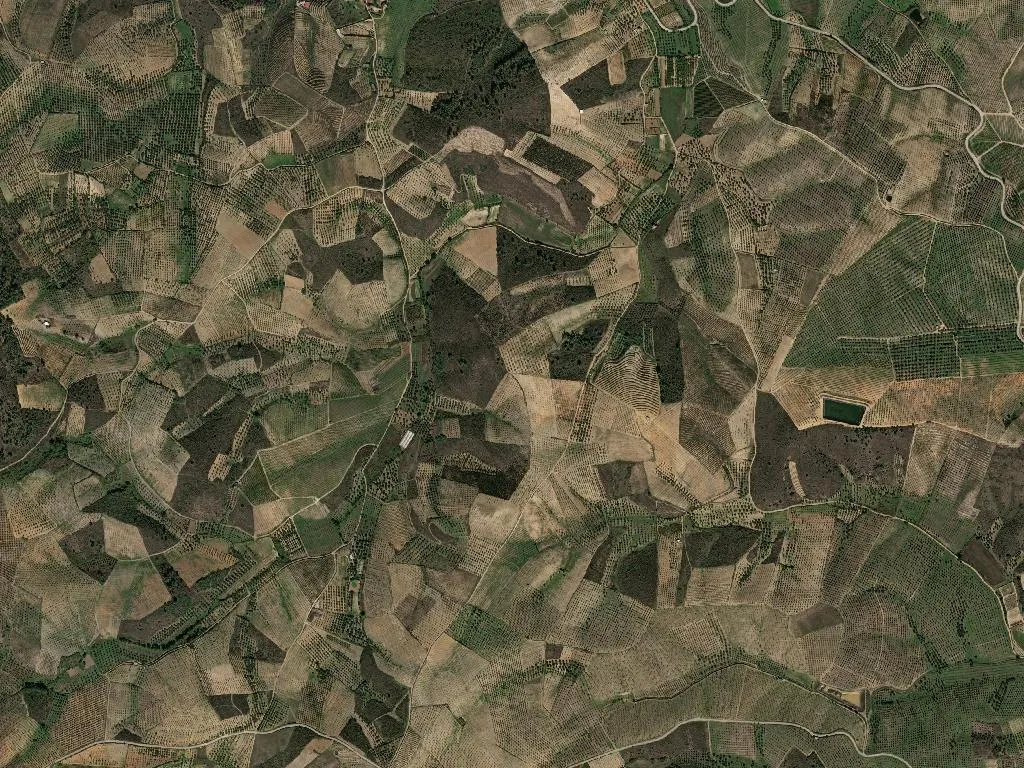
Rio Torto’s 284 souls occupy just over 3,000 hectares, one of the lowest population densities in Alto Tâmega. Do the arithmetic and every resident has the equivalent of fourteen football fields to themselves. The space is parcelled into medieval chestnut groves, olive plots whose fruit is crushed in stone presses, and south-facing amphitheatres of vines first planted in the sixteenth century. Formal incorporation into Valpaços came later, in 1856; the economy has always been whatever the granite soils will allow—dry-land cereals, olives, wine and the region’s famed chestnuts.
A 200-metre drop in eight kilometres
The river is born on the ridge and falls almost 200 m in little more than eight. That gradient once powered a chain of stone mills; their leats still tunnel through bracken and moss, though the paddles have long seized up. In August the flow shrinks to a silver thread; after January storms it runs the colour of iron oxide, staining the banks a raw, Martian red.
A table without shortcuts
Transmontana cooking is archival rather than inventive. Oak-grilled Maronesa beef, roast kid with Trás-os-Montes potatoes, fresh Terrincho sheep’s cheese drizzled with Terra Quente honey—the dishes are a roll-call of protected origins. At Easter the Folar de Valpaços appears, a saffron loaf layered with cured meats, while Vinhais hams cure for eighteen months in smokehouses scented with holm-oak and chestnut. Time is measured in seasons, not minutes.
Harvest between slate walls
September light flickers across tractor baskets as neighbours hand-pick parcels too steep for machines. Grapes—Viosinho, Gouveio, the thin-skinned Bastardo—are hauled to granite lagares where altitude keeps acidity bright and schist imparts a gun-flint edge. From the municipal road the terraces look like toppled bookshelves, each shelf holding a single vine, an olive, a chestnut. Holm-oaks and cork-oaks stand in the margins, unbothered by the continental winters that can plunge the valley to –8 °C.
What lingers after you leave is not human at all: wind threading the leaves of Portuguese oak, water gossiping round boulders, the faint, crushed-citrus note of rosemary underfoot.