Full article about Smoke, Stone & Chestnut: Santa Maria de Emeres
Chestnut groves, schist chimneys and honeyed chouriço in Valpaços’ hill parish
Hide article Read full article
Smoke, Stone and Chestnut Geometry
The plume rises dead-straight from the schist chimney, carrying the resinous bite of chestnut logs and the caramel note of ham curing in an outbuilding. February in Santa Maria de Emeres: frost feathers the granite cross in the square, yet sunlight is already warming the stone terraces that stitch the slope above the Ribeiro de Emeres. Locals are laying out trestles for the annual Festival of Smoked Meats and Honey — disks of wine-dark chouriço, obsidian salpicão dusted with paprika, jars of Terra Quente honey the colour of burnt amber. At 501 m the air still nips, but the day smells of hardwood smoke and pig fat: a Trás-os-Montes larder in winter.
The arithmetic of chestnuts
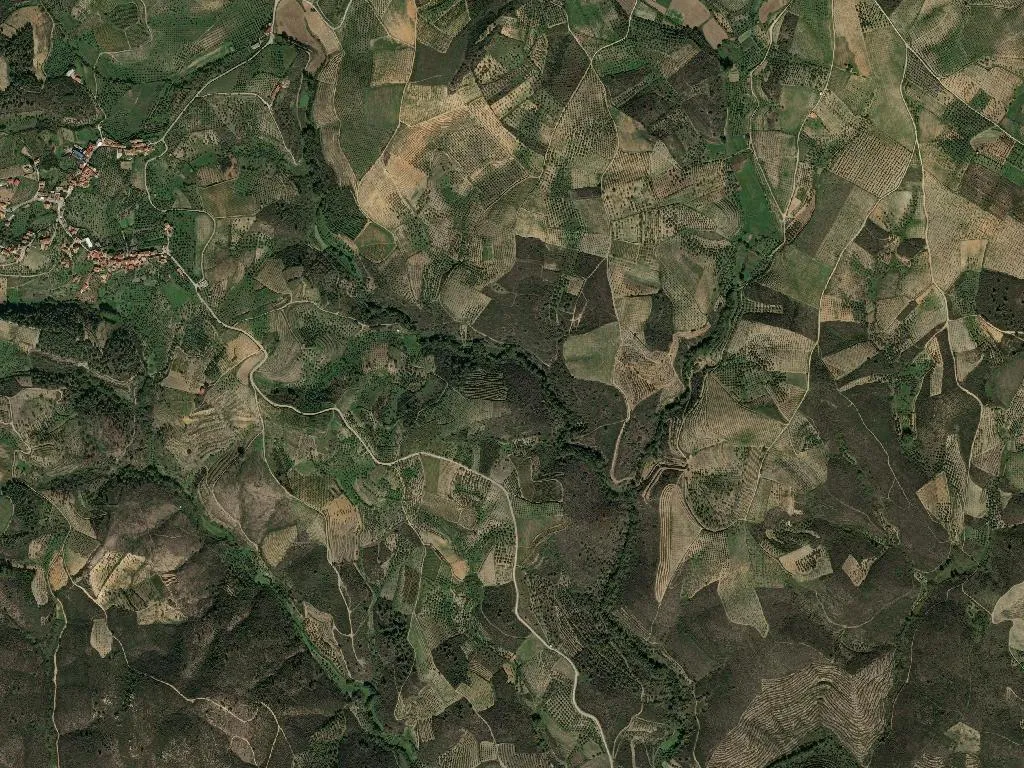
Barely 311 souls live here, yet the parish keeps roughly 120 ha of centenary chestnut groves — one of the densest stands in the Valpaços municipality. Come October the Souto da Malhada and Souto da Ribeira paths glitter with split burrs and rust-coloured leaves. The signed Chestnut Route — a seven-kilometre loop linking Emeres to the hamlets of Vilar and Cimo — threads dry-stone walls sprouting gum cistus and Spanish broom, and passes timber granaries blackened by centuries. In Vilar a four-bay communal granary survives, its padlocked compartments evidence of a time when harvests were pooled and rationed.
Until the 1960s two itinerant stills toured these villages, turning grape pomace into bagaço brandy; the carts are gone, but bottles of old-vine aguardente still appear at baptisms and saints’ days, poured from hip flasks with the gravity of sacramental wine.
Granite, water and August brass
Emeres’ 17th-century parish church squats at the village core — single-nave Mannerist-Baroque with a carved gilt retable and a bell tower that throws the hour across the valley. The first systematic description of the place came from parish priest João de Mesquita Pimentel, whose 1906 monograph “Memórias de Santa Maria de Emeres” is still quoted in the council archives. A century later ethnologist António José Pires mapped the footpaths and restored the stone watermills along the Emeres stream. When I walked there last spring the channel was biscuit-dry, but locals insist that after heavy rain the wheels still grind rye and maize as they did for their great-grandparents.
On 15 August the romaria hauls in brass bands and concertinas, a procession shouldering Santa Maria through lanes perfumed with rosemary smoke, and a fair where formigo — a fudgy mix of honey and walnuts — is sliced from wooden trays. Easter Monday brings the Círio de Emeres: pilgrims climb the lane from the main road on foot, keeping a vow their grandparents made for them in utero. Think of it as the village equivalent of the pub everyone still uses even though the craft-coffee crowd has arrived downhill.
What lunch sounds like
Kid goat crackles in a wood-fired oven until the skin blisters like thin toffee. Terrincho DOP lamb braises with chestnuts that collapse into the gravy. Valpaços-style pork nuggets arrive in a clay pot with IGP Trás-os-Montes potatoes — waxy, yellow, able to hold their shape after three hours’ simmer. The local folar, an egg-and-cinnamon loaf, is torn open while still too hot, releasing a plume of saffron steam. In the cellar, wheels of Terrincho DOP hard cheese sweat gently next to garlands of alheira, wine-tinted chouriço and paprika-dusted salpicão. When the sun drops behind the chestnut canopy and the temperature falls, blackbird song ricochets across the terraces. No one checks a watch; they wait for the bell and for the chimneys to resume their upright columns of smoke.