Full article about Veiga de Lila: smoke, silence & Maronesa beef
Cradled in granite, Valpaços hamlet breathes woodsmoke, ageing stone and shared oxen pastures.
Hide article Read full article
Smoke rises like breath
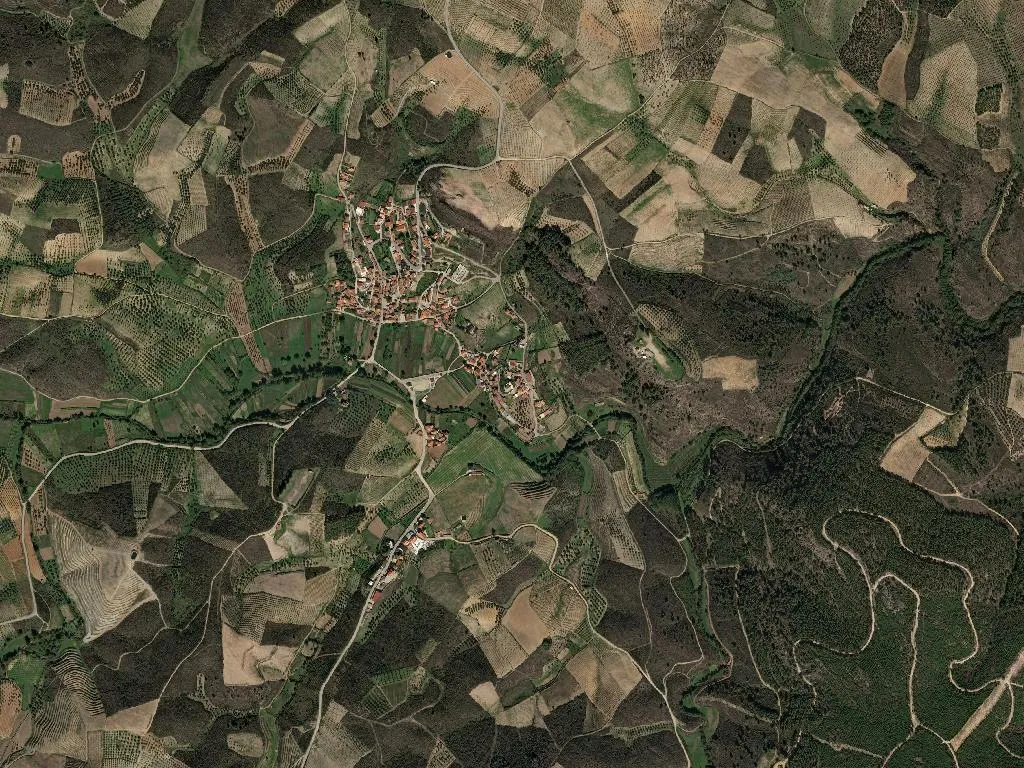
At half-past nine the chimneys exhale a thread of smoke so thin it dissolves into the pewter sky before it clears the ridge. The sun is still stuck behind the granite hump that shelters Veiga de Lila from the northern wind, and the air carries more than woodsmoke: damp oak leaf, the crackle-crust of rye bread Amélia has just raked from her wood oven, the morning dampness on António’s jacket after he walked to the chapel spring and came back jewelled with dew. Two hundred and thirty-three souls, if you insist on census arithmetic, yet villagers count differently—“twenty-odd houses still breathing” and “the rest with shutters bolted year-round.”
Geography of ageing
The cradle in Dona Guida’s loft has done service since 1953; today it rocks two infants, yesterday none. Turn sixty and you graduate to the stone bench under the wayside cross, watching the lane where harvest tractors once queued like pilgrims. After year-twelve the boys leave for Braga, Porto, a cousin’s garage outside Lyon; those who return speak with hybrid accents and park SUVs whose wing mirrors brush both sides of the lane their mothers never vacate.
Larder of smoke and ember
Vinhais ham is never bought—it is given. When your ceiling hook snaps under winter’s load of pork, you borrow the neighbour’s, return it with a slice fat as goodwill. Carne Maronesa beef arrives from the communal scrubland of Vilar de Nantes in exchange for a bottle of bagaço and the unwritten promise to help round up stray oxen at October’s fair. Genoveva’s folar loaf needs no Easter: she bakes it for her own birthday, slashing the top so her Lisbon granddaughter can pour melted butter into the crater and taste cheese that actually tastes of something. João Zé tests Terrincho DOP cheese by pressing his thumb into the centre; if the paste sighs shut slowly, the batch is ready for the cloth-lined box.
The weight of empty hectares
The parish files say 1,400 hectares; locals measure by ox-time and memory—“the Cabril slope,” “the knoll where father sowed rye,” “the flat no one ploughs since the donkey died.” Plots are paced out in round trips of a yoked pair: “two goes and half a return.” Trás-os-Montes potatoes are sown under an April waxing moon; they come up after Michaelmas when the skin no longer slips under a thumb-nail and a driven nail stays put.
Where the everyday holds the line
The day begins with the first car tyres hissing round the bend of the “new road”—so called although tarmac arrived in 1998. At seven-thirty Lambisqueira’s café unbolts its swollen door; the scent of espresso collides with the manure Orlando has been flinging since five. The bank’s white van turns up only on Mondays, the nurse on Wednesdays, sliced bread on Fridays; crusty coscido, though, is daily duty, fetched from Seara in a linen sack still warm from the wood oven. When the sun drops behind the shut primary school, the granite cross turns gilt and the first dog barks at its own echo—someone coming down from the threshing floor with a hoe on their shoulder and mental arithmetic of fertiliser costs.
Night-time, the only bulb visible from the hill belongs to Dona Alda’s kitchen: she coaxes flame from a kerosene lamp into the stove mouth, then smothers it with a saucepan lid the way her mother taught her. Up the chimney drifts the same thin cord of smoke, too fine for wind to fray. That is how you know Veiga de Lila is not a map dot but a slow communal inhale that still warms whoever stays to feel it.