Full article about Bragado: granite silence, smoke and Maronesa beef
Bragado, Vila Pouca de Aguiar: 643 m silence, Maronesa beef, baroque gilt and a village ledger that fades faster than the morning mist.
Hide article Read full article
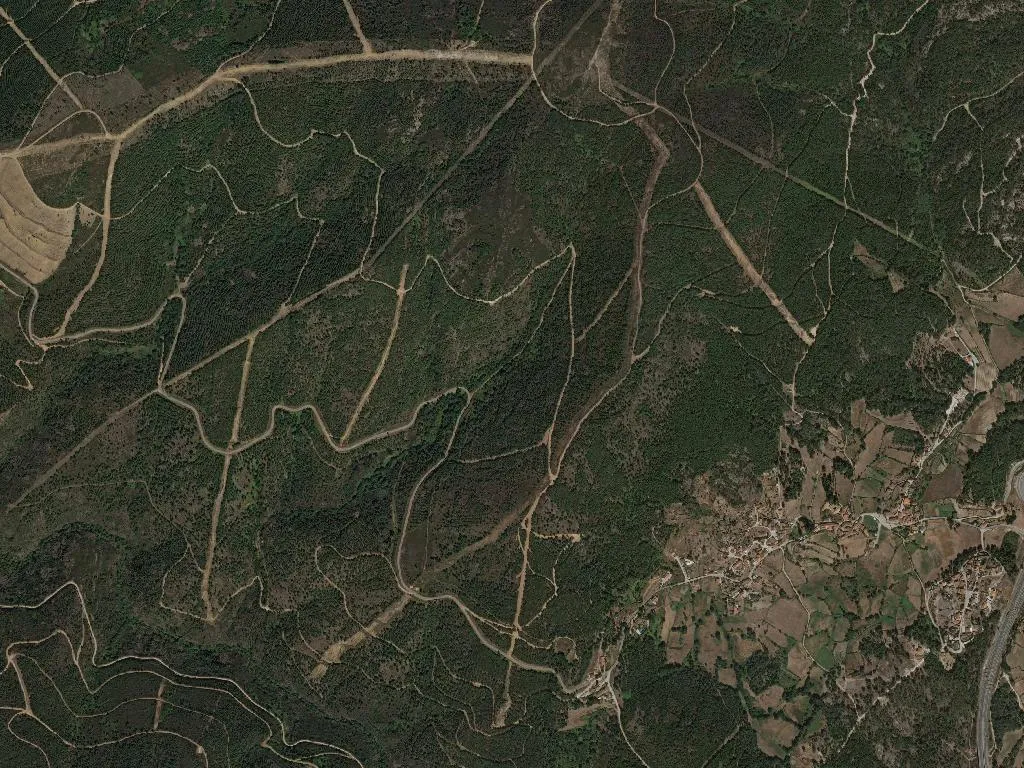
The mist rolls downhill and settles in the valley as if it has no intention of leaving. At 643 m, Bragado’s air carries a damp chill that slips through seams and buttons, forcing you to pull your coat tighter. Silence is the default setting: only the far-off bark of a dog and the wind worrying the leafless oaks disturb it. In the single-lane streets, morning dew polishes the granite of abandoned cottages until it gleams like obsidian.
Four-hundred-and-forty-six souls now occupy these 26 km² of Trás-os-Montes. Open the parish ledger and the arithmetic is brutal: 28 under-30s, 196 over-65s. The 1991 census listed 227 dwellings; today barely 180 are still lived in. Yet the houses that hold out keep their rhythms: woodpiles stacked breast-high by the door, a thin ribbon of smoke unspooling from the chimney, the sweet-pepper tang of curing chouriço drifting from an outbuilding.
What the plate still holds
Up here gastronomy is not heritage branding—it is the art of staying alive. Carne Maronesa DOP, rust-red and shaggy, grazes the water-meadows surrounding the village; the breed’s intramuscular fat tastes of heather and winter. Cabrito de Barroso IGP and Cordeiro de Barroso IGP appear only on high days, slow-roasted in wood-fired ovens until the skin bronzes and crackles. Honey from the same Barroso heather arrives in rough-cut comb, its bitterness offset by rock-rose and gorse aromatics. And there is always the potato—Batata de Trás-os-Montes IGP—boiled in its jacket until floury, a texture that only altitude and night frosts can engineer.
Granite and gilt
Inside the 18th-century Mother Church the entire east wall is claimed by a gilded baroque retable. Local carvers gave their angels cracked wings but serene noses; candle soot has gilded them further. Across the square the tiny chapel of São Sebastião, listed since 1982, keeps its baptismal register in a calf-bound volume that opens in 1723. The same surnames—Pereira, Gomes, Fernandes—reappear on the graves just outside, a loop of ink and stone that four centuries have not broken.
One weekend of noise
Come late August the parish council stages the Festa da Vila e do Concelho. For forty-eight hours the streets shrink under crowds, grills exhale fat-laden smoke, and pimba music ricochets off granite. It is the annual parentheses: conversation regained, cousins recognised, white wine poured until glasses cloud. Then Sunday midnight strikes and the hush returns, as though someone has turned off a switch.
Afternoon light slants across the façades, stretching shadows down the uneven pavement. Somewhere a hinge squeals. A single plume of smoke rises, straight as a ruler, until it dissolves into the grey Atlantic sky. Bragado does not ask for hurry—only that you notice the weight of what remains.