Full article about Soutelo de Aguiar: smoke, stone & silence at 753 m
Oak-smoked chouriço drifts above terraced potatoes and empty mills in Vila Pouca de Aguiar’s highest
Hide article Read full article
Smoke at 753 metres
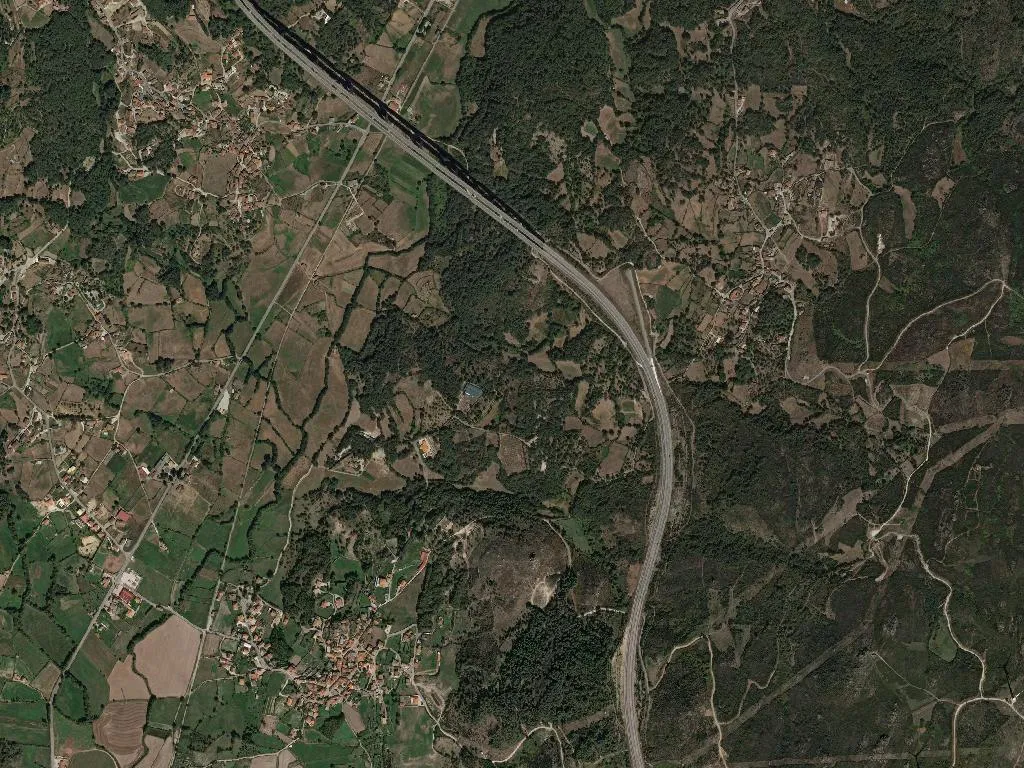
The curing house is alight, oak logs hissing beneath their cargo of chouriço and ham. White smoke slips through the slates, drifts downhill and merges with the dawn mist that pools between oak and chestnut. At 753 m above sea level, Soutelo de Aguiar wakes reluctantly, its 602 souls spread across 17.4 km² that were prised from granite and negotiated with gravity. Look north-east and the Serra do Alvão rises like a wall; turn south-west and the Serra da Padreira blocks the sky. Every field is a terrace, every lane a contour line.
The name is a fragment of empire: subtel(l)um, a Latin tag for a dependent smallholding, first attached to the medieval terra of Aguiar de Pena, recorded while Portugal was still inventing itself. No royal charter was ever issued here, yet 12th- and 13th-century royal writs that reorganised the surrounding country survive in the landscape—splitting rights to water, carving inheritance lines that still decide whose wall is whose.
Stone, wood, silence
The parish’s only National Monument is an 18th-century stone cross whose exact date even the council archivist will not wager. It shares a spur of grit with the chapel of São Sebastião, a waypoint on the old footpaths that stitch Soutelo to the hamlets of Vreia de Bornes and Valoura. Dry-stone walls hem the lanes; above them, terraces planted with the region’s IGP potatoes feather the slope. Maronesa cattle—chestnut-coloured, lyre-horned—graze the high meadows, their bells the loudest sound for miles. Oak gives way to chestnut, the Ribeira de Soutelo scribbles a border through the valley floor, and every property gate carries two padlocks and a surname older than the Republic.
Demography is brutal: 205 residents over 65, 62 under 14. Density is 34 people per km², which translates into long horizons and roofs without television aerials. Communal threshing floors stand empty, watermills are locked, yet the smokehouses still work, the September grape harvest still fills the lagares, and every morning at seven Zé do Cafezinho pulls the steel shutter of his one-room bar and pours António do Cacho’s first bica, a ritual three decades old.
What the mountain puts on the plate
Altitude and grass do the seasoning. Cabrito de Barroso IGP kid is roasted over vine embers or simmered in chanfana, the clay-pot stew darkened with red wine. Cordeiro de Barroso IGP—milk-fed lamb—appears as both Sunday joint and winter broth. Carne Maronesa DOP, from those auburn cows that summer above the clouds, thickens the transmontano boiled dinner: shin, ear, blood sausage and the local stoned potatoes that drink the broth. Presunto de Vinhais IGP or its darker cousin Presunto Bísaro de Vinhais IGP is sliced translucent and served with rye-corn broa and a glass of tannic red. Finish with Barroso DOP heather honey, spooned over papos de anjo—a yolk-heavy pudding—or brittle cavacas biscuits.
There are no restaurants on TripAdvisor. Instead, telephone Dona Amélia two days ahead and she will cook salt-cod baked with cornbread crumbs in her own kitchen. On Saturday nights Júlio opens his front-room tavern and ladles chanfana into unglazed bowls, washing it down with wine from his father’s backyard vines. Outside the annual Festa da Vila e do Concelho—a roaming fair that unites all fourteen parishes with processions, brass bands and basket stalls—you need an introduction. Ask in the village shop: Teresa keeps the ledger of who presses olive oil, who still dries maize in the communal granaries.
Beyond the dotted line
Soutelo de Aguiar is absent from Unesco lists, geopark brochures and official Santiago routes. No kayak-rental kiosks puncture the riverbanks, no way-marked MTB loops circle the crests. Since 2021 the parish has carried a subtler distinction: it is the only one of the municipality’s fourteen governed by the Socialist Party, a lone red flag among thirteen Social-Democrat parishes. “We have always rowed against the current,” the parish council chairman shrugs, half-smiling.
The single registered guesthouse has two rooms; guests arrive after agreement, not after impulse. Walk the oak tracks and the soundtrack is your own footfall, the cold wind combing the ridge, and the chapel bell counting the hours down in the village. Behind you the curing-house smoke still rises, white against granite grey. The mountain is not a backdrop here; it is a set of lungs. You climb on an empty stomach, and at the top the world is suddenly small enough to cup in your hand.