Full article about Tresminas: Roman gold seams still drip with time
Walk the Empire’s bullion tunnels, taste smoked kid and August waltzes in Vila Pouca de Aguiar
Hide article Read full article
Buried gold, exposed memory
The Roman gold works at Tresminas never quite fell silent. Duck through the padlocked gate and the air drops ten degrees. Water, channelled here from a 20-km network of Roman aqueducts, still trickles down the walls; pick-holes look wet-edged, as if the legionaries clocked off minutes ago. Forty metres below the heather you can walk the Alargamentos gallery, helmet brushing quartz dust that glitters like caster sugar. Between AD 50 and 250 this was the Empire’s bullion safe, yielding enough gold to mint 12 million aurei; spoil heaps the size of small suburbs remain.
Work resumed in 1953. Every dawn men hiked in from Ermelo and Rebordelo, carbide lamps swinging, to coax the last grains from stopes the Romans had judged too poor. They brought a field generator, a German jaw-crusher now seized with rust, and electric bulbs that turned Maria da Cunha’s kitchen window into a Christmas crib all year. When the price of gold stalled in 1970 the adits were abandoned mid-shift: tramlines stop at a rock face, lunch tins still on the bench. The silence that followed is the one you hear now when the wind drops and even the buzzards quit circling.
Stone, carving and procession
The parish church smells of beeswax and 18th-century cedar. At 18:30 on a summer evening the gilded high altar seems to ripple as sun slants through the clerestory; cherubs appear to inhale. On the weekend nearest 24 August the square outside is raked level for São Bartolomeu’s fair. Chestnuts roast over diesel-drums, aguardiente is ladled from aluminium kettles, and a three-row diatonic accordion plays a waltz that remembers the mines’ pay-day. Between songs the whole village holds its breath; only a dog barking down towards the River Olo reminds you the world hasn’t stopped.
Smokehouse, oven and clay bowl
Zé Mário fires his wood oven at 05:00. The kid must be Barroso IGP, milk-fed and no heavier than eight kilos; skin bubbles to parchment, bones sweet enough to chew. He binds his bola de carne with yesterday’s alheira bread, kneading in three-day-smoked bacon and the pork that has been buried in rock salt since Monday. Wine arrives in unglazed clay bowls—each one mapped to a knot in the dresser, a story involving a grandfather, a dropped suitcase and a train to Porto. Dessert is heather honey so thick it sags from the spoon like bullion, the same colour as the dust that still leaks from turn-ups when washing day comes round.
Quartz trails and heather
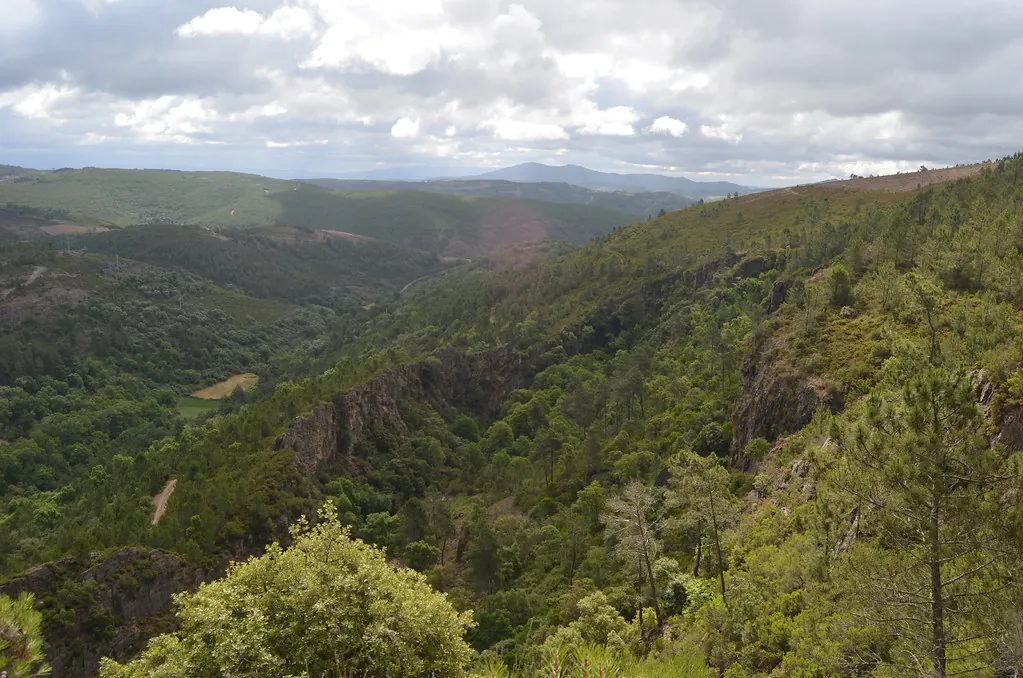
The PR1 way-mark leaves the last house, passes Joaquim’s mastiff (obligatory barking) and climbs into scrub that shifts from slate-purple in January to acid-yellow when the gorse catches spring. At kilometre three an oak stands solitary, its trunk scarred by generations of initials. From here the River Olo is a silver scribble; couples drive up after dark to add their own graffiti in headlamp flashes. The Archaeological Park opens when Aníbal feels like it—knock at the green door and he’ll fetch the key. He handles Roman oil lamps like family snapshots: “That one? Grandma used it for sewing after the war.”
When the sun slips behind the Serra da Padrela the adits blacken, breathing out a chill that tastes of two millennia—quartz, fear, expectation. It burns the throat, stings the eyes, and still draws you back.