Full article about Valoura: granite hush, bell echoing off Padrela
Three hamlets share sun-blessed sundials, roofless mills and August homecomings
Hide article Read full article
Granite mornings and a bell that remembers
Dawn light grazes the 16th-century Manueline cross beside the parish church, stretching shadows across the uneven granite blocks. Inside, the air is saturated with the scent of chilled stone, beeswax and centuries-old timber. Filtered through late-Gothic glass, the sun finds the fifteenth-century statue of Santa Iria: polychrome wood, her ultramarine mantle sun-bleached to the colour of winter sky, gaze resting on empty pews. At nine o’clock the bell swings; the note rolls down the valley, ricochets off the Padrela ridge and returns deeper, slower, as though the mountain itself were replying.
Three hamlets, one watershed
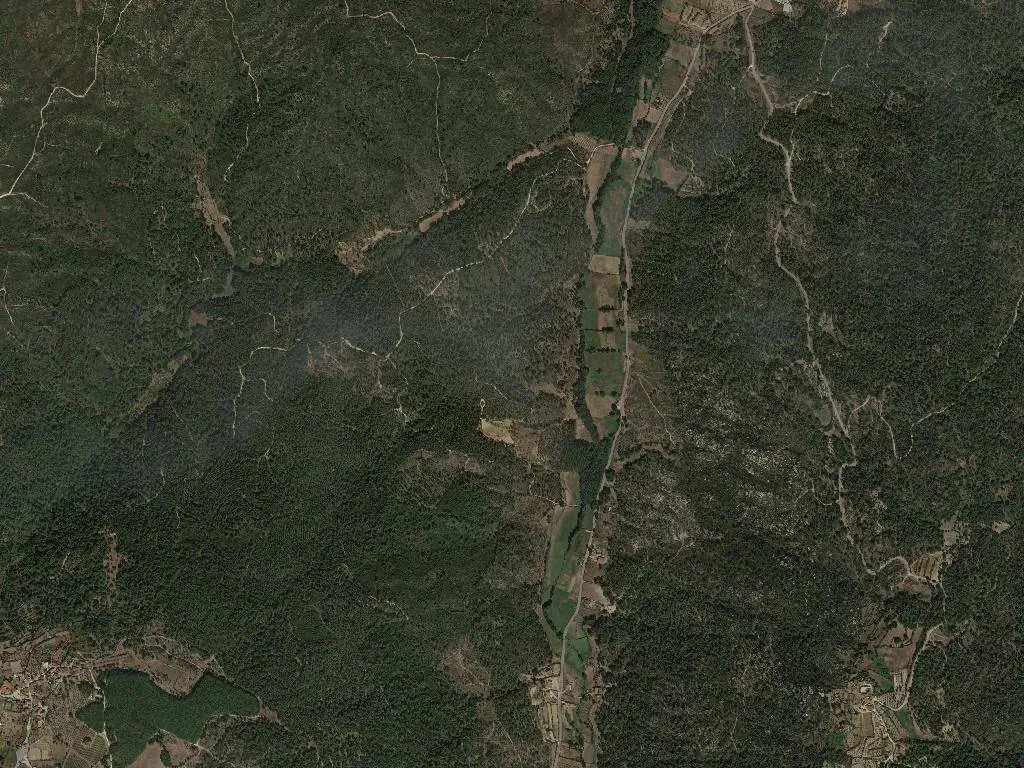
Valoura is really a loose constellation of three settlements – the main village, Vila do Conde and Cubas – stitched together by dirt tracks and run-off streams that sprint down from the Serra de Padrela. Along their courses stand roofless water-mills; some still cradle wooden paddles seized by rust and moss. Granite is the local vernacular: terrace walls, fountains with spouts carved like gargoyle tongues, five scratch-built sundials, one dated 1784 and inscribed Horas non numero nisi serenas. From the tiny chapel of Santa Bárbara above Cubas you look south into the Tâmega gorge – native pine, yellow broom catching the wind, and, far below, the silver scribble of a stream.
The August repatriation
Every August the Festa da Vila pulls back anyone who ever left. French and Luxembourg plates nose along the lanes; accents soften mid-sentence. After Mass under the plane trees, the procession – brass band, banner girls, toddlers in lace – halts at the cross for the outdoor sermon. By dusk the square smells of charcoal-grilled sardines and sugar-cinnamon dough; the DJ cues 1980s pimba hits; children weave between stalls selling hand-woven rye-straw baskets. On 29 October the parish honours its saint again: women from the council bake bolo de Santa Iria, an anise-scented loaf whose recipe is recited, never written.
Sunday lunch, smoke-cured
Sunday means kid goat fired in a wood-burning oven – meat lacquered with garlic, bay and local red, served with small, waxy potatoes that roast in the dripping. Chanfana – goat stewed in black clay with red wine and mountain paprika – demands a wedge of maize broa to mop the sauce. In attic fumeiros hang Vinhais ham and dark Maronesa beef sausages, slow-smoked over oak. At Easter the village folar – a saffron loaf spiralled with cured pork – is handed round after the resurrection service. Dessert is squash jam studded with walnuts, chased by a thimble of aged medronho firewater.
The sandal path
The old footpath from Valoura to Cubas is three kilometres of level granite flagging laid, family lore claims, by grandmothers in leather sandals. It tunnels through ancient chestnut groves, fords ice-cold runnels, skirts a wayside shrine no wider than a telephone box. From the Calvário belvedere red kites tilt over the valley; the silence feels mineral, as though the quartz in the rock were absorbing every sound except the wind combing the pines.
Back inside the church the Gothic saint keeps her vigil, hands folded on a chest darkened by seven centuries of fingertips seeking intercession. Approach and you can see the polished grooves where generations have touched the hem of her cloak – the slow sculpture of devotion.