Full article about Vreia de Jales: granite hamlet where wind writes the hours
At 833 m, pine-scented air carves Maronesa beef, marble potatoes & midnight rancho brass
Hide article Read full article
The silence has mass
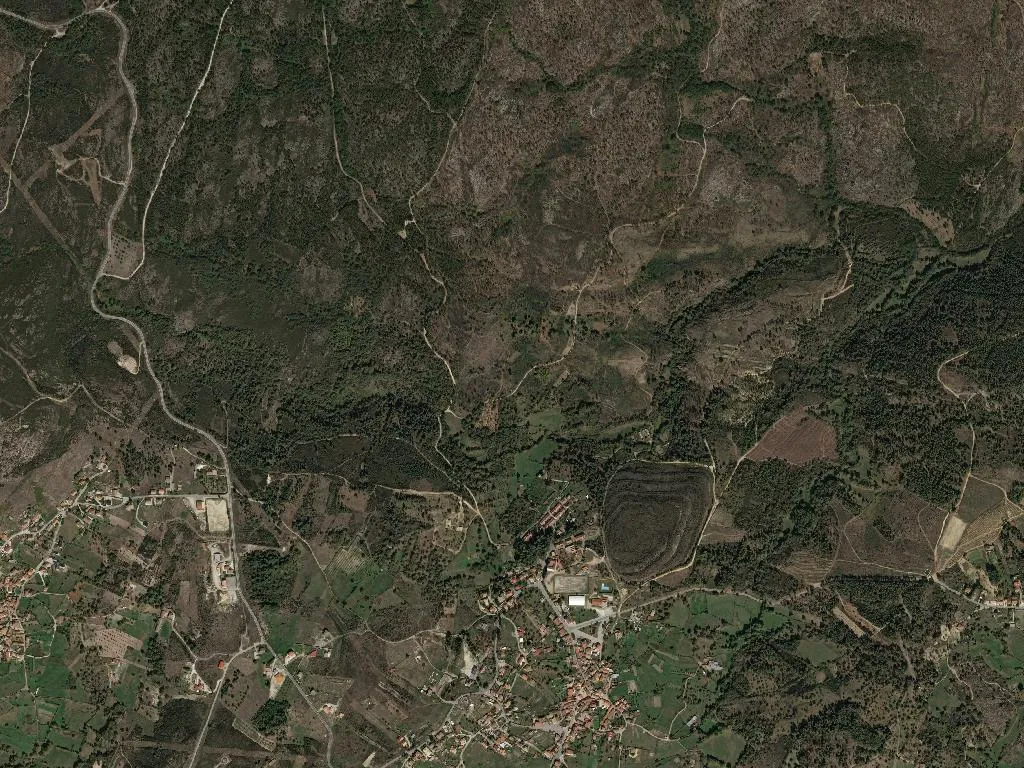
Climb to 833 m on the narrow N312 and the car radio stutters—static sparked by the clash between valley moisture and the high, bone-dry air of Vreia de Jales. Your sinuses tighten; your voice slips half an octave. Granite cottages the colour of weathered pewter appear to have germinated from the slope itself, their eaves angled to deflect a wind that always arrives from the same north-west bearing, smelling of pine resin and, in late May, rock-rose.
Winter moves in during the first week of October and does not relinquish the Serra da Padrela until Easter. Walls are a metre thick; indoors, the bread Genoveva fetches at dawn is still warm from the communal wood oven. In the smoke-house a Bisaro ham exhales slowly, shedding five hundred grams of water each month until, by June, it is mahogany-dark and whisper-thin.
What is served
There is no menu—only what the pot contains. Kid goat spends the night bathing in António’s own white wine (a dozen litres of Esgueira grapes, just enough to cover the joint) before entering the bread oven. Maronesa beef needs no sauce; the animals have walked every contour of these hills and flavour is already stitched into the fibre. The yellow Trás-os-Montes potato—size of a child’s marble—cracks open to release a plume of summer that has been stored intact since harvest. After six months over the hearth, Vinhais ham is sliced so thin it coils like parchment. Heather honey, almost black, refuses to slide off the spoon; gorse does not give its flowers for nothing.
One weekend when the village swells
On the Saturday closest to 15 August the population doubles. Mercedes with Zürich plates nudge vans still dusty from the Alentejo as sons and daughters who left for Geneva or Barreiro reverse up narrow lanes. Caldo verde steams in copper cauldrons at midday; by three in the morning the rancho brass band is still pumping out ‘Verde Gaio’. When the final trumpet fades the silence is so abrupt it rings, and the scent of fried dough lingers on your jumper all the way back to the coast.
What remains
No road signs point here; no souvenir shop sells fridge magnets. Instead there is a bandstand without a band, a spring that really does run, and a café whose opening hours depend on whether Zé feels like walking downhill to unlock it. Hiking the cobbled path to Cerdeira you hear only the dry knock of a hatchet on oak and the hiss of your own trainers on quartz grit. Night drops like a blind; stars arrive so low they seem to balance on the chimneys. Inside, the fire spits pine resin; outside, the wind carries tomorrow’s scent of woodsmoke and the faintest memory of a gold mine that once rattled these hills but now gives only mineral silence.