Full article about Aldeias: bell at seven-thirty, goat smoke by noon
Aldeias, Armamar, Douro: hear the early chapel bell, taste DOP chestnuts, join the 15-August romaria of roast goat and vinho verde
Hide article Read full article
The chapel bell rings half an hour early
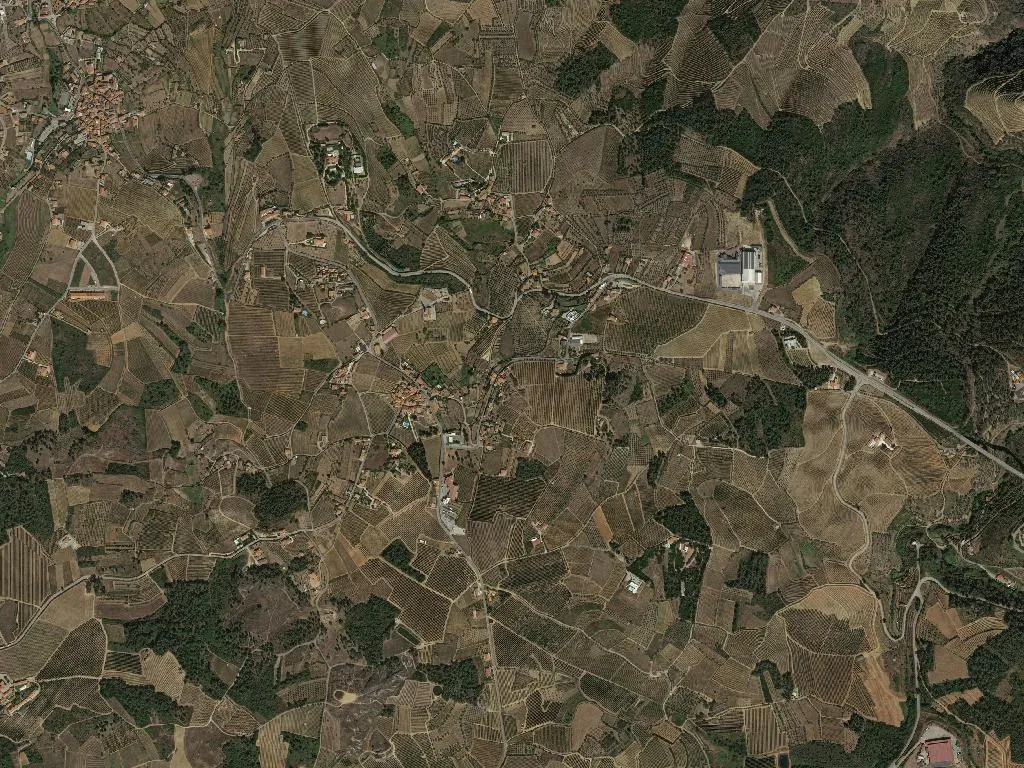
At seven-thirty sharp—not eight as the guidebooks claim—the bell of Piedade chapel chips the silence, ricocheting off granite doorsteps burnished to the colour of sponge cake. Aldeias hovers at 608 m, and the air arrives in two distinct notes: parched vineyard earth after the burn-off and the ghost of olive-wood smoke still drifting from bread ovens. Officially 307 souls live here, yet in late summer the dogs outnumber the human voices.
Three pilgrimages for three hundred people
Only one really matters: the Romaria da Piedade, the Sunday after 15 August. Four men shoulder the painted Virgin, calibrated at exactly twenty-eight kilos—measured once after three beers and filed away for ever. They pause at Fonte Nova bend to tighten the leather strap and drink; the faithful behind light cigarettes and whisper the rosary in fragments. By the time mass finishes, the real congregation is in the yard: kid goat roasted over vine prunings, ice-white vinho verde poured into glasses that leave rings on deal tables groaning like old pews. Expats mortgage holiday days to be here; Zé da Bibi has flown from France every year since 1998 just to haul the statue and let his London-born son ride his shoulders round the square.
A chestnut with its own surname
Castanha dos Soutos da Lapa, granted DOP status in 1996. Your grandmother stored them in three layers of coarse salt inside iron pots, trading a sack for olive oil when cash vanished. October smells of split burrs and singed shell; behind the church Celestino still crushes them with an aluminium boot, then counts the glossy nuts like rosary beads. The sweetness is not literary—less water, more sugar, schist soil and a northern tilt of the slope. Taste one raw and every supermarket chestnut afterwards feels like sawdust.
Aldeias sits inside the Douro wine region, but forget marble tasting rooms. You taste in the field: knock at Quinta do Covão and Sr António appears in crimson washing-up gloves, pours red into a beer glass he was rinsing and asks if you’re free to pick before the weekend—he needs arms, not critics. The port-style wine heads to the Sabrosa co-op; what remains is Christmas-table juice, bottled in one-litre flagons whose plastic caps sometimes refuse to screw straight.
Tracks among stones and hush
No waymarks, only tractor ruts across the terraces. The footpath to Fonte Longa starts at Celeste’s wall—she’s always at the window, dispatching you with a wooden spoon like a homing pigeon. Climb between loose-stone walls, pass the owl shed whose gate swings permanent invitation, and the whole valley opens: the Douro below, a grey satin ribbon, silence so complete you can hear bees working orchards on the opposite bank. At the summit a plank bench missing three slats offers the only shade; whoever arrives first claims it until shirt-dry.
On ordinary days the chapel stays locked with a padlock that last turned in 1987. The forecourt tilts, grasses lick your ankles, yet from the top step you inventory your world: your own roof, Sequeiro’s chestnut grove, the municipal road looping like dropped ribbon, and, far below, the Douro—reason enough for vines to grow on their knees and for no one ever to lift the stones from the path.