Full article about Aricera & Goujoim: Douro terraces at sunset
Hand-stacked vineyards, PDO chestnuts and saints’ processions above 700 m of glowing granite.
Hide article Read full article
Granite that Glows at 700 m
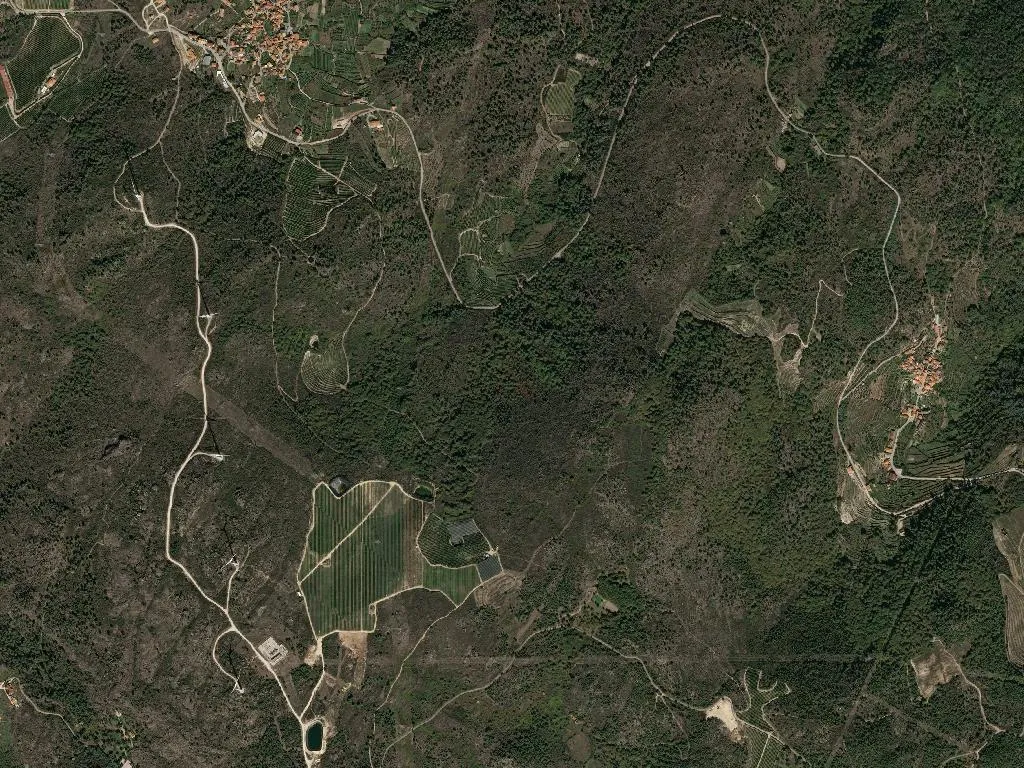
Late afternoon, and the schist walls holding up Aricera’s vineyards begin to glow the colour of burnt honey. From the bench outside Casa da Câmara you look across a laddered mountainside that drops 700 m to the Douro’s slow coils. No traffic, only wind searching for a way through the alleyways and making the few remaining barn doors complain on their iron hinges.
Terraces that Borrow the Sky
These are not the postcard-perfect quintas of the lower Douro. The socalcos here are hand-stacked, mortar-free, barely a stride wide; their vines grow on their own roots, trunks cork-screwed by decades of thin soil and Atlantic storms. Between rows, gnarled apple trees – the mountain cultivars that give Armamar its DOP maçã de cão – flicker acid-green against the shale. The entire slope is a UNESCO-listed palimpsest: every generation has added another skin of stone, another row of Touriga Nacional.
Chestnuts with a Passport
Drop into the sheltered folds on the northern side and you enter the Soutos da Lapa, a micro-valley whose chestnuts carry Portugal’s only Protected Designation of Origin outside the cheese and charcuterie leagues. Come late October the ground is a spiky carpet of burrs; smoke rises from sheet-metal braziers where the nuts are scored, salted and roasted until the shells pop like chestnut-gun salutes. Order a paper cone in the village café and you will be offered a glass of dry Tinto do Douro from a barrel that never sees a label.
Saints who Regulate the Calendar
The parish’s 185 souls still let the liturgy set the tempo. On the last weekend of July they ferry Nossa Senhora da Piedade down from her hilltop chapel to Aricera, the procession timed so the sun sets as the statue re-enters the porch. Two weeks later the Feira de Santiago doubles the population for twenty-four hours: makeshift stalls sell cast-iron pots, hand-tied brooms and bifanas dripping with mustard, while the village brass band rehearses the same march it played in 1953. At dawn somebody is always scrubbing soot from the church steps before the first coffee boils.
Walking without Waymarks
There are no signed trails, only the cobbled carreiros that once took ox-carts to the river. Follow one east and you will pass an abandoned lagar cut into the rock, its granite screw still in situ; follow another west and you reach Goujoim, a hamlet so narrow the village pump sits in the middle of the only street. The sound of your boots alters with the gradient – loose schist, then baked clay, then a sudden cushion of chestnut leaves – and every turning gives the same view framed differently: the Douro, a silver blade far below, catching whatever light the season allows.
At vespers the bell in Aricera’s little lantern-tower tolls a single, flat note. It carries across the terraces, ricochets off the chestnut valley, and finally disappears into the wind that never quite stops moving uphill.