Full article about Cimbres: smoke-house mornings above Viseu
Granite chapels, chestnut terraces and fog-draped vineyards at 740 m in Armamar
Hide article Read full article
Smoke, Stone and Chestnut
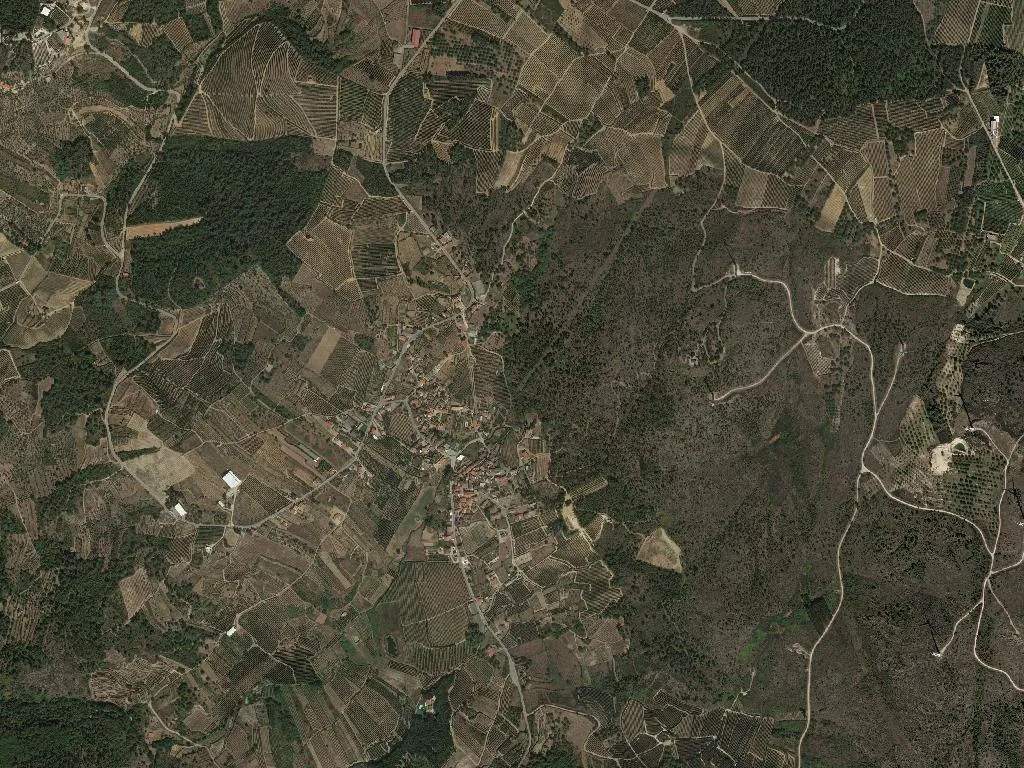
Smoke curls from the stone smoke-house in a slow helix, merging with the valley fog that still clings to the terraces. Behind a granite cottage someone rattles chestnuts across a cast-iron sheet; the toasted scent billows into the cold morning. Cimbres wakes reluctantly, 740 m above sea level, its vineyards stacked like loose staircases and its chestnut groves daubed in dark brush-strokes across the slope. The only sounds are the groan of a wooden gate and the cracked song of a blackbird perched on the 18th-century granite cross that guards the churchyard.
Baroque in granite and gold
The parish church of Nossa Senhora da Assunção anchors the village, its limewashed bulk glowing against the schist roofs. Inside, a gilded carved altarpiece traps the thin light from high windows; cobalt azulejos narrate miracles in silence. Above the settlement a serpentine lane climbs between loose-stone walls to the Mannerist chapel of Nossa Senhora da Piedage, destination for the Quasimodo Sunday pilgrimage. The nave shelters a 17th-century processional cross, its silver dulled by vows whispered into the wind.
The chestnut economy
Here the chestnut is not mere autumn produce—it pays council tax, university fees, winter heating. The DOP-certified Castanha dos Soutos da Lapa grows in the micro-valleys of the Cimbres stream where centenary trees have learned to angle for water. When the husks split in November, women gather the glossy nuts into wicker baskets their grandparents carried from Minho. Later comes Dona Idalina’s smoky chestnut soup in the old olive press, Aunt Alice’s velvety jam, the baker’s dense Friday-only cakes. At winter magustos the fruit roasts on open embers while glasses of jeropiga—fortified grape must—pass between work-roughened hands. Sooty fingers are a badge of honour.
Saints, fairs and a yellow Renault 4
March brings São Gregório and the Blessing of the Fields, when the priest pilots his custard-yellow 4L down from Armamar and the entire parish assembles with laurel branches. September summons Nossa Senhora das Dores followed by the Feira de Santiago: procession meets pop-up market. Helena sells hand-woven rugs, convent sweets are wrapped in glassine paper, and Sr Alfredo—who has never worn spectacles—hand-labels bottles of old bagaceira brandy. Between festivals the calendar is dictated by vines: pruning in frost, purple-footed treading in the communal lagar where João still works barefoot like his father.
Unmarked paths
There are no way-marked trails, yet the veredas exist—compacted earth ribbons linking chestnut to vineyard, chapel to stream. They begin behind Sr Domingos’s house where the wall has gaped for a decade, drop to the irrigation channel where women still scrub tablecloths in August. Walkers who find them cross golden terraces at sunset, hear water murmuring in stone conduits, spot black-capped tits in the gorse. On clear days the Marão ridge scissors the horizon, reminding you that the world continues beyond these 607 hectares and 270 souls—everyone, incidentally, knows the name of Toninho’s dog.
The last smoke-house sighs out at dusk; the scent of chestnut wood lingers in the freezing air, braided with the mossy perfume of wet stone. Cimbres does not impress itself as a postcard, but as an aroma that clings to coat and skin—physical proof that you stood between granite and chestnut, where the Douro is still measured in altitude and silence.