Full article about Fontelo: chestnut woods above the Douro hush
Follow leaf-scented tracks to springs, stone terraces and DOP chestnuts in Armamar’s sky-high hamlet
Hide article Read full article
Afternoon light, leaf mould and a village that keeps its own counsel
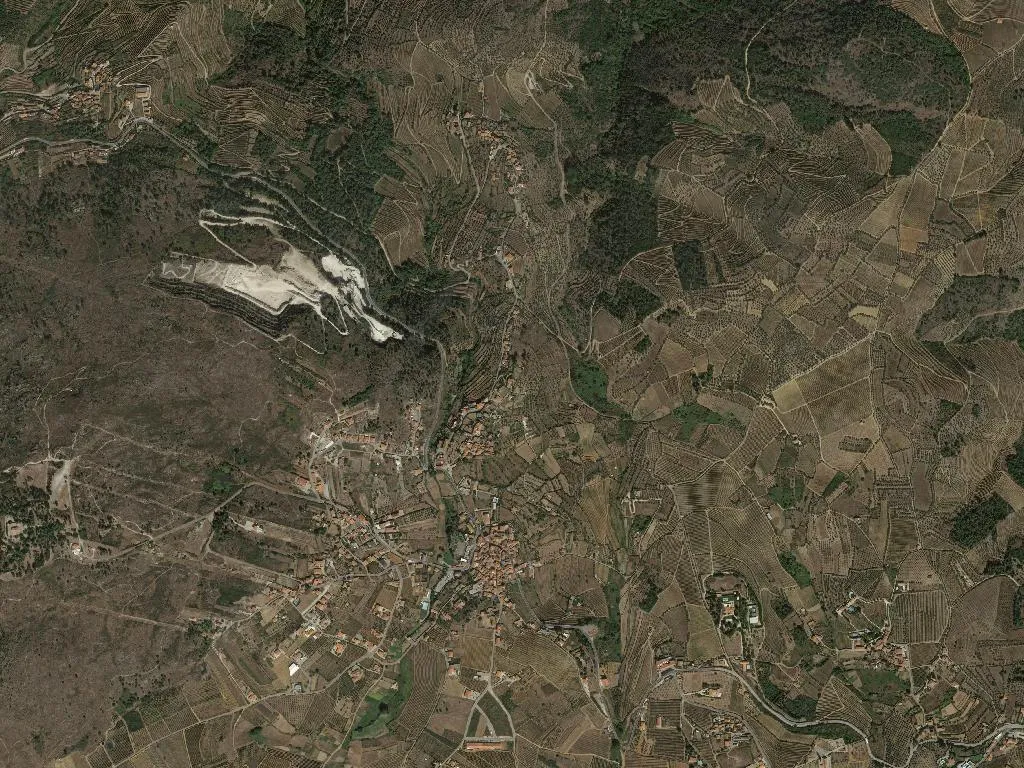
The sun drops low enough to rake the chestnut canopy, sliding gold across the compacted earth of a track that zig-zags between terraces. A smell of dry leaf and bark – somewhere between cigar-box and burnt honey – hangs in the air, the signature scent of ancient soutos that have outlived most Portuguese dynasties. At 532 m above sea level, Fontelo feels closer to the sky than to the Douro River glinting 12 km away, yet every slope here tilts imperceptibly towards the granite gorge that defines the region. Six-hundred-and-two residents, the last census insists, though you will meet more chestnut husks than people on an October afternoon.
Springs that named the place
The toponym is bluntly literal: fonte – spring – and the suffix -elo, affectionately diminutive. Ice-cold water still seeps from schist fissures above the village, the same aquifers that persuaded 12th-century smallholders to shoulder aside broom and heather and plant the first terraces. No castle keeps or crusader tales survive; instead, the Middle Ages live on in the dry-stone walls that stitch the hillsides, each one laid without mortar yet still holding after eight centuries of frost and summer drought. Fontelo lies just outside the UNESCO core of the Alto Douro Vinhateiro, but its south-western exposure and poor granitic soils earn it a supporting role in the Port-wine story: rows of Touriga Nacional and Tinta Roriz supply the lagares of nearby Quinta da Pellada, whose vintage Ports quietly collect silver at the International Wine Challenge.
A chestnut with a protected postcode
If Port is export glamour, the Castanha dos Soutos da Lapa DOP is domestic treasure. The denomination covers only 14 parishes straddling the Viseu–Guarda border; Fontelo’s century-old trees are its ambassadors. Come late October the ground clicks underfoot with spiny ouriços; split them open and the nuts show the DOP hallmarks – mahogany sheen, 30 mm+ calibre, flesh that stays firm after roasting. Families still harvest with cane rods and hessian sacks, grading beside the woodshed so the wood-smoke mingles with the sugary steam. The chestnut appears at every latitude of the local menu: roasted in embers and eaten with aguardente, stewed with winter cabbage and chouriço, or puréed into a fondant that props up a wedge of Serra da Estrela sheep’s-cheese mousse.
Saints’ days that pull the diaspora home
Fontelo’s social calendar is stubbornly liturgical. On the last Sunday of August the parish quadruples in size when pilgrims return for Nossa Senhora da Piedade – a candle-lit procession, Mass under the plane trees, then long communal tables where caldo verde is ladled from copper pots. Similar assemblies mark Nossa Senhora das Dores (third Sunday of September) and São Gregório in March. No fireworks barges or pop-concert warm-ups: just the church bell, a brass band that has played the same marchas since 1953, and elders who measure the year by whose turn it is to carry the standard.
Stone, silence and staying power
Publicly, Fontelo claims only one listed building – the 17th-century granite cross beside the EN226 – yet the entire landscape is a monument you can walk through. Dry-stone walls divide plots no larger than a tennis court; miniature 18th-century wayside shrines still receive night-time candles; cobbled mule paths tunnel through chestnut groves to emerge on ridge-top vineyards. Demography is less romantic: 173 residents over 65, 63 under 14. Rural tourism has tiptoed in – eight self-catering houses, solar panels discreetly bolted to schist roofs, Wi-Fi that works if the wind is in the right quarter – but there is no boutique vineyard hotel, no infinity pool surveying the Douro. Instead, the village practises a slow, almost stubborn form of conservation: pruning shears sharpened every January, rye bread risen with 40-year-old massa-mãe, stories traded on a bench whose paint has long since weathered away.
Stay until dusk and the ridge blocks the sun, the temperature drops like a stone, and the chestnut canopy starts its nightly rustle – a rehearsal for the October drop that will carpet the ground in bronze. Fontelo offers no ticketed attraction, no audio guide, no gift shop. Memory is worked into the calluses of the hand that pours your glass of tinto, into the smell of leaf mould that clings to your jumper long after you have driven back down to the river.