Full article about Queimada: Dawn Smoke over Terraced Vineyards
Queimada, Armamar: carrizo smoke at sunrise, storm-bruised chapel, Lapa chestnuts dried in timber barrels
Hide article Read full article
Smoke before dawn
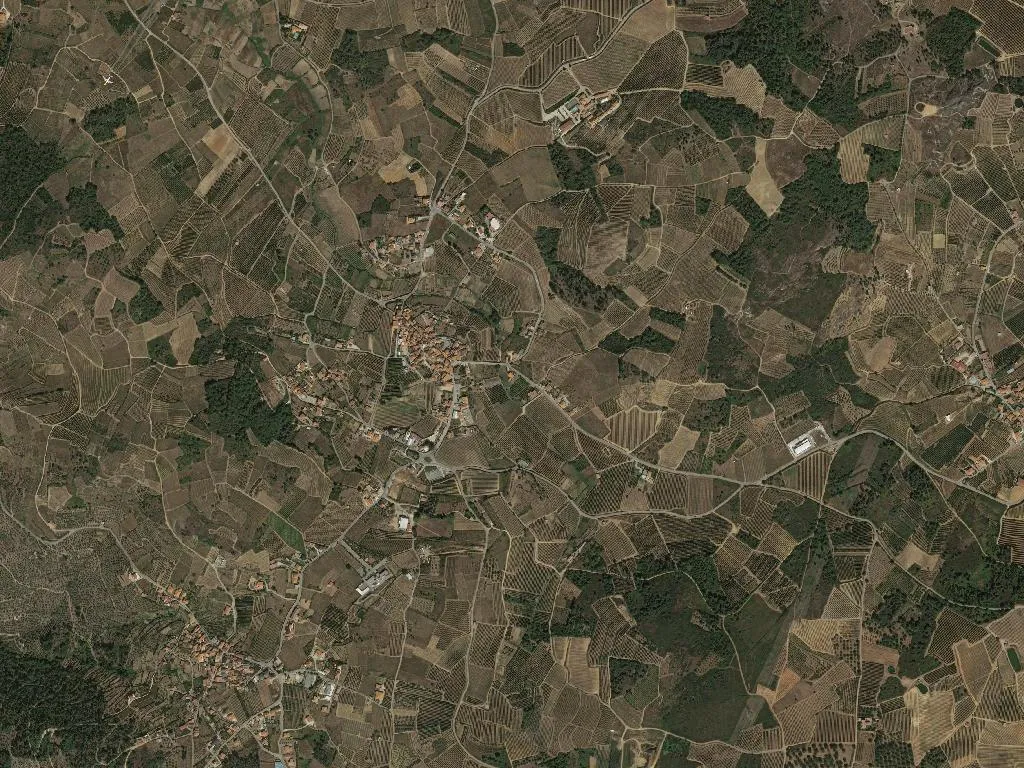
The scent that drifts down the valley at dawn is not chestnut but carrizo smoke. Adelino lights the fire at six to dry the Lapa chestnuts, and the haze clings to laundry, hedgerows, and the bend before the slate bridge. Then Queimada reveals itself: a granite shoulder punched out of the slope, church on the ridge, houses stitched edge-to-edge against the drop, vineyards terraced like giant steps to the sky. Population 291 – yet on Sunday the churchyard holds them all, with room left over for cousins back from Vila Real.
A door that never quite closed
The Matriz lost its latch in the storm of ’83. The priest claims angels prefer an open entrance; in truth the timber swelled and no carpenter ever returned. Inside, the altarpiece glints with candle-softened gold, polished by nine-day vigils and the wool of forgotten jackets. Blue-and-white azulejos of Pope Gregory the Great carry a painted Gordian knot in the corner – Master Valentim’s wager that anyone who unpicks it earns a year of luck. Half-way down the slope the Piedade chapel marks the point where lungs begin to burn and belief kicks in; on the third September Sunday the procession climbs on foot because the road’s hairpins are too tight for cars. The Cruzeirinho dos Namorados is barely shoulder-high: three sets of initials and a fractured heart. Local rule: scratch another name over an old liaison and you’ll stay single forever – which is why the same letters reappear at different heights, a palimpsest of second thoughts.
Chestnuts that remember
The EU stamp on the crate is only ink. What matters is that Lapa’s oldest trees have outgrown even Ze’s grandfather’s pole. When autumn smells of wet earth and singed leaves, the women crawl between the trunks, wicker baskets slung like holsters. The nuts spend nine days in a fumeiro – a timber barrel with a vent in the base – then pass the drum test: a hollow thud means export grade, a dull shake means pig feed. Wine is another ledger: at Quinta do Espinheiro and Quinta da Lapa the lagar is still granite and the grapes are still trodden by foot. Fermenting must mixes with sun-warmed schist; at night the caretaker’s dog barks at shadows shifting between the casks. In Adelino’s tavern the kid chanfana has marinated for three nights in wine and garlic and spends the morning burbling in a clay pot. Dona Albertina’s bolinhos de amor-feito are twisted left-handed; her right shakes with age and she swears that tremor gives them their crumble.
The trail only locals trust
The PR3 starts at the spring where housewives still scrub arkoxas – rough linen sheets. The first kilometre lies: it looks level but climbs steadily, and strangers spend their breath before the watermill. Lapa do Dinheiro hides a fist-sized hole once stuffed with contraband tobacco; after heavy rain you can still dig up a sodden pack. From the lookout the Varosa coils like a grass snake; at dusk griffons circle the cliff as if drawing property lines. Downstream, schist heats the natural pools until children can cannon-ball in pants alone. The square’s chestnut is hollow: three kids and a dog fit inside, and every August that is exactly what you’ll find.
On Easter Sunday the boys of the Enterro do Bacalhau – “Burial of the Cod” – borrow their fathers’ shirts and tour the parish. It is less a request than an ancient levy: eggs, a strip of smoked bacon, a glass of red. Refuse, and next year a salted cod will be “buried” on your doorstep, an ill-omen no one risks.