Full article about Santa Cruz: granite hush & high-altitude vines
Santa Cruz, Armamar hides sky-high vineyards, DOP chestnut groves and a chapel relic—taste wine in farmhouse kitchens and hike the 860 m Senhora da Lapa lo
Hide article Read full article
8 a.m.: eight iron clangs, no one stirs
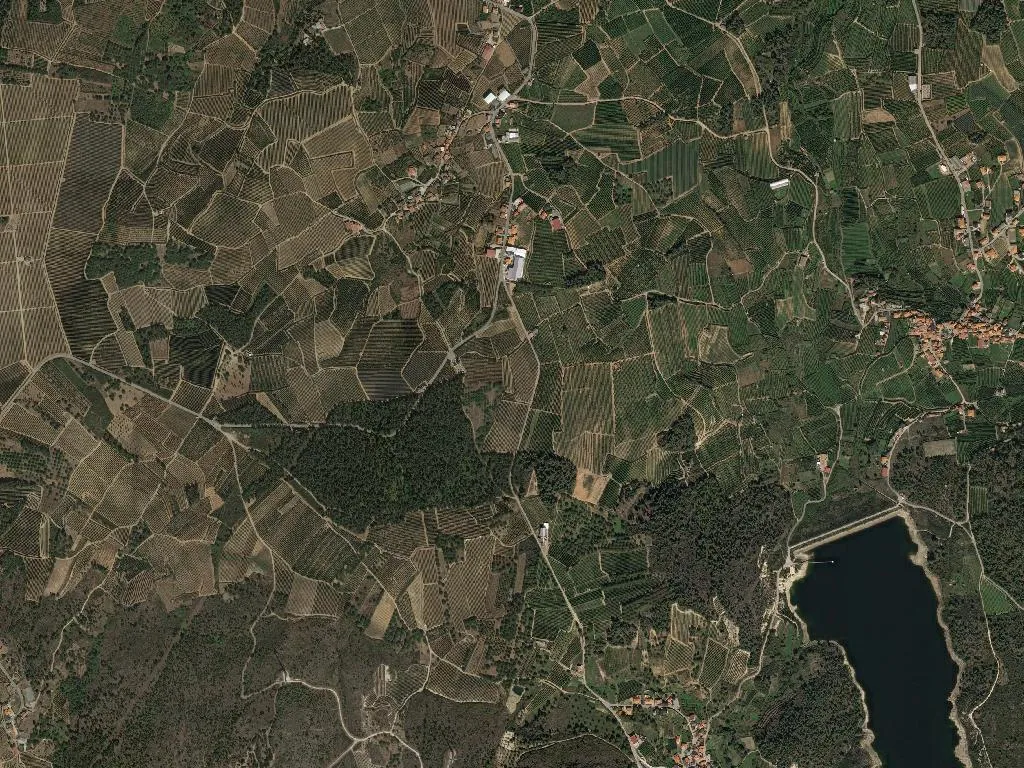
The bell in Santa Cruz finishes its eighth beat before a single curtain twitches. One-hundred-and-seventy-three souls are scattered across 788 hectares of northern granite, and the head-count is still falling—nineteen fewer than a decade ago. The village sits at 802 m, but the unpaved municipal road keeps climbing to the Senhora da Lapa lookout at 860 m, the rooftop of the entire Armamar council.
Vine, schist, thin air
Rows of Touriga Nacional march up to 700 m, root fingers prised into narrow schist ribs. There is no river traffic, no railway spur; grapes leave in growling tractors or 7.5-tonne lorries that drop down the EN226 to the co-op warehouse on the Douro margin. Altitude locks in acidity, so the wines from Quinta da Lapa and Quinta do Cruzeiro end up in the cellar of Seia’s Bread Museum rather than on the standard Douro trail. Want to taste? Phone 48 hours ahead; there is no tasting room, just a farmhouse kitchen and a cork-pull.
Chestnuts of the Soutos da Lapa DOP
The protected grove covers 1,500 ha; 40 % of it belongs to this parish. Harvest starts the last week of October, when locals sell to the Armamar middleman for €2.20 a kilo (2023 price). At the Feira de Santiago (25–26 July) only two stalls bother to roast the nuts; a third pours firewater from an unlabelled bottle. Everything else is wickerwork. The romaria of São Gregório (12 March) draws maybe seventy people: Mass in the hilltop chapel, soup made from last year’s dried chestnuts, vinho tinto in plastic cups, everyone home by four.
Church, calvary and the locked relic
The parish church unlocks at 9.30 a.m. for Sunday service; at 6 p.m. it opens again if a wedding is scheduled. The baroque retable was cleaned in 1998, but no one has patched the four nicks on the eighteenth-century Passion tile panel. Village life pivots around the granite calvary in the yard—useful when the only café is twice-a-year full. The sacristy keeps a cloth-wrapped relic; the priest will unveil it for a group of twenty and a €50 donation toward roof repairs.
Miradouro da Senhora da Lapa
Three kilometres of washboard gravel spin off the main street. There is no car park; you nose the passenger side against a low wall and leave half the hatchback on the road. The view runs forty kilometres of valley, from Marco de Canaveses to the Spanish rim of the Douro Internacional. Come on a December afternoon: the sun drops straight ahead, igniting the schist terraces, and not a single electric light shows until you hit Spain. When the bell tolls for Ave Maria the church sensors switch on the nave lights—code for the café owner to pull her shutters in fifteen minutes. Miss that curfew and you face a 12-km night drive to the nearest restaurant on the EN226.