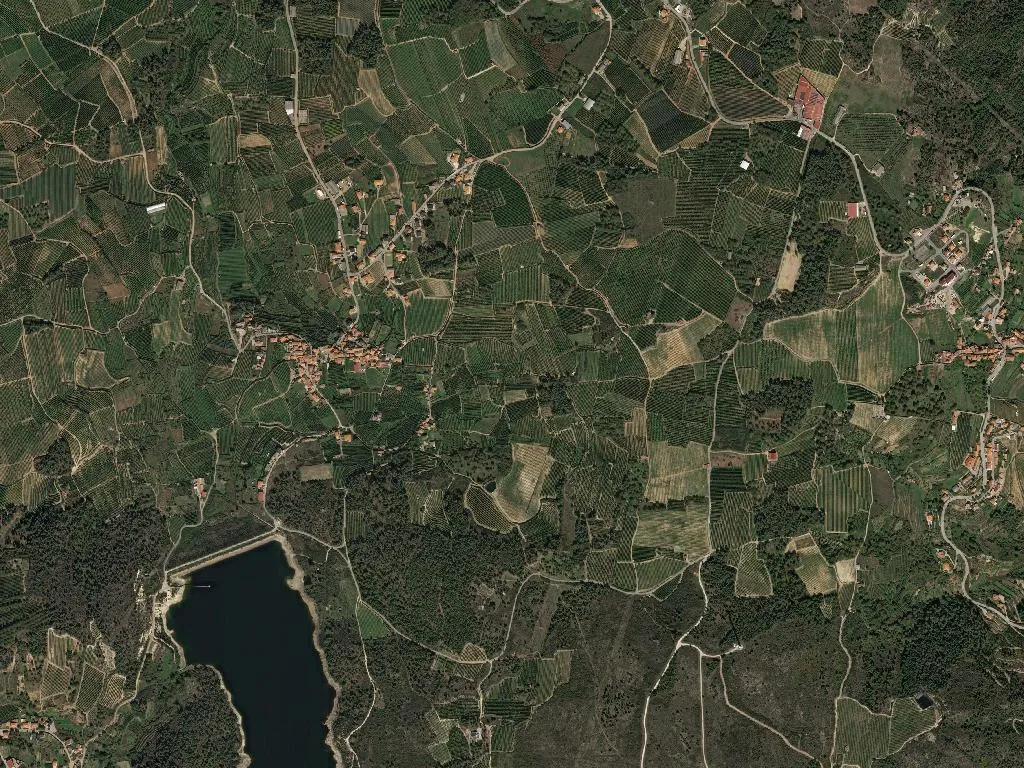
Full article about São Martinho das Chãs: Where the bell rolls downhill
Village of slate roofs, smoke-cork fires and four pilgrimages tucked above the Varosa
Hide article Read full article
The bell that learns to ring itself
The bell of São Martinho das Chãs travels downhill like a stone skimming water, rattling across the slate roofs before it disappears into the terraces that stagger towards the Varosa. At dusk the sole street turns obsidian where generations of clogs have ground the cobbles smooth, and wood-smoke – not from hipster firepits but from honest cork-oak – drifts up from the valley floor.
Fiestas that overflow the churchyard
Three pilgrimages are inked into the parish diary, yet locals insist on four. July’s Romaria da Piedade begins the night before, when votive candles outline the cemetery walls like runway lights. September’s Romaria das Dores buses in Vilar de Maçada families who unroll sleeping bags in the shuttered primary school. São Gregório, at October’s end, is the last licence for backyard goat-slaughter and the sharing of blood-wine between neighbours. August brings the unlisted one, Nossa Senhora da Lapa, when the village bar shuts early; the priest refuses to lead a procession past worshippers clutching plastic litre bottles of Super Bock.
Chestnuts are something else entirely – not revelry, but winter insurance. The soutos above the settlement start to drop their burnished fruit around mid-October, but the sharp-eyed head up in September after saturday storms to collect the unclaimed. The shells are thinner than the famed chestnuts of Vila Pouca, and when the knife slips they exhale a single curl of steam. They roast in perforated paint tins rescued from the garage; a hole punched in the base stops them exploding. Take your sack to the only working mill – Ribeiro’s stone wheels still turn – and the flour that emerges smells of scorched timber that will cling to your palms for three washings.
What the UNESCO line on the map omits
Administratively, yes, this is the Alto Douro Wine Region, but the left bank of the Varosa plays by different rules. Vines sit higher, Atlantic air sneaks in, and the wine is built for the coming December, not the next decade. Rough, purple, already throwing a sediment that catches in the throat, it is tapped straight from cask to jug. Picking starts promptly on 8 September, the feast of Nossa Senhora dos Remédios; those with pristine bunches sell to the Tabuaço co-op, those without ferment marc for Zé Murtosa’s travelling press. The pomace later fuels the kitchen stove when January’s cold splits the rafters.
Of the 478 inhabitants the census claims, 32 lie in the new cemetery, 12 in the mossy old one. The rest are scattered: a plasterer in Paris, a waitress in Bairrada, a surgeon in Porto. Yet someone always clocks in for the September maize-threshing; another returns for the big romaria and stays a week after his Citroën gives up at the Pousade level-crossing. Granite doorways are lower than memory, and every other garden still carries the peach tree a mother planted the year she left for France.
When the sun slips behind the Marão ridge
That is the hour the village reveals its balance sheet: silence that is not silence at all but the slow rustle of maize leaves turning to parchment; the iodine tang of north-facing schist; the metallic taste that blooms in your mouth if you hurry downhill too fast towards the river. Plane trees along the abandoned national road sift the wind into something like surf – they were planted back when the water tax was still paid in wheat sheaves. And you realise that, on the day the last resident turns the key, the bell will still toll seven times because the wind up here has learned the mechanism by heart.