Full article about São Romão & Santiago: Where Vineyards Meet Vespers
Corn-and-rye broa drifts over copper vines, linking two granite hamlets above the Douro.
Hide article Read full article
The smoke drifts sideways
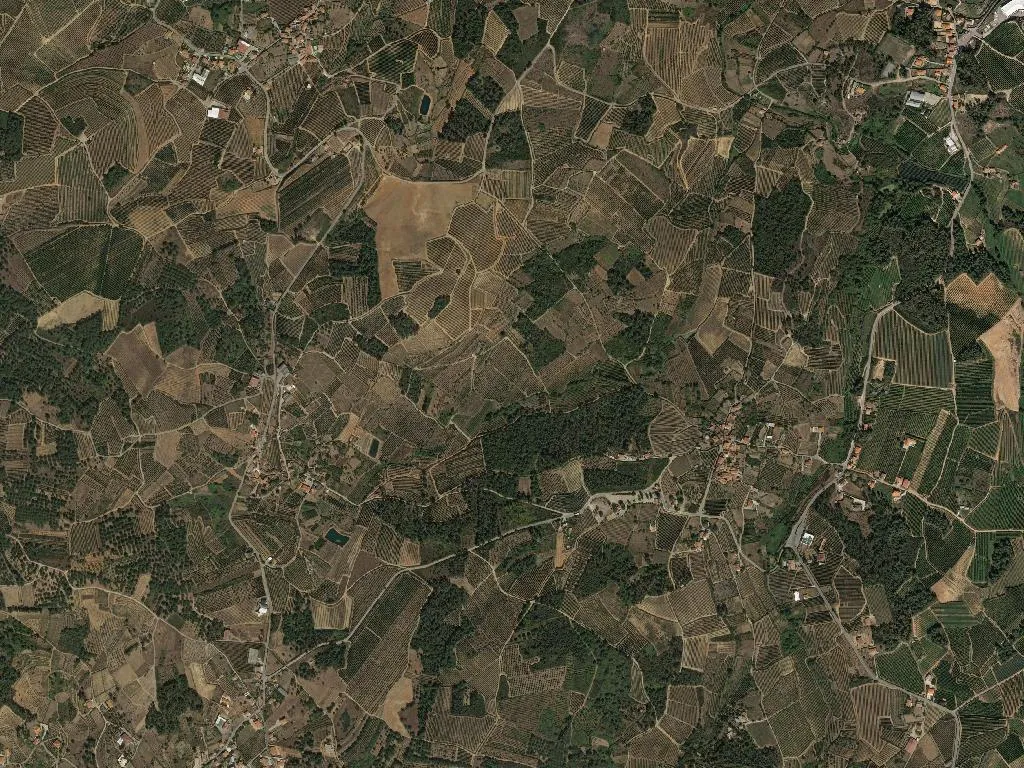
The smoke drifts sideways from the bakery chimney – still no wind – carrying the scent of corn-and-rye broa that Alda slid from the oven at six-thirty. Dew blackens the granite setts, but the sun spilling over the Marão ridge is already gilding their edges. Below, on the schist terraces that stair-step down to the Douro, the vines are turning copper, yet the harvest is a month off. Between the rows the river valley hides inside its own mist, playing truant.
Two churches, two hamlets
It is 2.2 km of parish road from São Romão to Santiago, but anyone walking it on Mass Sunday knows the distance multiplies: climb the Costa de Santiago, drop to the Ribeira de Água Quente, cut through the chestnut grove António replanted after the 2017 fires. Inside São Romão’s church the Manueline altarpiece is still missing a gilt panel – damp got in during 2009 – yet the blue-and-white azulejos spell out the Gospel for anyone who can read 18th-century tile. Santiago’s broken pediment is not an aesthetic choice: a stone fell in 1926 and the collection plate never recovered. Only three manor houses still display their coats of arms: one is now a three-room guest house, another is padlocked since the owner died in Lyon, the third keeps its 1965 barrels in the cellar, quietly turning to vinegar.
On the hilltop, the chapel of Nossa Senhora da Piedade has been latched with a bent nail ever since the priest stopped coming. Except on the first Sunday of September, when Maria do Carmo unlocks it at seven, sets out three candles and waits. By nine the tractors arrive, seats draped with patchwork quilts. There is turnip soup, chestnuts roasted in Júlio’s copper pot, and aguardiente hauled up in five-litre demijohns. The pilgrimage has no brass band – just a loudspeaker balanced on the parish president’s Fiat – but the improvised chant duels carry on until the eucalyptus shadow reaches the chapel wall.
What the year brings
September prises open houses that have been shut since Easter. Children who have never trodden grapes are lifted onto the granite lagar in Santiago so parents can photograph them. For a fortnight the communal press – all oak beams and wooden screw – creaks back into service. Touriga Nacional is scarce; after the 2017 frost the planters swapped vines for almonds. Still, there is always enough fruit for red table wine, which Adelino stores in glass balloons beneath the stairs.
In the Soutos da Lapa, chestnuts are picked wearing rubber gloves; the husks lie. Tree 37, lightning-scarred, produces nuts too fat for market, perfect for Celeste’s candied sweets. The PR1 trail is blazed in yellow, but October’s storms took out two wooden bridges. You can still walk from Santiago’s stone cross to São Romão’s without wetting your boots if you know which granite slab bears your weight.
What you eat when you belong
Chanfana happens only when the billy-goat stops giving milk and António decides the moment has come. Three-day process: one to slaughter, one to marinade, one to simmer with last year’s red and sweet paprika from the Fundão co-op. On Armamar’s Wednesday market you buy your charcuterie: Valdemar’s blood sausage with rice, Zé Mário’s wine-smoked chouriço, Adelino’s wife’s salpicão smoked over the hearth for three weeks. The olive oil comes from Lagar do Paço: two hours to grind thirty kilos of cobrançosa olives, enough for ten five-litre tins. For pudding, grandmother Aninhas’ walnut cake – no one weighed the nuts, she added them “by eye”. Folar, the aniseed loaf, is an Easter ritual, but a frozen half-moon can be sliced paper-thin for visitors, served with Ilda’s four-hour egg-yolk conserve.
When night falls and Júlio’s dog stops barking, climb the track above the village. The council telescope is padlocked – key lost in 2020 – but you won’t need it. The Milky Way stretches above the chestnut canopy and the un-irrigated vines. Below, Alda’s kitchen light is still on. She will be kneading tomorrow’s dough: four firings a week ever since her son opened the roadside café.