Full article about Vacalar: Where the Douro Bell Still Rings
Hear schist terraces echo noon in Armamar’s tiniest parish, where vines outnumber folk 500:1
Hide article Read full article
The bell and the schist
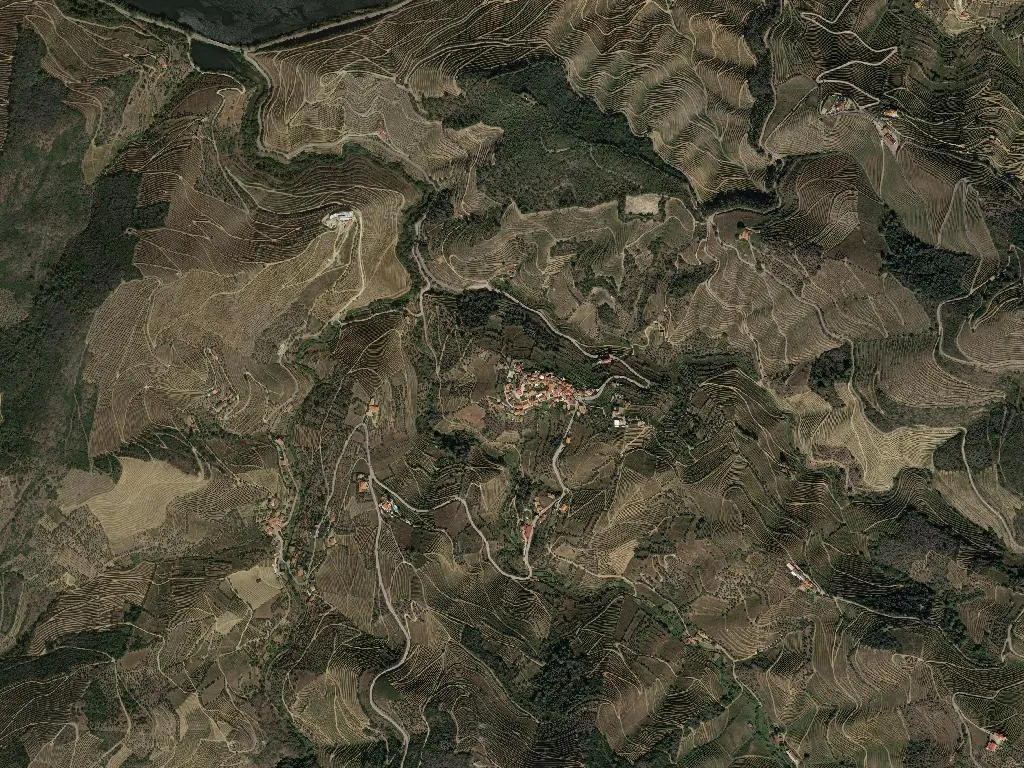
At noon the chapel bell of S. Gregório strikes once, and the note slides 240 m down the valley until it hits the cliff the Douro has not yet swallowed. Vacalar perches on the western rim of Armamar, where naked schist platforms stack above the river and the air smells of earth a horse has just turned. One hundred and seventy-two people occupy 615 hectares – the same head-count recorded in Portugal’s first modern census of 1864, when the total was 169.
Vine country
The parish lies inside the Cima-Corgo sub-region, folded into the Alto Douro’s UNESCO-listed core since 2001. Vineyards cover 42 % of the land (CCDR-N 2022), mostly century-old terraces stitched into flaky schist. Touriga Nacional, Tinta Roriz and Sousão root directly into the rock. Locals last trod grapes with bare feet in 1987 inside the “Casa dos Lagares”; today two quintas – Vale de Cavalos and Covas do Douro – buy fruit from the 28 remaining growers. At 16:30 on a clear winter day the sun skims the tiers, painting the valley rust and ochre.
Three feast days, three calendars
– 15 August, Nossa Senhora da Piedade: a 1789 painted palanquin, attributed to José de Armamar, is shouldered through the lanes; dawn is broken at 6 a.m. with roast pork from the traditional autumn slaughter.
– 15 September, Nossa Senhora das Dores: doubles with the Feira de Santiago, a livestock and tool fair documented in the town-hall minutes of 1591. The churchyard fills with ironmongery, chestnut stakes and fattened capons.
– 9 December, S. Gregório: an open-air mass followed by “bolo de São”, a sweet loaf of sweet potato and pine-nut that must be cracked underfoot for luck.
Chestnuts and Douro table fare
The Soutos da Lapa chestnut carries DOP status since 1996; 23 growers are registered. Nuts weigh 28–30 g, are soaked in water and red wine, then roasted in a wood-burning oven. They arrive alongside crisp-skinned toucinho-dourado, Mirandela smoked sausage cured over chestnut embers, and 24-hour-fermented rye bread. Winter turnip soup is fortified with Vacalar fumados – blood chouriço and streaky bacon – and the new vintage is poured in 75 ml glass cups, the old measure for field hands.
Populated silence
Of the 172 residents, 14 are under 14 and 55 are over 65 (INE 2021). Five holiday houses are registered (RNAL 2023): four in schist cottages restored with EU PRODER funds, one in a two-storey straw-loft. The primary school closed in 2009, the bakery in 1998. Yet the day-centre opened in 2017 and serves 18 elderly regulars. At 21:00, when the health post shuts, the light flicks on at Zé Sampaio’s tavern – open since 1976 – and sound returns: a 20 ml tot of aguardiente for €0.60, domino scores chalked on the table, Antena 1 murmuring from the radio.
Evening wind stirs the irrigation-channel chestnut grove; upslope, a Covão tractor growls in third gear toward the Carril terraces. Vacalar offers no viewpoint selfie-stop, no gift shop. It gives you split granite under your shoe, the tang of cane-pruning bonfires, and the burn of a chestnut cracking between finger and thumb, still carrying river water from the hidden stream at the valley floor.