Full article about Beijós: lamb so tender the knife sulks
Serra-scented lamb, wrinkled mountain cheese and Dão vines cupped in an unshowy vale
Hide article Read full article
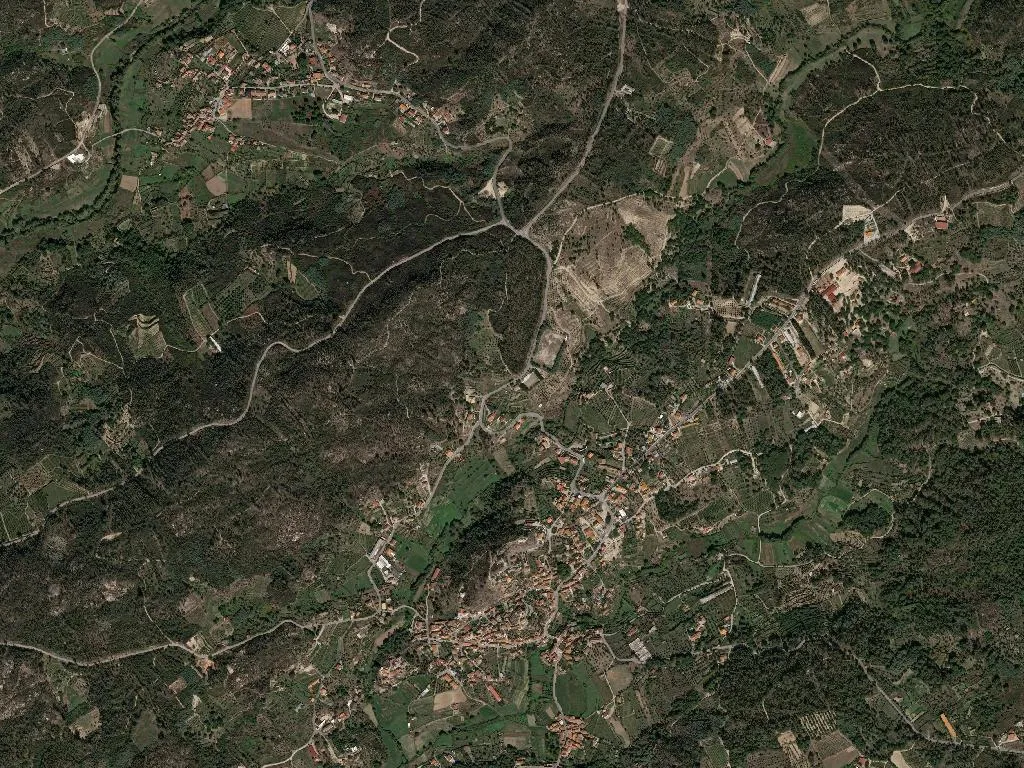
The scent of burnt logs — the one that drags you straight back to Sunday afternoons at your grandparents’ — drifts through the yard and collides with the sweet, yeasty sigh of freshly crushed grapes. We are dead-centre in the Dão valley, where vines claw up schist slopes as though jostling for the best sunset seat in the house. Beijós lies 243 m below, cupped in a widescreen vale that someone clearly sketched for people who like their horizons generous but unshowy.
One hundred and twenty-five square kilometres, 814 inhabitants. Do the arithmetic: 65 souls per km², only fractionally more than the solitary oaks that sprout between the cracks of grey stone. Census clerks note that 257 residents are over 65, which means the village carries more voices remembering ox-ploughed fields than children scraping knees on bike gravel. Yet when the primary-school door swings open at 8 a.m., yells ricochet down the lane sharp enough to stop the place turning into a sepia postcard.
What you eat (and drink) without making a song and dance
Order the Borrego Serra da Estrela DOP and the knife is ornamental: the lamb fibres fall apart at the mere suggestion, blush-pink and tasting of upland herbs that only survive where the air has bite. Cheese is the serious conversation. It spends months on rough-sawn shelves, acquiring wrinkles and attitude, and when the wheel is cracked open it oozes like posh baby-food. The fresh requeijão doesn’t even make it to the larder: you attack it at the kitchen table with a wooden spoon and demerara sugar that melts before it reaches your tongue.
On feast days — and some saint always needs celebrating — the wood oven is fired, a shoulder of lamb goes in with potatoes that emerge with glass-crisp skins and insides the texture of mousse. Carqueja rice is assembled by instinct: a fistful of this, a slosh of that, salt “to taste” (translation: keep spooning until your grandmother nods).
Vine, stone, everything else
The vines are so old their trunks resemble twisted broom handles. By mid-September the smell of trodden grapes is so heady even the dogs look half-cut. In the cellars the must murmurs like a satisfied cat; it is simply time doing shift work.
Granite walls absorb the afternoon heat and hand it back after dark, like the storage bricks your granny covered with a shawl. Press a palm to the stone and you feel orange lichen, fissures where rain slid before television existed. Nothing more is required.
If you come from elsewhere
No chain hotels, no leisure reps. There is one solitary turismo rural house: guests arrive knowing precisely what they’ve booked — silence with ballast, paths without way-markers, a table set with whatever the land decrees. Risk: zero. Logistical effort: minimal. Reward: absurdly high for anyone who has remembered how to sit still.
Beijós refuses to fit into a brochure. You inhabit it — if only for the weekend your mobile spends searching for signal while you relearn that time can be calibrated in grape bunches and cheese slices that vanish long before the Instagram shot.