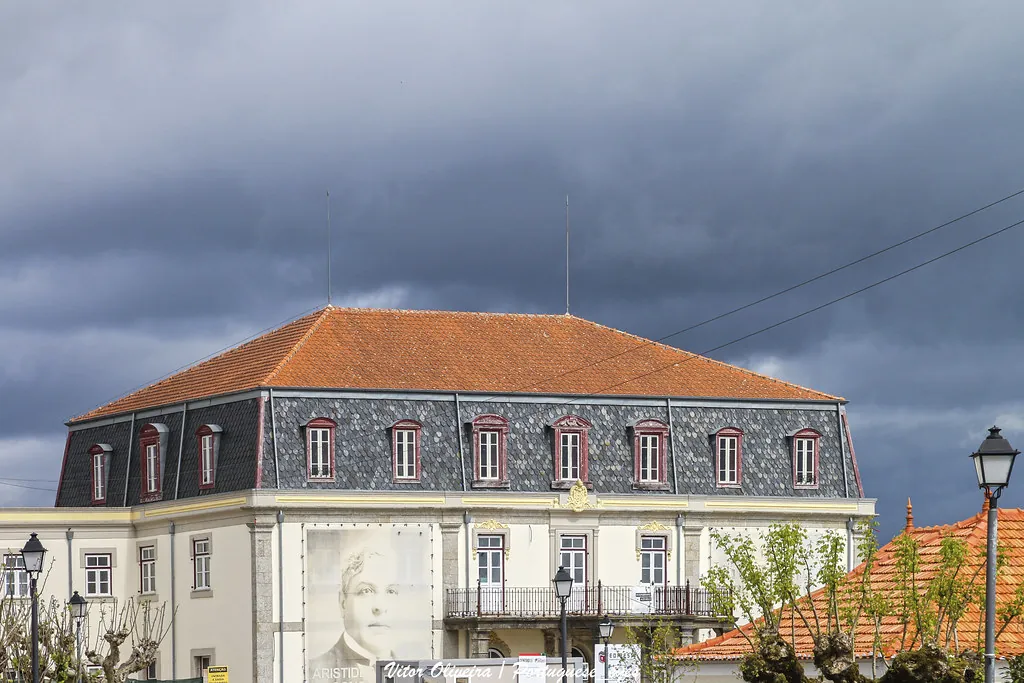
Full article about Cabanas de Viriato: Where the Bell Still Slows Time
Granite lanes, oak-smoke air and cheese that forgives winter—life at 321 m in the Dão foothills.
Hide article Read full article
Dawn slips through the gaps in the pine-green shutters and stripes the granite floor like a Catalan awning. At 321 m above sea-level, Cabanas de Viriato wakes to the smell of wet schist and oak-wood smoke drifting from chimneys – the same perfume that village elders insist “has drifted here since the Moors”. Three slow clangs from the parish bell ricochet between slate roofs; no-one thinks of hurrying.
The name honours Viriatus, the Lusitanian shepherd-turned-rebel who tormented Rome, but the living archive sits inside Café João. Order a galão and it still arrives in a porcelain cup, sugar cubes balanced on the saucer like dice. Around the village, vineyards stitch pale terraces into the slope, granite thresholds are scooped by two centuries of boots, and the only siren is Bobi, Sr Alfredo’s dog, barking at the same postcard view he’s guarded for twenty years.
Where flavour needs no certificate
Dona Lurdes’ Serra da Estrela cheese arrives in oozing wedges that collapse under a knife. No PDO label is required: one mouthful of the rye bread from the 1953 bakery and you understand why. Her requeijão is eaten straight from the pot, eyes closed, winter morning forgiven. On feast days, Aunt Albertina fires the oak-fed bread oven for kid goat, brushing the skin with Dão red made by her son in the family adega across the lane. The demarcated region starts at the edge of town; the vineyard that supplied the vintage is visible from the kitchen window.
The monument that minds its own business
A plain 16th-century pillory stands in the square, indifferent to processions, football arguments and hopscotch chalk. While the population slips quietly towards 1,457 – 533 of them over 65 – the stone column keeps its own tally of stories never written down: the priest who said Mass on horseback through the blizzard of ’54; the day the olive press caught fire and the whole village smelt of roasted fruit. When children scatter at dusk, the pillory remains, listening to gate hinges that squeak the same note they did in 1923.
The texture of an ordinary day
January finds Sr Joaquim pruning vines barefoot, “because the pests don’t wait for payday”. Winter sun draws Dona Amélia outside to hang sheets; they stiffen on the line, drying more slowly but for free. With barely 68 inhabitants per km², there is space for Tiago to tear along the Ecopista do Dão on his mountain bike without a single car horn. The view south picks out the summit of Serra do Marão, 70 km away, while the only soundtrack is the rasp of secateurs and the click of knitting needles from a balcony.
By late afternoon, terracotta roofs glow copper and smoke thickens in the cold air. Someone shuts a wooden gate with the identical groan I was once ordered home by. Cabanas offers no spectacle – simply a café that remembers your order from a decade ago, rye bread ready at seven, and the weight of silence that settles after the eighth bell fade, when the echo finally surrenders to nightfall.