Full article about Parada: Where Travellers Once Paid in Dinner
Medieval tolls, baroque carvings and river-cooled cheese in Carregal do Sal’s hidden village
Hide article Read full article
Where the Road Once Demanded Dinner
The name Parada is a relic of medieval road tolls: parada marked the spot where nobles exacted the foro de parada—a compulsory meal from every traveller. Formalised by the 16th century as a staging post between Viseu and the Serra da Estrela, the village still offers rest, though the transaction is now voluntary. Its mother church, rebuilt in 1727 after the 1755 earthquake buckled its tower, is a textbook example of rural baroque. Inside, a mannerist altarpiece and gilded carving attributed to 17th-century wood-carver José de Almeida drink in the light from high windows. On the first Sunday of October, the procession of Nossa Senhora do Rosário winds through the lanes, followed by a micro-fair where wheels of Serra da Estrela DOP cheese are sold still warm, spooned with pumpkin jam.
The Valley that Keeps the Millstones Turning
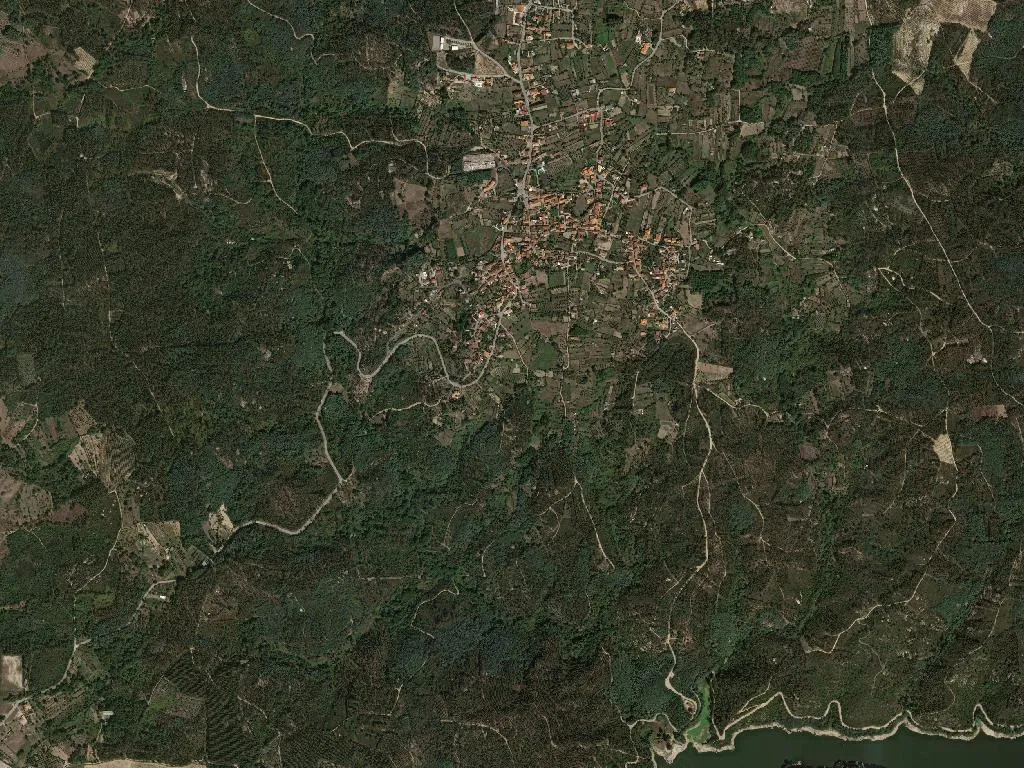
The Alvoco river slips past Parada’s southern edge, feeding stone channels and ice-cold pools that children and dogs colonise on hot afternoons. A four-kilometre footpath, the Caminho do Alvoco, threads between schist walls and olive groves to the hamlet of Póvoa das Forcadas—its name a reminder of the medieval gallows that once marked the boundary of the parish. Half-collapsed chestnut-trunk presses lie in the undergrowth, portable wine presses that could be dragged from vineyard to vineyard at harvest. Only Álvaro Cardoso’s water-mill, beside the 1932 rebuild of a Roman bridge, still grinds wheat in the same 19th-century schist hoppers.
Smoke, Barrel and Wood-Fire Oven
Goat chanfana stews for hours in black clay, Dão red wine reducing until the meat is lacquer-red. In the broad chimneys of the older houses, blood sausages—morcela and farinheira—sway in the smoke, darkening like antique mahogany. Serra da Estrela DOP lamb crackles in wood-fired ovens, fat hissing on iron trays. Wheels of the same origin cheese cure in walnut barrels, emerging butter-soft and trenchant. Four generations of the Silva family on Rua do Poço still age theirs in a cellar that smells of tannin and lanolin. At table, warm maize broas mop heather honey gathered from the chestnut groves that quilt Parada’s 1,166 undulating hectares.
Vintage and Communal Threshing
September’s grapes are picked from schist-rooted vines; the whole village lends a hand. In November, neighbours gather in the main square for the batuque do milho, beating maize kernels by hand while white wine circulates in five-litre jugs. On the night of 5 January, the cantar dos reis drifts through the streets—Manuel Costa, 82, leads the group, intoning the same verses his grandfather taught him. During Lent, sweet folar loaves threaded with hard-boiled eggs are broken and shared. The primary school, housed since 1942 in a building by municipal architect António Ferreira, keeps its doors open despite a population density of barely 64 people per square kilometre and winter dawns when the Alvoco’s fog erases every contour.
As the sun drops, oblique light ignites the granite of the manor houses and the church bell—cast in 1892 at Viseu’s foundry—looses three unhurried chimes that roll down the valley. The scent of roasting chestnuts lingers, and the river keeps its low conversation, a sound that in Parada never quite stops.