Full article about Espadanedo: where the bell answers the vines
Granite hamlet in Cinfães echoes with Vinho Verde, Arouquesa beef and fading feast-day song
Hide article Read full article
The Bell, the Vine and the Granite
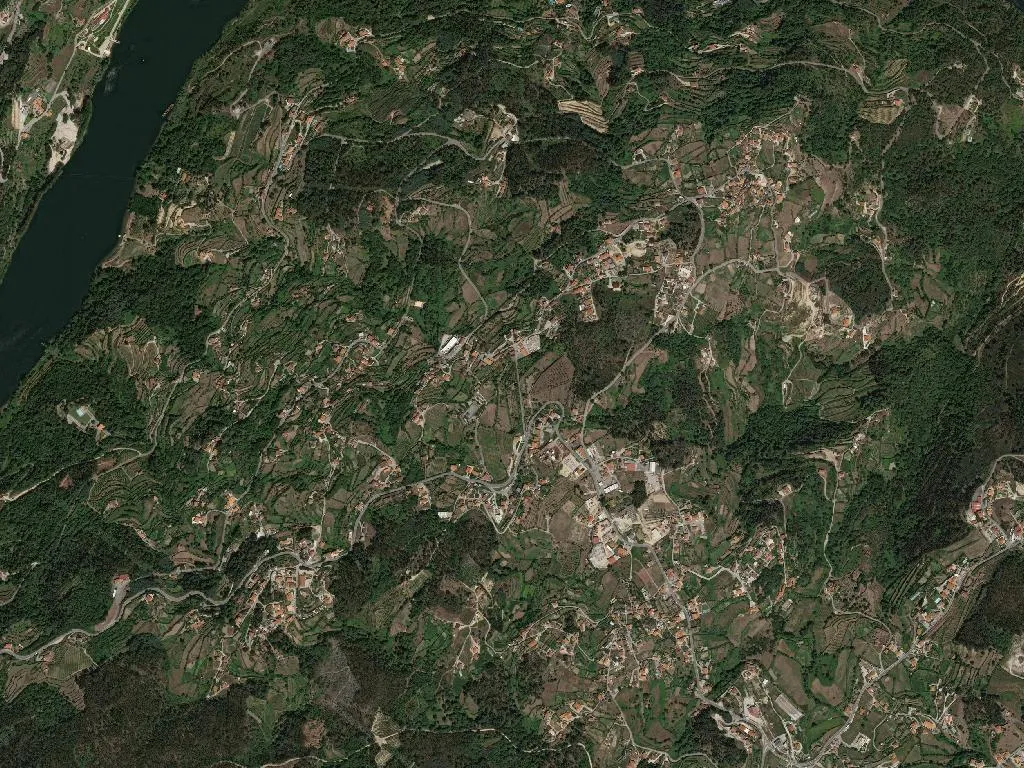
The bell in Espadanedo’s church tolls three times. Its bronze note rolls down the terraced valley, ricochets off rows of Loureiro vines and drifts back as a softer echo, as though the hillside itself is replying. At 326 m above sea level, the village unrolls in dark-grey granite and vegetable patches laid out like pocket handkerchiefs. Only 1,161 people live here, spread across 530 hectares of schist walls and fig-heavy yards—space enough for every inhabitant to own the view.
What the Slope Gives
This is Vinho Verde country, and the landscape obeys the rule of the grape: every incline is hand-scalloped into irregular steps that climb until the soil runs out. In July the air tastes of tart juice and sun-warmed straw; by early September it is laced with the perfume of ripening grapes. Between the rows, cattle of the native Arouquesa breed graze free-range, their butter-coloured hides moving like slow lanterns. Their meat, stamped DOP, is butchered at 36 months and served later as lunchtime steaks that dissolve on the tongue with a faint, stony sweetness. Breakfast belongs to the bees: Terras Altas do Minho honey, thick as fudge and the colour of burnt toffee, scraped from hives tucked among oak scrub and hay meadows.
Feast Days
Three processions still dictate the calendar. For São João in June, S. Pedro in late July and the Senhor dos Enfermos in September, the population doubles. Farmers descend from Montemuro, river-workers climb from the Douro, and the granite forecourt in front of the 18th-century church fills with candlewax and polyphonic chant. Standards shiver, boots scrape over uneven cobbles, then—just as suddenly—the tide retreats, leaving only the echo of dress shoes on empty streets.
Arithmetic in Stone
National statistics read brutally here: 246 residents are over 65; only 125 are under 14. Walking through the village at three in the afternoon you count more walking sticks than open shop doors. Five granite houses have been repurposed as tourist lodgings—stone sinks replaced by rainfall showers, haylofts turned into reading lofts—yet the ratio of guests to grandmothers remains delicate. Book early if you want someone else’s homemade pumpkin jam with your coffee.
What Lingers
Evening light slices diagonally across the valley, igniting the vines and warming the granite doorsteps until they release the day’s stored heat. Somewhere a dog rehearses the same two-note complaint; closer, an unseen irrigation channel keeps its metronomic hiss. There is no melancholy soundtrack, only the audible negotiation between a place that remembers and a place that still expects. When the sun finally drops behind the Serra de Montemuro, the air smells of slow-burning oak and the last sweet breath of the 2023 harvest. You leave; the scent does not.