Full article about Oliveira do Douro
Oliveira do Douro, Cinfães: hand-tended terraces, clay-pot chanfana, June bonfires and river-valley echoes.
Hide article Read full article
Where the smoke rises before noon
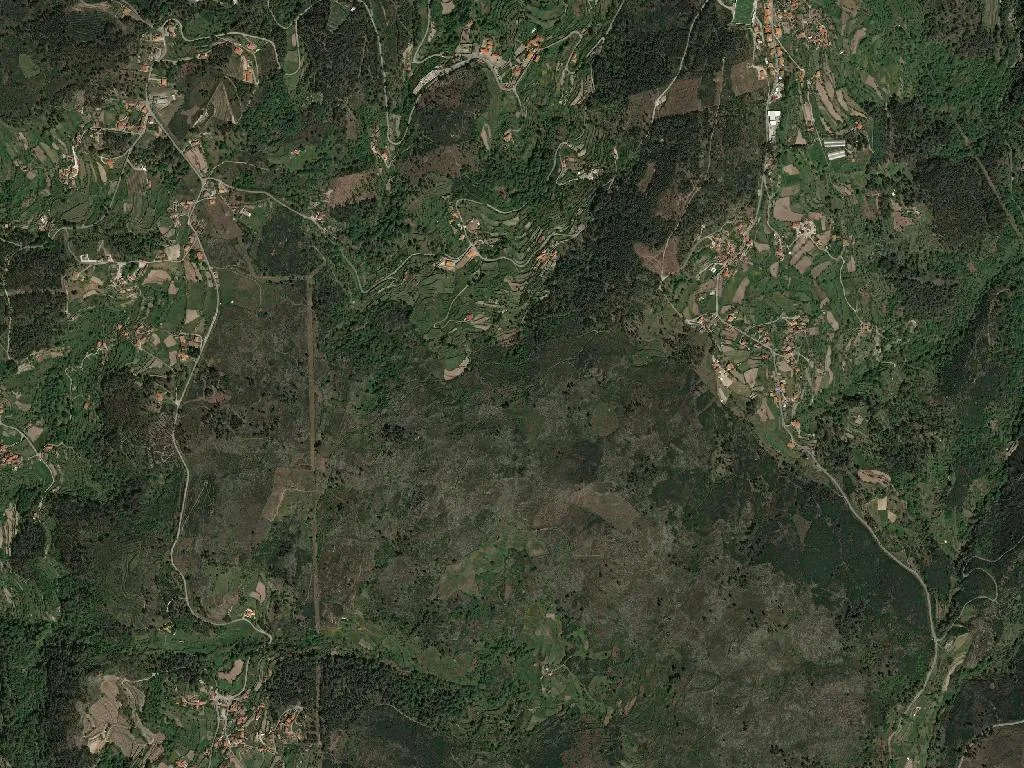
Oak-wood smoke drifts lazily from chimneys, carrying the scent of smouldering logs and the deeper note of chanfana – goat stewed for hours in red wine until it collapses into its own sauce. At 531 m above the river, the terraces of Oliveira do Douro are ruled by a single line: a blade-thin shelf of schist scarcely wide enough for two feet, where Loureiro and Azal grapes swell under the June sun. The only sound is the distant bell of the parish church, its bronze voice rolling across 1,412 ha of terraced valley as it has done since my grandparents were children.
A parish that answers to two masters
Oliveira do Douro is cartographically bilingual. Administratively it belongs to Viseu district, yet viticulturally it is annexed to the Vinho Verde region. The result is a hybrid landscape: the slate-grey geometry of Douro patrimony overlaid with the light, spritzy whites more usually associated with Minho. Small family holdings – Quinta da Cancela, Quinta do Moura – work these UNESCO-listed walls by hand, their grapes once ferried down-river to Porto on flat-bottomed rabelos. A 1260 charter first named the place “Oliveira” for the olive trees that still interrupt the vines like dark punctuation marks.
June brings São João. Bonfires flare on the chapel terrace of São João Baptista, sardines blister over coke-box grills, and a pair of concertinas duel until the dew settles. A month later devotees tramp the lanes for São Pedro’s romaria; in September the Senhor dos Enfermos procession turns the same paths into a slow-moving rosary of candlelight and song. Inside the eighteenth-century Igreja Matriz, varnish has been worn back to bare wood by three centuries of Sunday best.
What stays on the tongue
Order roast kid in the only tasca still open at lunch and it arrives with glass-crack skin, the potatoes beneath bronzed in garlic-and-bay fat. Chanfana is brought to the table in a black clay pot, the lid lifted so the wine-dark steam hazes your sunglasses. Winter lingers in the form of smoke-cured chouriço, folded into a Transmontana bean stew thick enough to support a spoon upright. Dessert is a wedge of sponge still warm from the wood oven, its centre sagging under the weight of egg-yolk threads. On Saturday mornings the market stalls hold DOP Carne Arouquesa beef and Terras Altas do Minho honey, the labels a guarantee that nothing has travelled more than a few kilometres uphill.
Between wall and water
Minor tributaries – the Bestança, the Mau – slice through gorse and holm-oak, their pools reflecting short-toed eagles circling on thermals. Walk the mule tracks and schist grit migrates into your boots; in October the vines crisp underfoot like cornflakes. Turn a corner and the Douro below is suddenly gun-metal, suddenly molten bronze, depending on the altitude of the sun. Century-old olives flare their kraken limbs above the walls; in the village press their fruit still yields oil the colour of early straw.
Population density is 89 souls per km², yet the place feels anything but empty. Granite houses are spaced far enough apart to let roosters argue without embarrassment. Three homesteads now take paying guests: wake to the smell of yeast from the communal oven, drink Loureiro straight from the stainless-steel tank while the winemaker’s Labrador watches every swallow.
When the church bell tolls the evening ave-marias, smoke lifts again – this time laced with the yeasty sigh of bread cooling on wicker racks. Down on the river the last light skids across the water like a struck match, then goes out, leaving only the ember-coloured glow from kitchen windows where neighbours gather to referee the day.