Full article about Santiago de Piães: granite lanes & baroque gold
Santiago de Piães in Cinfães clings to a granite ridge between terraced vines, baroque chapels and the open Iron-Age walls of Citânia de S. Fins.
Hide article Read full article
Granite underfoot, wood-smoke on the air
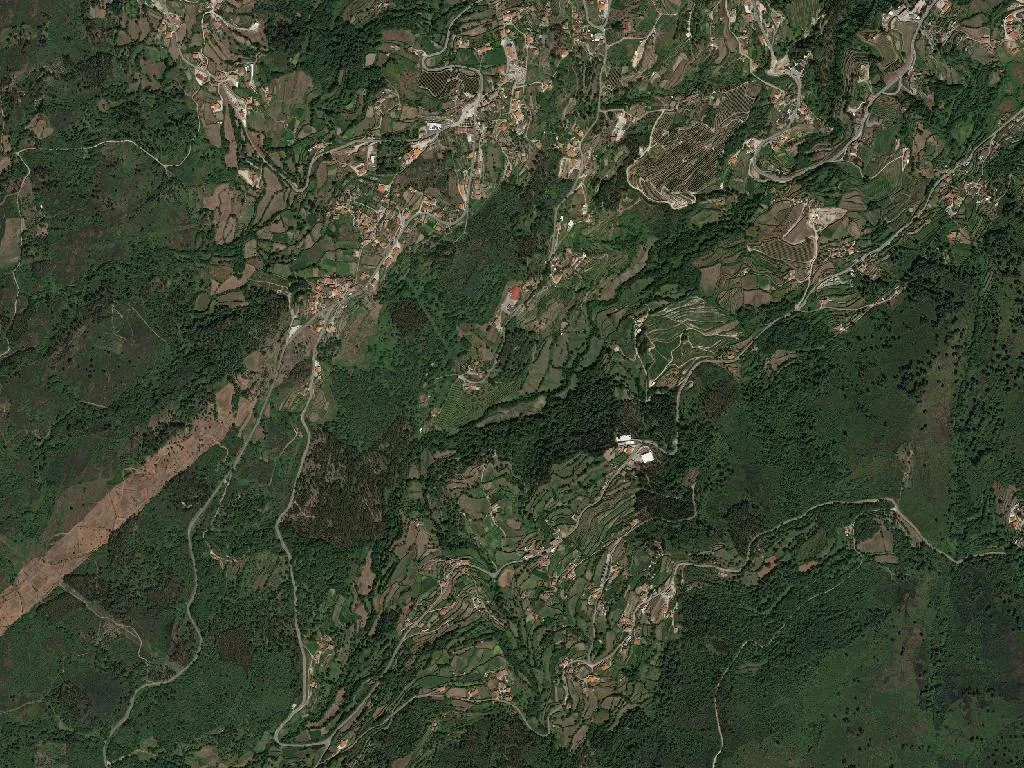
Footsteps ring on coarse granite as water chatters somewhere out of sight. In the churchyard of Santiago de Piães, morning sun throws long shadows across tombstones while wood-smoke drifts up from chimneys lower down the slope. The village perches at 341 m between the Bestança valley and the western flanks of the Serra de Montemuro, its 1,759 ha stitched into a patchwork of vines and maize terraces. Schist walls parcel out the meadows, oak crowns the ridges, and the river—always the river—slips past the southern edge, still feeding a handful of irrigation channels and stone mills that refuse to die.
Baroque that gleams behind rough stone
Inside the parish church, dedicated like the village to St James, a gilded baroque altarpiece flashes against plain granite. Eighteenth-century polychrome saints catch side-light from deep-set windows—provincial baroque, unshowy yet certain of its place between faith and field labour. On outlying lanes, manor houses—Quinta da Lameira, Quinta do Moura—announce themselves with private chapels, granite gateways and arched verandas blotched by damp and moss. A 1985 survey listed five such small palaces; their social order has faded but not vanished.
Iron-Ah citadel watching the valley
Climb to the ridge of S. Fins and the Citânia de S. Fins spreads out, one of the few Iron-Age hillforts in Cinfães you can enter without ticket or turnstile. Circular walls, knee-high and woolly with thyme, merge into the scrub, yet the view south over the Bestança gorge repays the calf-burn. The signed Citânia loop (3 km, starting by the church) climbs earthen tracks where wind combs the pines and a distant dog is the only DJ. People who had never heard of Santiago once lived here; they knew instead the give and take of granite and the valley’s narrow generosity.
Light wine, stubborn beef and high-country honey
Santiago de Piães sits on the Rota dos Vinhos Verdes, turning out light, faintly spritzy whites from the Sousa sub-zone—pour them into a tall glass after a Sunday lunch and time loosens its belt. Local kitchens work the Arouquesa DOP herd: native-breed veal and young ox, slow-simmered as chanfana in red wine with bacon and smoked sausage, or cut into Minho-style rojões. High-country Minho honey DOP sweetens the sponge cake of Margaride and the queijadas that appear at summer fairs. A whole salt-cod baked in a wood-fired oven can scent an entire quarter, announcing a feast before invitations are posted.
Processions, bonfires and sung poetry
On 24 June the Festa de São João sets the churchyard ablaze with bonfires and parades the image through lanes flanked by box-tree arches. The following Sunday the Romaria de S. Pedro follows a field track to the tiny chapel of the fisherman-saint. In September the Romaria do Senhor dos Enfermos turns the volume down: candlelit processions, petitions for the sick, a murmured litany that drifts across allotments. At every fiesta folk groups strike up vira and chula—improvised sung duels where irony is as sharp as the aguardiente de medronho that fuels it. Turnip broth, sardines split and grilled over vine prunings, and suddenly the village of 1,607 feels like a metropolis.
Granaries that still keep the harvest
Stone espigueiros—some two centuries old—stand in cottage gardens and along footpaths, their granite staves still airing last year’s maize. Horizontal slats let the wind whistle through, keeping rodents at bay with a simplicity that needs no architect’s vanity. Wayside stone crosses mark crossroads, and mills, even when idle, retain paddle-wheels cracked by drought and winter frost.
After rain the smell of wet schist mingles with smoke from curing sheds where chouriço tightens its waist. Santiago de Piães keeps its own tempo: vines climb at their own pace, the Bestança slips seaward without interruption, and the granaries continue—stone by stone—the task assigned them long before any of us were counting time.