Full article about Tendais
Experience Tendais in Cinfães, where empty valleys, schist cottages and three village feasts keep mountain traditions alive.
Hide article Read full article
The granite keeps the heat like António’s coffee cup
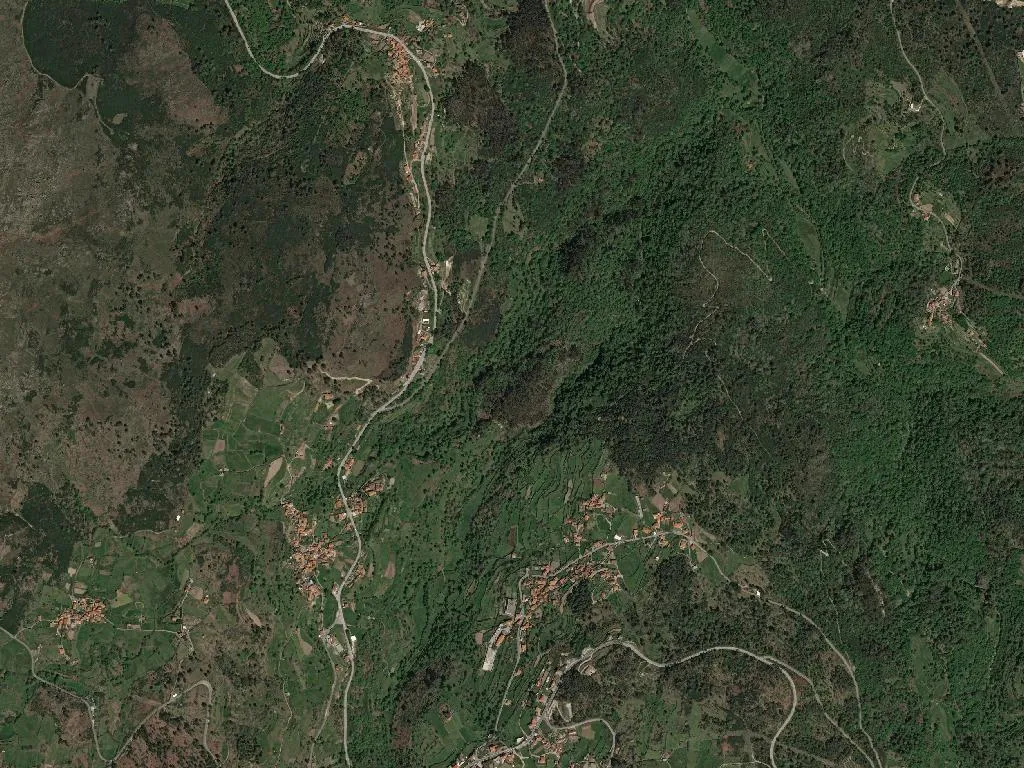
Dark schist walls soak up the last sun of the day in Tendais, 591 m above the Rio Bestança, and release it again slowly, the way António lets his espresso cool on the counter while he watches the valley. A single bell note drifts over the rooftops – not on the hour, simply because someone pulled the rope. Below, the terrain folds into boot-hook valleys so steep that even the goats negotiate in single file. Officially 697 people live here; in winter you can count the permanent lights on two hands. Three thousand hectares of gorse, oak and broom for so few souls: shout for the dog and the echo never comes back.
Time carved in stone
The parish sits at the eastern edge of the Vinho Verde demarcation, but vines are a minority interest; the gradient favours rye, potatoes and the caramel-coloured long-horn cattle that give DOP Carne Arouquesa. Domingos at Levada do Castelo grills half-kilo steaks over holm-oak, no marinade, no herbs: “Salt, pepper and the wait.” The same altitude that shortens the growing season gives the local heather honey the opacity of set toffee; a teaspoon cuts through mountain tea better than any aguardiente.
Civil parish records list 52 under-30s, 256 over-65s. The school bus leaves full at seven and returns empty at four. Those who stay carry the living map: where the 1943 flood took the old bridge, which stream holds the fat lampreys, which flat granite slab is cool enough to cure a ham.
Three feasts, three clocks
São João, São Pedro and the Senhor dos Enfermos – three Saturdays that mark the year more precisely than any council calendar. There are no tickets, no branded T-shirts. Instead, crackling rocket powder, sardines freighted up from Ovar by Zé’s cousin, and lager drawn fast before the barrel loses pressure. Anyone returning for the festivities is registered not as a tourist but as family who happened to emigrate to France; children who still can’t hit the bell with the wooden swing get hoisted up all the same.
Beds are offered in three houses: Amélia’s, Senhor Albano’s, and one whose owner nobody can name but whose key lives under a saucer. None has a television; mobile signal arrives only if you stand on one leg facing north-east with a NOS sim card. Perfect.
What lingers
The kitchen larder dictates the menu: pork, potatoes, kale, Ermelo apples when frost hasn’t stripped the blossoms. The signature dish is arouquesa steak – a 500 g slab that reaches the table hissing and weeping smoke sharp enough to make your eyes water before the first bite. You cut it with a pocket knife, mop the juices with day-old rye, and wash it down with white wine that Zé Mário presses in a granite lagar older than the first Portuguese republic. Dessert is either pumpkin preserve or the airy biscuits D. Fernanda bakes in the day-centre oven; they take three days, she says, “because haste is for outsiders.”
When the sun slips behind the Bornal ridge the valley turns Prussian blue and fills with cricket song. What stays with you is not a postcard image but the certainty that here time is still measured by shadow, the National Road still has a café where someone remembers your father’s nickname, and the mountain demands no likes, only respect. Tendais has no intention of becoming a destination; it is simply the place where you leave your muddy boots and know that, if you return, the bell will still toll at the wrong hour – on purpose.