Full article about Avões: Dawn over 35° schist terraces and 502 souls
In Lamego’s sky-high parish, vineyard shadows stretch longer than the Douro below
Hide article Read full article
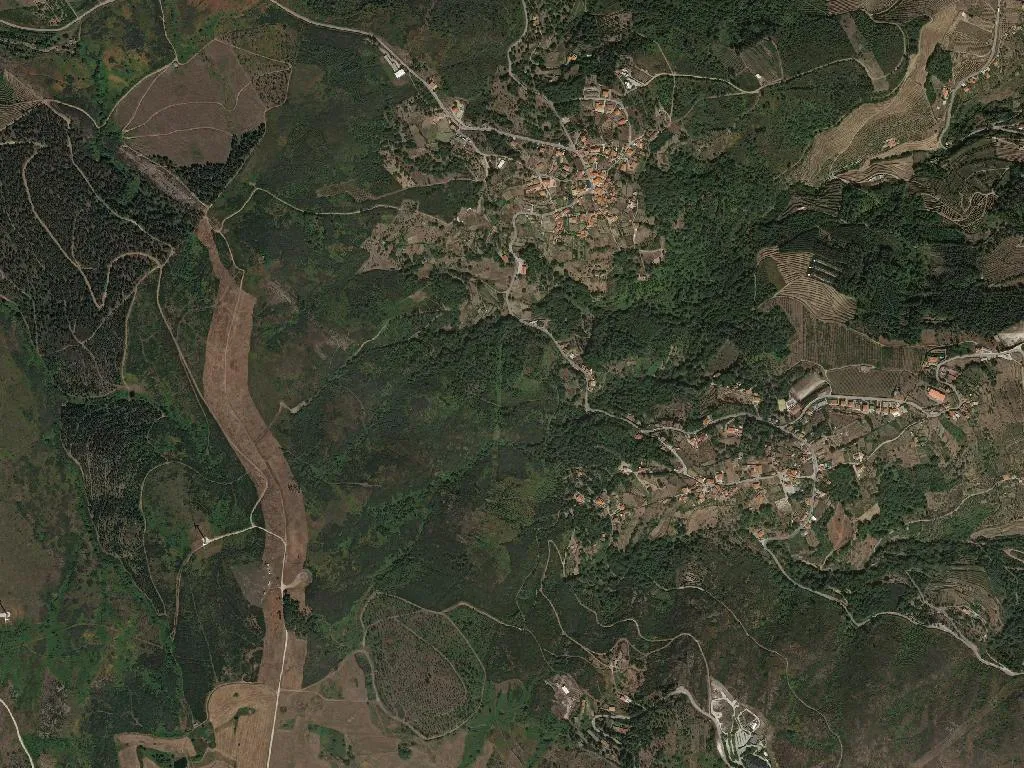
At 721 m, dawn light slips between the rows of vines and prints razor-sharp shadows on the schist. The night’s chill still clings to granite doorways; only a tractor’s diesel note or the echo of a single dog disturbs the air. Avões, a parish the size of 500 football pitches and home to precisely 502 souls, wakes slowly, governed by the vineyard calendar rather than any clock.
In the Alto Douro’s front row
UNESCO’s World Heritage boundary runs straight through these terraces. The dry-stone walls, rebuilt every generation, stitch the slope into a three-dimensional map of labour: each terrace an average of 1.8 m high, angled at 35° in places, planted predominantly with Touriga Nacional and Tinta Roriz. Below them the Douro is hidden by the fold of the valley, yet its presence is tasted at every harvest—most fruit is trucked 40 km east to quintas that still foot-tread in traditional granite lagares before fortification. The autumn air carries the scent of crushed berries and dust so dry it crackles under boot soles.
Two pilgrim footpaths, one granite village
Avões sits on the hinge between the Via Lusitana and the Torres branch of the Camino de Santiago. Walkers emerging from the maize-coloured maize fields refuel at the stone trough by the 17th-century fountain, topping up bottles with calcium-rich spring water that once slaked the thirst of mule trains heading to Salamanca. The annual Romaria de Nossa Senhora dos Remédios, held since 1871, briefly triples the population: processions of barefoot penitents, candle-wax dripping onto cobbles, a brass band whose trumpets reverberate off granite like gunshot.
Demography in real time
Census 2021: 113 residents over 65, 46 under 14. The primary-school bus leaves at 08:00 with eight children; by 08:10 the only sound is the clatter of chicken coops being opened. Elderly women occupy plastic chairs outside south-facing doors, knitting while monitoring the slow passage of the day. The café-tabac, half grocery, half social club, serves bica from a 1985 Brasilia machine; men debate the 2023 vintage price—€1.45 per kilo for A-grade fruit, up 12% on the previous year—then fall silent as the church bell strikes six, its bronze cast in 1789 still audible for a kilometre.
Where to stay, how to get lost
There is one guesthouse: three east-facing rooms, shared bathroom, breakfast of Avões loaf—wheat and rye leavened for 24 h, baked in a wood-fired oven—and house-made tomato jam. No credit-card terminal; cash only, preferably exact. The final 4 km from the N2 involve single-track tarmac, reversing into vine rows when the daily Lidl delivery van appears. Sat-nav confidently directs drivers onto a cobbled lane passable only by Massey Ferguson. The reward is zero light pollution and a dawn chorus that starts with black redstarts at 05:42.
Sunset ignites the terraces into molten copper. By the time the granite releases its stored heat, the village has already folded itself into silence. Avões offers no monuments, no gift shops, no Michelin mentions—just the geometry of human perseverance carved into a mountainside and the realisation that, after dark, the only thing to do is listen to the vintage breathing in the cellars below.