Full article about União das freguesias de Cepões, Meijinhos e Melcões
Stone terraces, Romanesque chapels and chorizo smoke crown this Lamego tri-village above the Douro.
Hide article Read full article
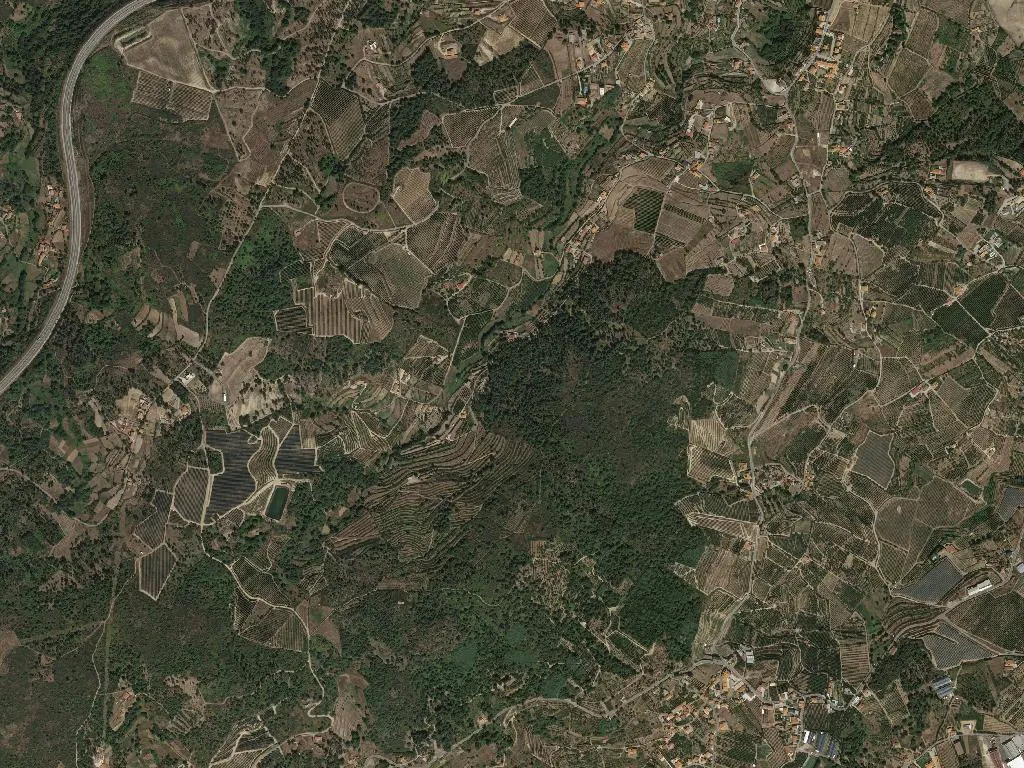
The hillside wakes reluctantly. At 755 m, fog slips off the valley like a still-warm sheet, first exposing the tops of the stone-walled terraces, then the vines stitched into dark schist. Even after the sun begins to heat the retaining walls, the air keeps a blade-like clarity. In the merged parish of Cepões, Meijinhos and Melcões nothing is flat, and nothing forgives slack work. Each vine is anchored where it can survive; each wall was built for a reason. Neglect the slope and the slope wins.
Three villages, one script
The 2013 amalgamation yoked three settlements that had always shared the same hard ground. Cepões—its name rooted in the old word for “stump”—declares its obsession in syllables: vineyard first, everything else second. Meijinhos and Melcões, barely more than hamlets, guard squat Romanesque chapels whose walls store centuries of quiet. There are no ticketed sights, only continuity: the same surnames in the cemetery, the same pruning cuts grandfathers taught grandsons, the same view of the Alto Douro UNESCO core.
Nine hundred and seventy people occupy 1,095 steep hectares. The arithmetic is blunt: 268 seniors, 85 under-25s, a density of 88 souls per km². It is not abandonment; it is triage. Those who remain can read every change in the light on a leaf and recite which neighbour left, which house is shuttered, which olive grove now belongs to a grandson who flies in from Lyon each August.
Pilgrims’ footnotes
Two branches of the Portuguese Camino—Interior and Torres—cross the parish. They are not curated trails but farm tracks: cracked tarmac, granite fountains that run ice-cold even in August, smokehouses where chorizo darkens slowly over oak. The big baroque procession in nearby Lamego draws regional crowds; here devotion is domestic. Women sweep the church porch before the Saturday mass as if welcoming a cousin.
Altitude in the glass
You are still inside the Douro Demarcated Region, yet three-quarters of the way up a mountain. Ripening is late, winters bite, the wind polishes the grapes to a smaller, thicker-skinned crop. Quantity drops; character stiffens. There is no glossy tasting room—wine is work, not theatre. The three licensed guesthouses cater mainly to itinerant agricultural consultants and tired pilgrims, not weekenders hunting souvenir tote bags. Arrive around elevenses, accept the offered bica, ask who pressed last year’s tinta roriz, and you may find yourself drinking from an unlabelled bottle that tastes of altitude and schist.
The road corkscrews between stone walls. Below, the valley fans out in geological stripes: graphite schist, bottle-green vine, umber soil. Sound is rationed: a tractor’s diesel cough, the church bell giving a single business-like stroke for noon. No one urges you to stay, yet leaving immediately feels abrupt. This is slow-passage country, where the itinerary is tactile: the rasp of granite, the dawn chill, the sudden weight of a ripe bunch in your palm, the way time slackens between one olive tree and the next, as if the day had nowhere else to be.