Full article about Lamego’s 686-step dawn climb from Sé to sky
Granite stairway, gilded cathedral, coffee-scented alleys—Lamego wakes upward
Hide article Read full article
Lamego, where stone climbs to the sky
The 686 steps begin in silence. Dawn still clings to the granite of the Escadaria do Santuário, even when September sun begins to toast the plane-tree canopies that flank the climb. From somewhere below, the Sé’s tenor bell tolls once, twice; the sound rolls across the tile roofs and loses itself in the folds of the Douro escarpment. Lamego wakes upwards: from river to ridge, from nave to castle, from soles to soul.
Almacave and Sé, the civil parish that cradles the old town, stretches across 20 square kilometres of schist and granite at just under 490 m above sea level. Its 12,071 inhabitants (2021 census) occupy a grid of lanes too narrow for anything wider than a donkey cart. Granite ashlar has blackened to graphite; wrought-iron balconies drip with washing; the smell of dark-roast coffee leaks from half-open doors before eight. This is not a city to be admired from a miradouro—it is to be walked, heel to cobble, until your calves remember it.
A cathedral older than the kingdom
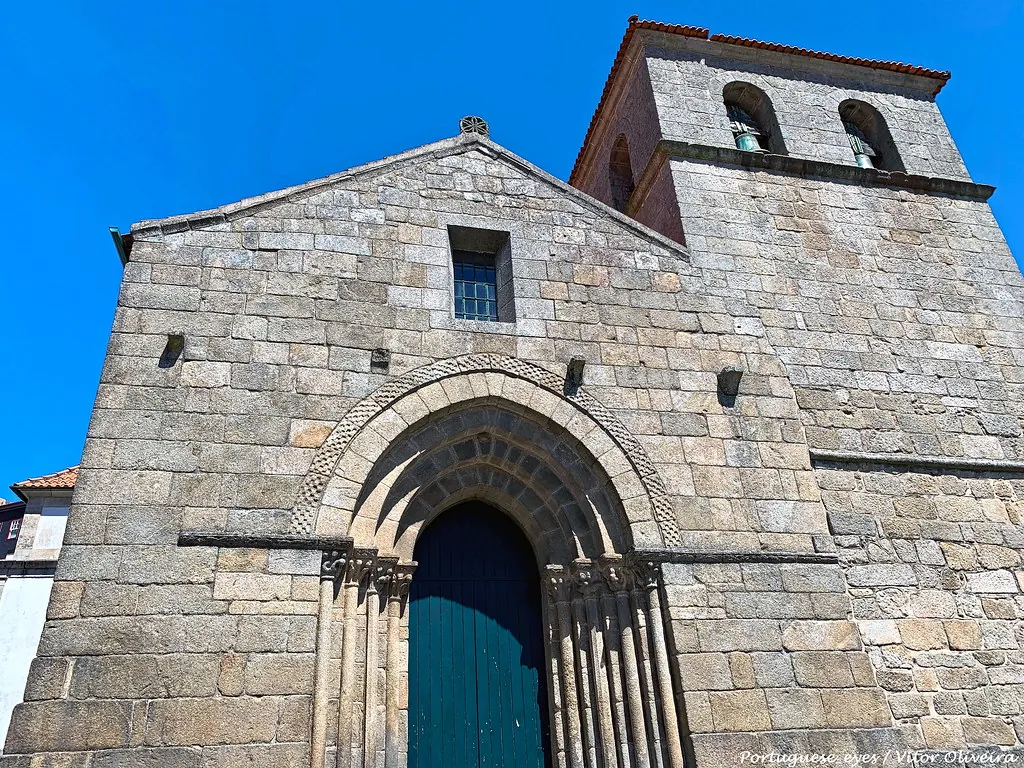
Portugal did not yet exist when Lamego was already a diocese. Begun in the 1120s over Roman footings, the Sé towers with the self-confidence of a building that has heard a thousand years of plainsong. The exterior is all Romanesque severity—chunky blocks, slit windows, a rose that admits only a ration of light—yet inside, 17th-century gilding splashes across the chancel like a firework. Step through the south portal and you move vertically through time: granite gloom, then Manueline knots, then baroque angels tumbling from clouds of gold leaf. The wooden floorboards sigh underfoot; candle-glow flickers on the breastplate of a polychrome St James.
Tradition claims the cortes that acclaimed Afonso Henriques as king met here in 1139. Whether myth or record, the story is stitched into street names and school primers rather than marble plaques; Lamego’s civic pride is understated, almost familial.
686 steps of vow and vertigo
The Escadaria da Nossa Senhora dos Remédios is a baroque sermon in stone. Started in 1750 and finished only in 1905, it zig-zags up the slope in nine flights, each landing furnished with fountains, obelisks and blue-and-white azulejos that narrate the life of the Virgin. Every September, during the Romaria dos Remédios—one of Portugal’s largest pilgrimages—thousands climb on bleeding knees, the granite turning into an altar of wax tears and murmured Latin. After dark, the funfair takes over: smoke from roast-suckling stalls, the clatter of tin mugs, brass bands competing across the valley.
Out of season you have the staircase to yourself. Pause at the third terrace and the town unscrolls: first the terracotta wave of roofs, then the twin towers of the Igreja de Santa Maria, finally the serrated ridge that corrals the Alto Douro World Heritage vineyard country.
Beira cooking, Douro wine
Lamego’s kitchens borrow from the Beiras and the Douro in equal measure. Cabrito assado arrives with skin the colour of burnt sugar, the meat beneath scented with bay and mountain garlic. Sarrabulho rice—black, glossy, shot with cumin and smoked blood—warms winter tables, while morcela de arroz reveals its wood-smoke pedigree in every slice. Convent sweets are unapologetically dense: papos de anjo (syrup-heavy “angel bellies”) and toucinho-do-céu (“bacon from heaven”) demand a nip of 10-year-old Port for equilibrium. The town lies inside the Port wine demarcation; bottles appear at lunch like salt cellars, and the waiter will ask whether you want “conversation wine” (red) or “thinking wine” (white).
Roman stones, Santiago scallops
Beneath the modern fire-station forecourt, archaeologists uncovered a 1st-century Roman villa complete with polychrome mosaics; the finds are now displayed in the tiny Museu de Lamego, alongside Visigothic belt buckles and a Moorish oil lamp. The 12th-century Igreja da Almacave, pillories and several manor houses swell the parish tally to thirteen classified monuments, three of them National Monuments.
Lamego sits on three converging pilgrim routes to Santiago—the Interior Way, the Lusitana Way and the Torres Way. It is common to meet a German hiker consulting GPS beside the pelourinho, scallop shell swinging from a trekking pole, smartphone battery begging for a café socket.
Terraces that read like pages
Beyond the last houses, the land drops away in hand-built terraces of schist. Olive trees occupy the upper ledges; lower down, vines are gnarled into bonsai shapes by a century of pruning. The PR2 “Port Wine Trail” threads through these walled gardens for 7 km, the air thick with lavender and the metallic smell of hot slate. Buzzards wheel overhead; somewhere out of sight a pump-chugging tractor hauls the afternoon’s spray tank. Stand still and you hear only insect harmonics and the snap of a cane in the breeze.
Lamego does not do goodbyes. It lingers—in the ache behind your patella after 686 steps, in the iron note of sarrabulho that colours your tongue hours later, in the Sé bell that keeps tolling inside your skull all the way down the N2 and back to the motorway hum.