Full article about Lazarim: granite comma above the Douro mist
At 910 m, Lamego’s highest village breathes pine-sharp air, wolf legends and stone-cold silence.
Hide article Read full article
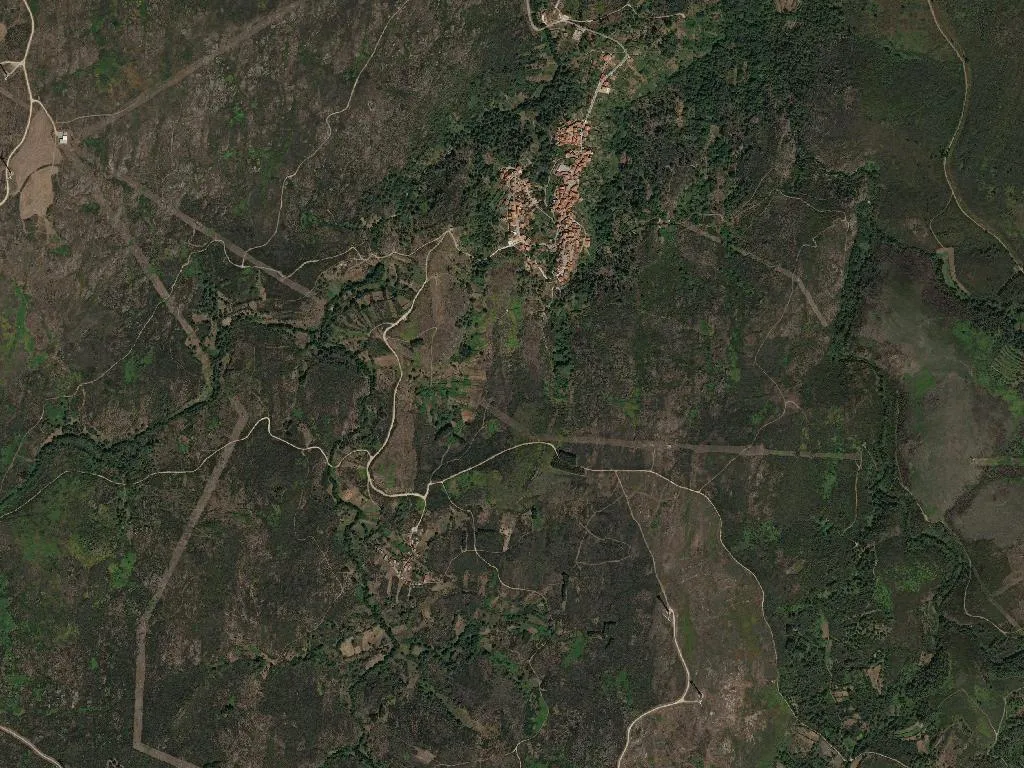
The wind scuds up the escarpment carrying the scent of sun-baked heather and resinous scrub. At 910 m the air feels sharpened on a whetstone: breathe in and it slices, clean as menthol, to the back of your throat. Lazarim squats on one of Lamego’s highest ribs, a granite comma between sky and the terraced Douro far below. Four hundred and seven souls live here, parcelled out among broom-covered slopes so steep that every letter the postman brings counts as a small athletic victory.
Stone and procession
The village revolves, as it has since at least the 13th century, around the Capela de Nossa Senhora dos Remédios. The chapel’s granite walls are Listed, but the real protection is social: inside them the annual romaria still assembles, brass band wheezing up the hill behind a statue of the Virgin decked with paper roses. On that weekend the narrow high street becomes a slow-moving theatre of neighbours who see one another only at baptisms and funerals, and the stone benches outside the chapel fill with card games and gossip thick as custard.
Way-marked but never claimed
Two St James routes—the Interior Portuguese and the Torres variant—thread through Lazarim, but the village is a comma, not a clause, in the pilgrim sentence. Hikers pause just long enough to refill water bottles at the granite font, note the scallop shell carved above it, and disappear downhill towards the next stamp in their credentials. What remains is a demographic ledger tilted towards the past: 149 residents are over 65, barely 25 children rattle the primary-school desks, and three stone-and-slate houses have been bought by Lisboetas who come for the silence and the dark-sky nights of January.
A mountain that exhales
Below the village the Douro’s disciplined vines stair-step the warm schist; above, the terrain reverts to gorse, granite outcrop and wolf-print legends. Winter fog wells up the valley and erases the 21st century for days on end; August sun turns the rocks into storage radiators that release their heat long after Orion has risen. Walk the old transhumance tracks and you measure the incline in your quadriceps, in sweat that dries before it has time to drip, in views that slide from green-blue river to Spanish sierra without a pylon to spoil them.
Late afternoon light strikes the chapel façade and throws a ruler-straight shadow across the flagstones. Down below, the Douro is a water-colour wash; up here the granite still holds the night’s chill, a reminder that some places warm slowly, storing their cold like last century’s confessions in the joints of the stone.