Full article about Samodães
Roman milestones, cobalt azulejos and barefoot lagar treading beneath the chapel ridge
Hide article Read full article
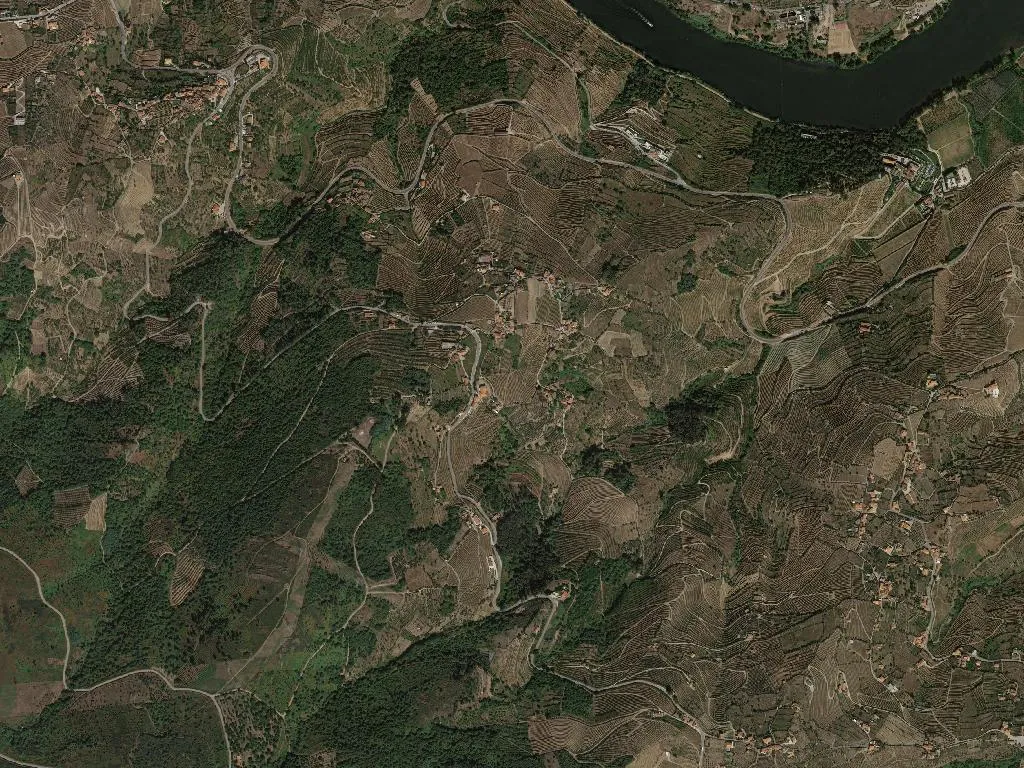
A rocket splits the valley silence; its echo skitters across slate terraces like a thrown stone. It is the second Sunday of September. The parish doors swing open and 172 winter souls become 3,000 summer lungs all climbing the 350-metre ridge to the Capela de Nossa Senhora dos Remédios. Dust lifts from the dirt track, warm sponge cake drifts from kitchen doorways, and for one afternoon Samodães breathes in a single rhythm.
The Roman who never left
The village owes its name to Samellus, a 3rd-century landowner whose milestone still props up the village cross. Drivers pause beside it for a cigarette, unaware they lean on the old Roman road that once marched from Viseu to the Douro. Inside the 1750 parish church the State’s own letter-headed paper gilds the walls: a Baroque altarpiece bright enough to make your eyes water and a complete set of cobalt-blue tiles that once taught Scripture to the illiterate. While the rest of Portugal lost half its azulejos to fashion and forgetfulness, Samodães kept every last panel.
Goat, maize and wine that tastes of schist
Chanfana arrives in its black clay pot—kid, Douro red and a fistful of parsley so vivid the rubies sulk. The stew stays volcanic while conversation endures, which is indefinitely. At festival tables corn porridge with red beans disappears first; blood-enriched sausages scented with vineyard garlic follow. Dessert is a fig sculpted into a pear and walnut brittle that rewards patience with toffee intensity. The wine is simply “Dão”, but the palate reads schist, altitude and the afternoon sun that still warms the glass. At Quinta do Cerrado the lagar is granite; if the lagareiros are short-staffed they tread barefoot, purple calves flashing.
Five kilometres of holm oak and mushroom anxiety
The marked trail begins at the church, drops to the Balsemão stream and climbs again through abandoned vineyard terraces. Locals march it for pleasure; visitors eye March fungi with respectful terror—only parish elders know which scarlet caps are saints and which are summonses to the afterlife. The lookout delivers the same Douro panorama that UNESCO plaques a few kilometres east, minus the land-tax premium. Slate walls descend like tectonic wrinkles; each course remembers a grandfather’s winter.
Water screws, Yule logs and the pilgrim who missed the last bus
A hand-cranked water screw still opens the irrigation sluice—thirty turns and the levada sighs into life, giving the arms the same workout the chanfana gives the soul. On Christmas Eve the “Fogo da Velha” burns: a log so large it needs a tractor to arrive and persuades children that Santa comes by Massey-Ferguson. At Easter every household brings its crucifix to the church steps for the Encontro das Cruzes; no one blinks if a 19th-century carving makes the trip in a wheelbarrow.
The inland route of the Camino de Santiago bisects the village. Pilgrims stop for water, hear the parish bell braid with the river below, and suddenly the sun is gone. Dona Albertina has no hotel sign, only starched sheets that smell of home-made soap and breakfast jam made from tomatoes that think they are fruit. The next stage can wait until morning; Samodães has already reset the clock to somewhere around the year its Roman stone was still new.