Full article about Sande’s Harvest Bell Rings Over Granite & Vine
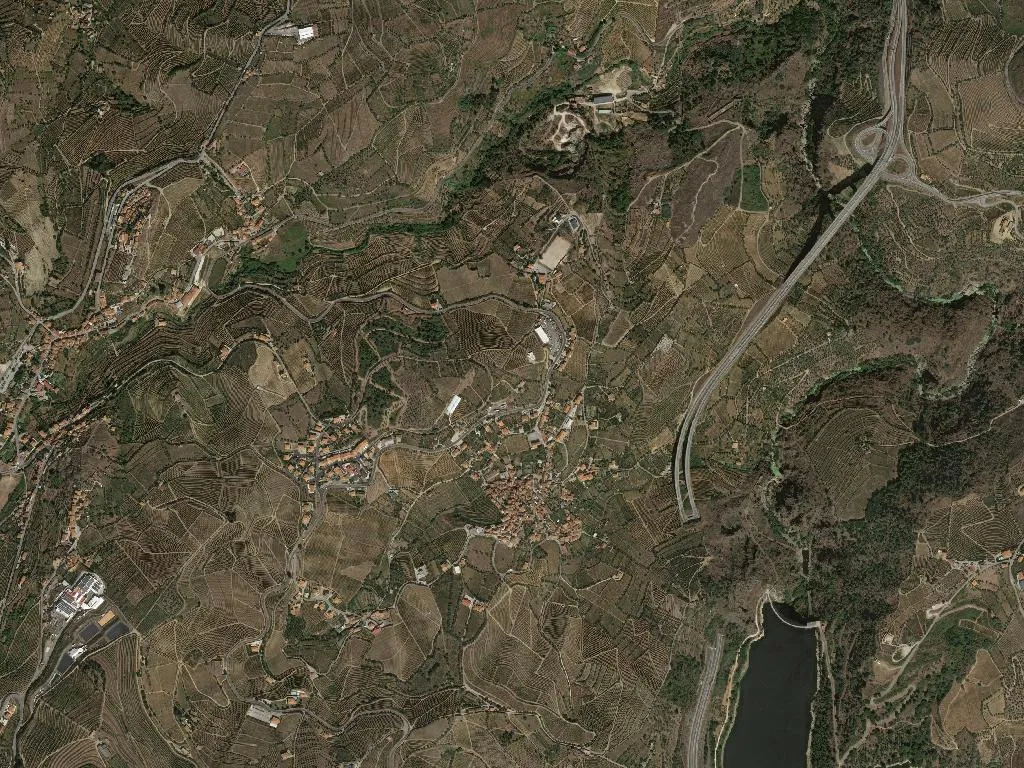
Bronze bells, straw arches and schist terraces shape life in Sande, Lamego.
Hide article Read full article
The church bell tolls three times at the end of the afternoon, its bronze note rolling over the vineyard ridges as if time were a loose thread. In Sande, granite walls still radiate the day’s stored heat; from the terraces below drifts the odour of damp horsehair and crushed vine leaf. It is not perfume – it is the smell of work that refuses to lie: the harvest is late and the pickers are racing the last stripe of sun.
Between vines and pilgrims
811 people are on the parish roll, but the place feels smaller once the 08:20 bus has curled down the hill and spirited the children off to secondary school in Lamego. What remains is a hush broken only by Silvério’s dog objecting to hens and the slow squeak of the Bar do Crispim’s door. Two variants of the Caminho de Santiago – the Interior and the Torres route – intersect here. Backpackers trudge in, refill bottles at the Calvary street fountain, and leave. The few who stay usually doze off on the church wall, the valley warming their shoulder-blades like a firm hand.
The feast-day that anchors the year
On 8 September, as soon as the last grapes are in, a straw arch goes up at the mouth of the lane. Women dress it with crêpe-paper roses and a freshly tailored Infant Jesus. There is no silver band – only Zé Alberto’s uncle on concertina, a bass drum and a clarinet, the same trio he has assembled for forty years. At eleven o’clock the priest shoulders the processional canopy; behind him come black-veiled grandmothers, men whose shirts are buttoned to the Adam’s apple, and barefoot children swinging from the balustrade to watch the cortège climb. For three days the bakery opens at six, draught lager costs €1.20 a glass at Crispim’s, and the tray of fried pork disappears before the sky turns the colour of a bruise.
Terraces that tumble to the valley floor
The schist terraces are not ruler-straight – they bend to whatever the stone and the centuries allowed. The builders used no spirit level, only a mattock, a donkey, and hands already split by winter. Vines are still planted by touch; bunches are still hauled out in wicker baskets that bite the collarbone. In late October the leaves flare rust-orange and the slope looks incandescent at noon. Shale crackles under a boot; when the soil is turned it gives off the faint iron scent of dried blood. The wine made here carries no estate name – it carries the name of a father or a grandfather and leaves the cellar in three-litre flagons bound for Christmas tables in Lisbon or Porto.
What you will eat
There is no printed menu. You eat what the neighbour brings: alheira sausages smoked over cork bark in October, kale that survives the first frost, corn bread kneaded at dawn and baked in the communal oven on Saturday. On St John’s Night sardines are grilled on a borrowed iron plate and washed down with red wine that stains the linen tablecloth like a birthmark. A stranger is immediately handed a glass – a tall, slim tumbler made in the old glassworks at Santa Comba, filled to the brim.
Arriving, slowly
Outsiders miss the turning at Vilarinho: the road sign is snapped off and the sat-nav cheerfully points into the river. You steer by instinct, drop past a hand-scrawled “red for sale” board, and Sande reveals itself in sequence – first the church tower, then the scent of split logs, then the hush. No ticket office, no gift shop: just a wooden bench under the plane tree, a valley that knocks the breath from you, and the bell sounding once more – seven o’clock, and the sky revolving towards violet.