Full article about Várzea de Abrunhais: granite glowing at dusk
Terraced vines, woodsmoke, barefoot harvest—Lamego’s hill village breathes slow time
Hide article Read full article
Granite Still Warm at Dusk
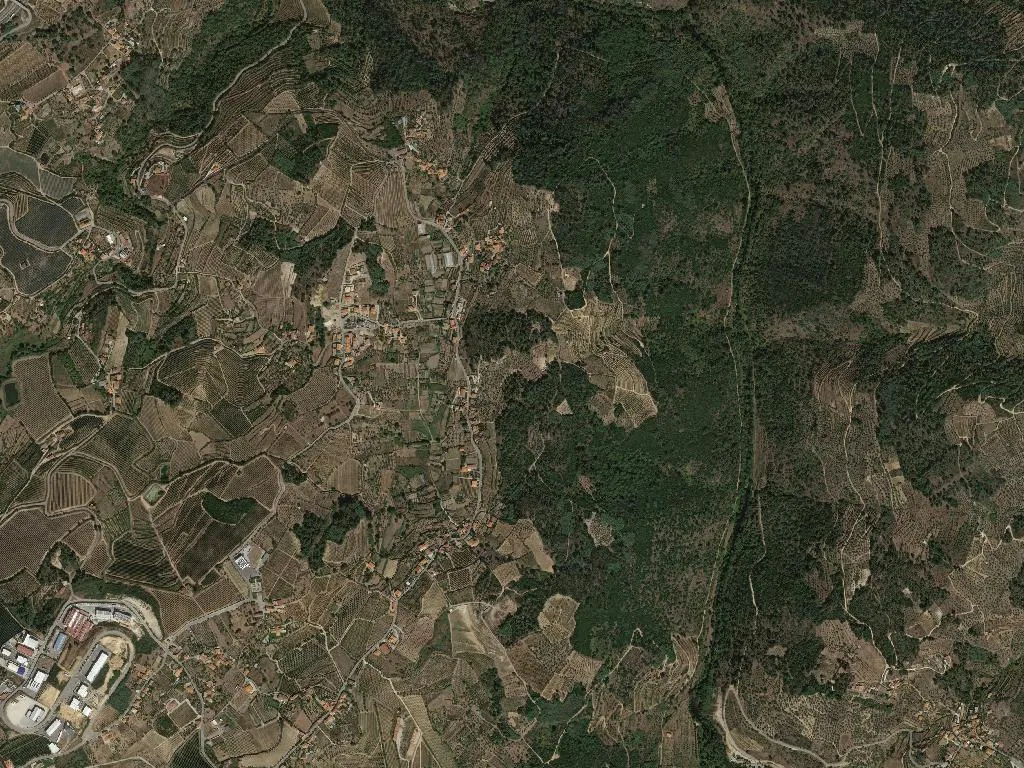
The granite houses of Várzea de Abrunhais radiate the day’s heat long after the sun has slipped behind the Serra do Leomil. A downhill breeze drags with it the smell of newly-turned soil and the faint sweetness of dry hay stacked on top of stone walls. Officially the village sits at 492 m, but its real altitude is measured in aching knees: the bend where José props his weight after carrying a plastic watering can up the terraces, the callus on Maria’s palm as she snaps an errant vine. These terraces are not the manicured “steps” of Douro postcards; they are schist slabs jigsawed together by moonlight, stones so obstinate they surrender only to two men and a stubborn donkey.
Between the Path and the Vineyard
The Portuguese Coastal Caminho snakes through the parish, yet few pilgrims break stride. Those who do usually linger at Casa da Encarnação, where the granddaughter of “Old Ze” still appears at the gate with a clay mug of tap water drawn from the spring. The four guest rooms are simply family houses that outlived their owners: Aunt Albertina’s front bedroom under moth-scented wool counterpanes; Uncle Anselmo’s hay store that once doubled as a winter stable for his horse. Re-branded now as Casa do Vale or Quinta do Pinheiro, they still smell of woodsmoke and the ghost of over-heated olive oil.
Harvest starts without fail on 15 September, rain or shine. There are no contracts, no clocking-in. A cousin brings her city sons, a neighbour hauls his pregnant daughter-in-law. By twilight the wicker baskets outweigh the pickers; tannin stains every fingernail indigo. Must is carried in aluminium pails to Lopes’ stone lagar where barefoot teenagers tread grapes to a Bluetooth playlist echoing off the granite tank.
The One Day the Village Refuses to Shrink
The Festa de Nossa Senhora dos Remédios is locked to 8 September. Grandchildren fly home from Paris, from Boston, from Porto’s suburban sprawl. Mass begins at eleven; the single-nave chapel spills worshippers into the street, espresso cups in hand. After the procession the parish council serves turnip-and-spare-rib soup and rough red drawn from Sr Ramalho’s own barrels. Tables are rough pine planks balanced on trestles; forget your spoon and you eat with a borrowed plastic one.
The brass band from Tarouquela strikes up Salazar-era marches. Only two pensioners remember the drum cadence and one can still manage the cornet, so the beat limps, but no one minds: the congregation is busy scanning the crowd for new grey hairs, fresh divorces, who has grown plump, who has returned alone.
Silence Loud Enough to Ring
By seven o’clock the evening silence has body. You can slice it, spread it. Crickets tick, a neighbour’s kitchen clock tocks, the bakery hatch slams as Emília claims her daily loaf. Basílio’s dog barks at the same shadow every night—its own. Streets have no signs; they have proprietors. “Upper lane” belongs to Sr Agostinho; church lane to Dona Aureliana, house-bound yet all-seeing through her lace curtain.
Houses are not “restored” but continuously patched: a door from an aunt, a window from a cousin, everything mortised like family gossip. The drip that has fallen beside the staircase for three decades is now architectural; if it ever stops, locals will ask who has died.
What remains is olfactory: oak logs lit at five, smoke sliding down the chimney to season the washing on the line. And the sound of the Rooster Mass bell drifting three kilometres up the valley, proof that, whatever unravels elsewhere, someone here still tugs the bell-rope on Christmas Eve.