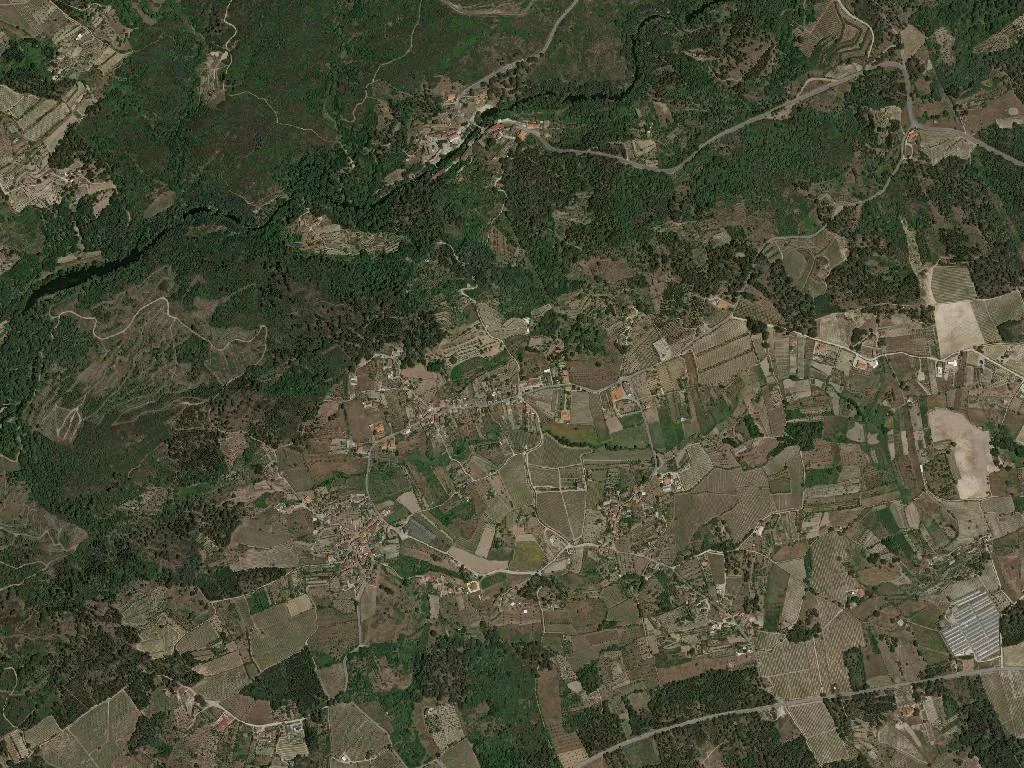
Full article about Alcafache: Where Pilgrims’ Bridge Meets Smoking Cheese
Granite Romanesque arch, communal oven Saturdays, winter Serra cheese in a blue-doored schist cottag
Hide article Read full article
The bridge that wakes your bones
Dawn slicks the cobbles with river-mist and the granite arch below the road shudders every time a car crosses. Locals insist it’s Roman; engineers say medieval. Either way, look left as you drive and you’ll spot a cockleshell scored into the parapet – the old waymark for pilgrims trudging north to Santiago along the “Viseu road”. In January the Dão shrinks, revealing the arch’s rib-cage; the rest of the year it runs fat with walnut leaves that spin like paper boats.
By half seven the communal oven behind the parish hall is exhaling. Four neighbours still keep the rota: each Saturday they ferry dough from home, swing open the iron mouth with a three-metre paddle, then split the firewood receipt. If you want cornbread, tap on the chemist’s window and ask for D. Lurdes – she’ll wrap a still-warm loaf in a tea-towel.
Al-Kafāḥ, winter pasture
The name is Moorish, but the phrase you’ll hear is “vou à pastagem” – “I’m off to the grazing”. Three flocks from the Serra da Estrela spend the mild season here; the cheese is sold from kitchen tables. Insist on DOP paperwork and you’ll pay village price plus VAT; accept the un-stamped wheel and it costs less, tastes identical. Sr António’s curing room is easy to find: schist cottage, blue door, tabby cat that detests strangers, air thick with eucalyptus smoke.
The eighteenth-century church is nothing special outside, but push the heavy door and the gilt retable flashes like a new razor. Ask the sacristan nicely and he’ll light the votives; otherwise peer through the grille and watch the carved angels glint against the gloom. Opposite, the band-stand hosts the Trinity Sunday concert – villagers bring their own chairs because two slats collapsed in 1997 and the council never replaced them.
What to eat (and when)
- Chanfana: kid goat, clay pot, Dão red. Teresa at the tasca cooks to order – phone two days ahead, wine included.
- Ensopado de borrego: lamb stew at Quinta do Rio, served by reservation only. Comes with house-baked maize bread; leftovers are wrapped in foil for the journey home.
- Bolinhos de São Sebastião: appear only on 20 January, the saint’s procession. €1 a bag, keep for a week – if they last.
Tracks and weirs
The PR2 way-marked loop starts above the bridge: 8 km, no café until Póvoa at the halfway point. All three water-mills are locked, but the middle one still sports its wheel – good for a photograph and a game of pretend. The kayak stretch opens after Epiphany and only if you can swim; the café landlord below the bridge rents boats and runs you upstream in a van. Tell him you’re in no rush and he’ll knock twenty cents off the beer when you return.
Festivals that refuse to die
- Easter Sunday: the Boys’ Procession. Seven lads with snare drums, one still learning, rescued by an uncle on concertina. They set off from the mother church at ten, finish at the tasca with wine-and-sugar sandwiches.
- 13 June: St Anthony’s eve cake contest. The rule: whoever bakes what D. Alda would have baked wins – she is the judge and barred from entering.
- Twelfth Night: the Janeirros carol-singers still bang on doors. Bring a sausage to swap or you’ll be listening to Kings until midnight.
Where to sleep
- Casa da Ponte: double room, kitchenette, river view. The owner leaves sawn logs and eggs from her hens. Ring first – she shuts up on market Wednesdays.
- Quinta do Rio: two rooms, pool tucked behind the barns. Dinner possible if arranged; warn them you don’t eat chanfana or you’ll get cabbage soup and a glare.
Last look
Stay on the bridge until the sun slips behind the ridge. The granite warms to honey, water slaps the arch like the village clapping the day off. Legend claims the unwilling stumble seven times; I only know that leather soles find the loose slab straight away – sin or simple physics, you decide.