Full article about Espinho’s Woodsmoke & Granite Silence
Mangualde’s hill-village where chestnut fires season stone lanes and elders swap quince recipes
Hide article Read full article
The Smell of Real Woodsmoke
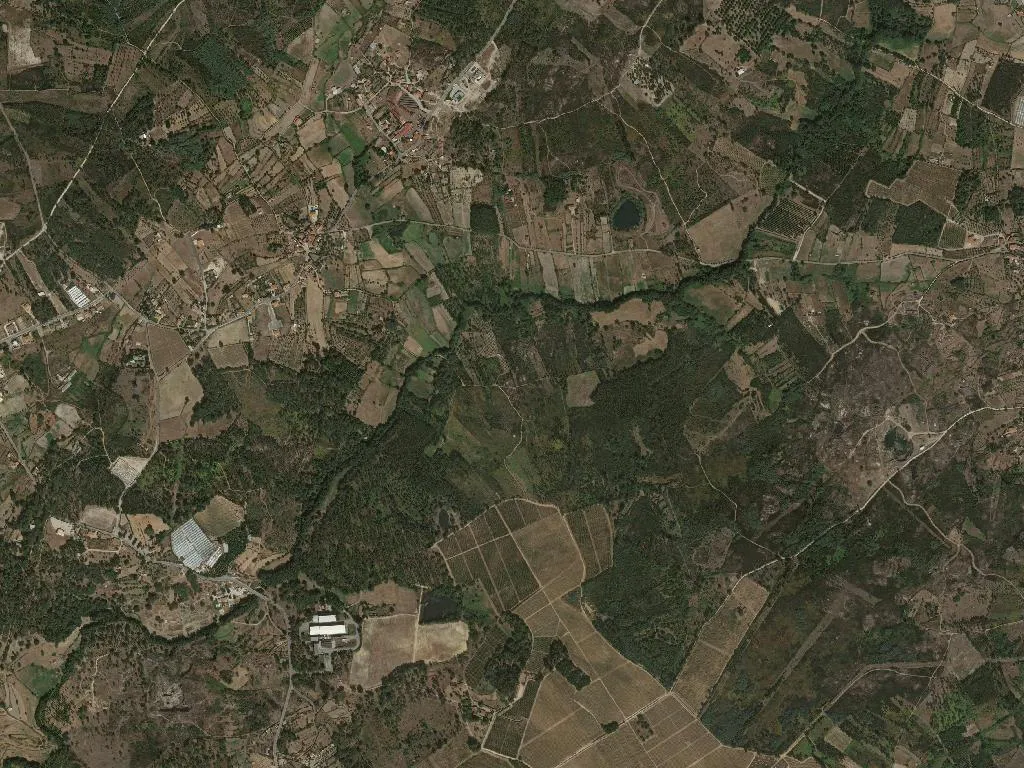
The scent that drifts downhill at four o’clock is not the candle-store fantasy of cedar and pine; it is actual ash and chestnut, still pulsing from hearths where dinner is being coaxed into existence. Espinho stitches itself across a 410-metre shoulder of granite without the faintest nod to town-planning—roofs buttress the slope wherever the incline relents, some gable-end grinning at the tarmac, others half-swallowed by the vegetable plots that refuse to retire. At the bend where the Serra da Estrela finally gathers courage, silence has a measurable mass. Even the church bell sounds padded, as though the village itself is cupping the bronze to keep things down to an indoor volume.
Officially the head-count is 951. Practically it is the cluster of men who reclaim the bench after Sunday mass, the women timing their loaves to the wood-fired communual oven’s rhythm, and the weekend children who return with strimmers to stop their parents’ terraces turning into scrub. Three hundred and six residents are over sixty-five; stand in the praça for five minutes and you can recite the prescription. They trade quince-jam formulae, tally up rosary beads when someone takes to bed, and in doing so keep the settlement on life support.
Stone That Outlasts Paperwork
The parish church has been here longer than any paperwork can prove. It is not grand—one squeaking door, pine pews that have supported the same pair of backsides since the Carnation Revolution, an altar that doubles as the mislaid-keys drop-box. The granite is polished to a darker skin where generations of palms have braced themselves; under the leaking eaves it stays permanently damp. No heritage plaque is required: every village dog understands the protocol and leaves the walls unviolated.
Houses continue the same quiet conversation: walls thick enough to warehouse summer heat against a winter that can bite until May, windows trimmed to postcard proportions so the cold cannot shoulder in, orange tiled roofs stapled to the gradient however they can manage. At nine o’clock the bread van still climbs the lane—if you are not on the threshold Mr António gives two courteous toots and drives on; five more hamlets are waiting for their morning pão.
What the Mountain Tastes Like
The cheese that appears on the café table is not factory output; it arrives in a friend’s van from a cousin’s herd outside Seia, still wearing the imprint of hillside thyme. Mid-morning aguardente is chased with a slab of fresh requeijão spread on doorstop slices that Rosa baked in the domed oven at the bottom of her garden. For baptisms the lamb you watched grazing above the village all spring is the one that ends up in the communal oven, rosemary-stuffed, tasting of the same scrub you smelled on yesterday’s walk.
Dão wine sloshes into glasses from five-litre garrafões that travelled up from Nelas or Mangualde. You drink barefoot on stone floors, wool slippers close at hand, discussing not tasting notes but whether August rain spoiled the Touriga, and whose turn it is to help with the harvest this year.
Between Ordinance-Survey and Sky
Walking here is ascending by stealth: the main road tilts so gently you do not notice the climb until the valley unrolls below like a rumpled ordinance map—Mangualde’s red roofs reduced to toy-town scale, the N234 a piece of dropped string. Between November and March the village often sits inside a glass of milk: fog thickens sound, lights go on at three, and woodsmoke from every chimney drifts in as though the neighbour has just struck the match in your living room.
There are no visitors because nothing has been arranged for them—and that is the entire defence system. People arrive because a grandparent left them a key, or because they misread a sat-nav on the way to the ski slopes. They are startled by the 2 a.m. silence that actually rings in the ears, by a night sky still equipped with the Milky Way, by the smell of wet schist that drifts through summer windows like a reminder that stone, too, breathes.
The granite sill of the church door is scooped into a shallow groove—centuries of processions, funerals, weddings that grow rarer each year. No statue or information board can match that inch-deep dip for storytelling; it tallies every generation that has stepped over it. They depart but never fully leave, their clothes still carrying the incense of mountain firewood, tugging them back when city radiators start to clank and the air smells of nothing at all.