Full article about Freixiosa: Smoke, Stone & Sheep-Milk Dawn
Schist hamlet where Serra da Estrela cheese ages in granite cellars and 60-year-old vines cling on.
Hide article Read full article
A Smoke That Rises Straight from the Chimneys
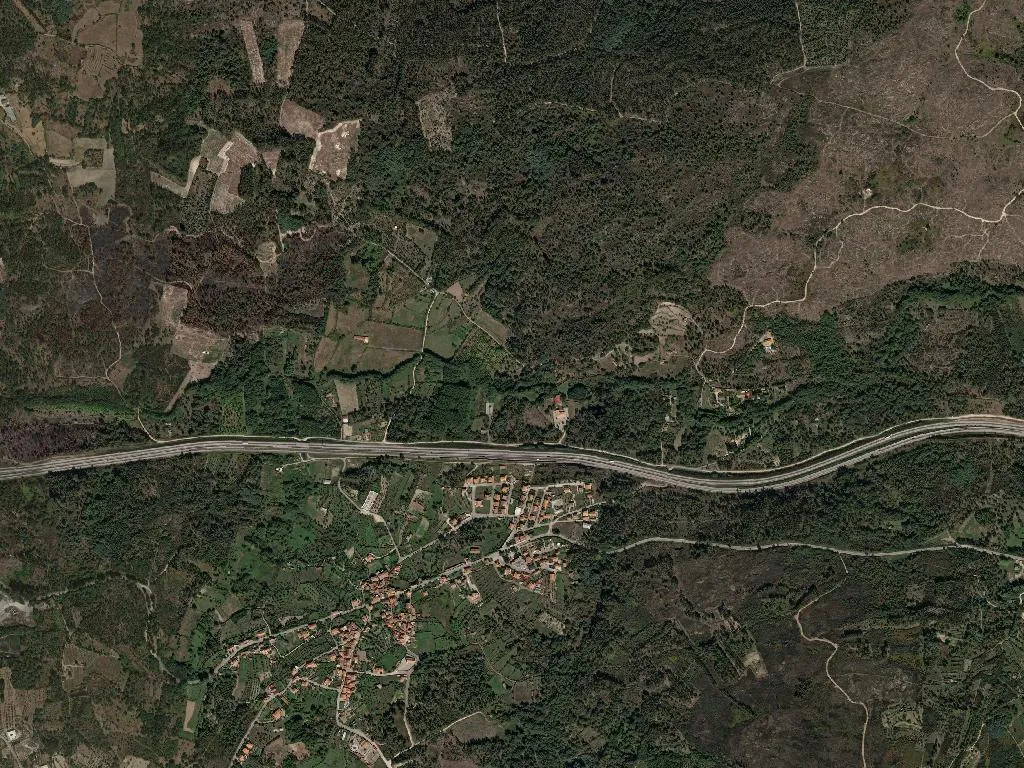
The smoke rises in a perfect vertical, a charcoal line scored across the December sky. At 498 metres above sea level, Freixiosa inhales and exhales like something half-asleep — 234 souls across seven square kilometres of schist and granite, where the only punctuation is a dog barking somewhere out of sight and the slow scrape of boots on uneven cobbles. This is the outer edge of the Dão wine region: vineyards laid out in rigorous rectangles, dark earth between them, granite outcrops pushing through like old bone.
Shepherds, Cheesemakers and the Maths of Leaving
The demographics tell the story more bluntly than any speech: 105 pensioners, 18 under-25s. The village bakery-café unlocks at seven for a clientele you could count on two hands, same as yesterday and the day before. Serra da Estrela DOP cheese, requeijão curd and IGP lamb are not marketing slogans here; they are what Dora loads into a Peugeot Partner every Friday morning for the Mangualde market so she can keep the lights on at home. Célia’s mother still bakes queijadas in a wood-fired oven, the recipe unchanged since 1973: no butter in the pastry, only a smear on the tin to stop sticking.
On fogged January dawns António fetches his ewes in the same oatmeal-coloured coat he bought the year France won the World Cup. The milk — rich, almost orange from mountain herbs — becomes cheese that his Lisbon nephew collects at dusk on Fridays. “He says customers pay stupid money,” António shrugs, “but I don’t follow that stuff.”
Wine Carved from Schist and Stubbornness
The Dão denomination creeps this far east, and 60-year-old vines grip granite with arthritic determination. There are no tasting rooms, no hip wine-barrel Airbnb kitchens. Instead, José keeps 12-litre glass demijohns in a cellar that smells of damp schist and cobwebs — wine his father made in the communal press at neighbouring Fagilde before EU hygiene rules shut it down. September’s harvest is the village’s only hectic fortnight: secateurs snapping, yellow crates stacked outside stone doorways, must fermenting in the stainless-steel tank José bought the winter his wife threatened to leave if he kept treading grapes with gouty feet.
The Quiet Arithmetic of Staying
Freixiosa doesn’t bother to disguise its depopulation wounds. Thirty-two inhabitants per square kilometre equals rusted gates, nettle-choked gardens, houses with swallows nesting inside bedrooms. The nearest guest accommodation is the spare room Dona Amélia prepared for a grandson who now works in Luxembourg; if you want it you must ring before ten o’clock because she goes to Mass, then to Continente in Mangualde, and won’t be back until the one-o’clock news. There is no gift shop, no selfie-frame, no craft-beer taproom in a converted stable. Authenticity is not a brand; it is simply what remains when no one has rebranded anything.
Evening light slants across whitewashed walls, throwing long shadows over the beaten-earth lane. Isabel — who left at 18 for a payroll job in Parque das Nações and returned at 60 to nurse her mother — latches the goat-pen gate. The church bell strikes six. The smoke keeps rising, straight and unhurried, sketching the silent biography of those who never found a reason to leave — or who still haven’t quite managed to go.