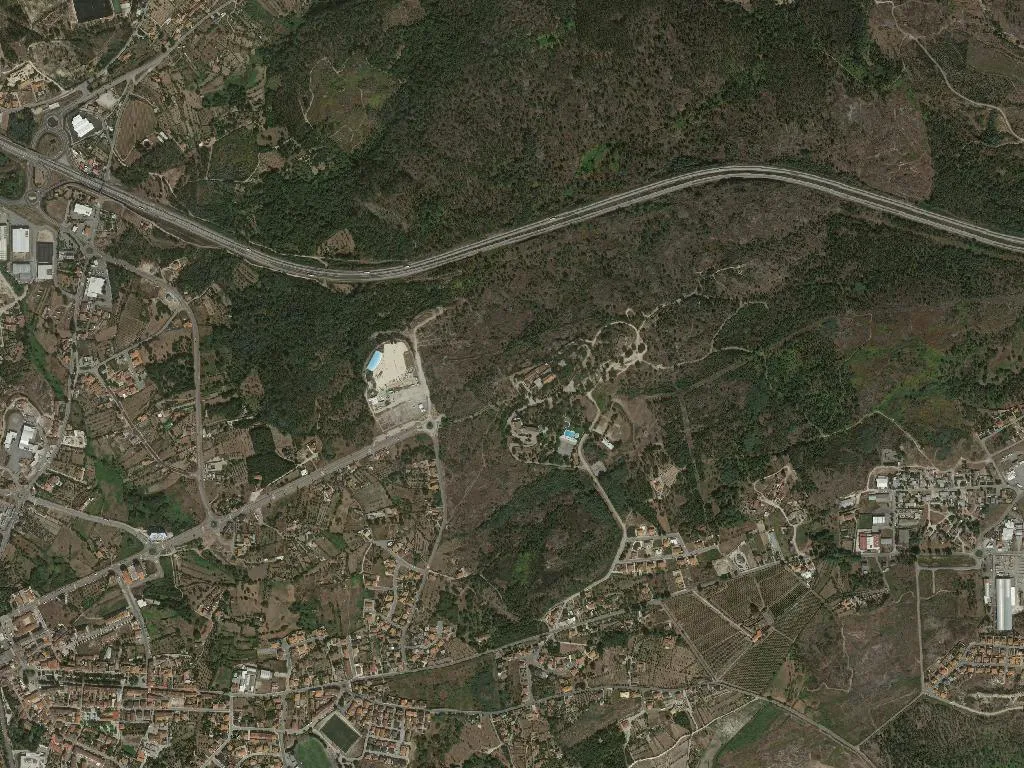
Full article about União das freguesias de Mangualde, Mesquitela e Cunha Alta
In Mangualde, Mesquitela & Cunha Alta, oak-shaded lanes link market stalls to a vanished castle
Hide article Read full article
The stone that warms in the June sun
A single bell note leaves Mangualde’s parish church, drifts down Rua Direita and vanishes among the terracotta roofs. Ten o’clock on a Saturday: the covered market is already humming. Celeste the fishmonger hollers prices; crates thud on pine boards; the lactic tang of Quinta da Lagoa’s runny Amanteigado folds into the green bite of coriander just cut behind Seixo. Dona Alda halves a wheel of DOP Serra da Estrela and the yellow cream sags over brown paper. No one checks a watch. No one needs to.
We are 610 m above sea level on a Beira Alta plateau where granite ribs push through ochre soil and oak shade stripes the lanes. The civil parish of Mangualde, Mesquitela and Cunha Alta—created in 2013 by stitching together three villages—covers 46 km² between the River Dão and the first ripples that announce the Serra da Estrela. Of its 9 858 residents, more than a quarter are over 65, and the rhythm of life obeys them: deliberate, calibrated, quiet.
A vanished castle and the memory that stayed
Mangualde first surfaces in a royal charter of 1258 granted by Afonso III. Etymologists argue over the name—some hear the Latin manicula, “little hand”, tracing either the contour of the hill or the granite boundary marker still standing beside the road to Penalva do Castelo. During the Reconquest a watchtower-castle crowned the rise; today you find only a 1.2 m stretch of wall, a moss-lined cistern and, halfway up, the chapel of Nossa Senhora do Castelo (1641). Come late afternoon the low sun lacquers its stone amber and the distant pine ridges blacken like cut-outs.
The mother church in the square layers centuries without apology: a Manueline doorway from the early 1500s, a 1724 baroque altarpiece carved by José de Almeida, the perpetual chill of granite even when the thermometer nudges 35 °C. In Mesquitela—whose name betrays the village’s life as a small mosque between 714 and 1055—the church is whitewashed farmhouse-plain, the silence thickening at noon. Stone bridges arch over narrow streams: the three-ogival-arched bridge at Cunha Alta looks less built than grown from the riverbed. Seven such structures in the parish are listed; all are excuses to stop and listen to water arguing with granite.
Where sheep still walk to the mountain
Cunha Alta keeps alive one of Europe’s most endangered journeys: transhumance. Each May shepherd António Cerqueira sets off with 450 ewes for the high pastures of the Serra da Estrela, a 35 km hoof-clack accompanied by brass bells and the low, steady bark of Estrela mountain dogs. The lambs that return become DOP Borrego Serra da Estrela—roast shoulder with thumb-sized potatoes or January stews thick enough to spoon standing up. Morning milk is turned into the same DOP requeijão, loose and lactic, that local women call the “sweetness of warm whey”.
January’s pig-kill is still a communal calendar entry: neighbours gather to spice, fill and oak-smoke chouriço for three days, stocking larders before the lean months. Chanfana—kid goat braised for four hours in Dão white wine inside a black clay pot—appears on Sunday tables alongside carqueja rice, whose herbal bitterness tastes of gorse and granite. Wine arrives in unlabelled bottles from Quinta dos Carvalhais, the vines sandwiched between loose-stone walls at 500 m—enough altitude to keep the tannins brisk and the finish stony.
The stream that teaches you to pause
The Mesquitela stream slips through schist gorges and cork-scrub until it widens into quartz-lined pools clear enough to count stones. Way-marked trails follow it under centuries-old oaks and resinous esteva—rockrose that in early June exudes a sticky perfume catching on fingers and shirt sleeves. Short-toed eagles wheel overhead; at dusk wild-boar prints appear in the vineyards like pressed black olives.
The Castle Hill is a natural belvedere: from the summit you survey Mangualde’s mosaic of small plots, red roofs and dark pine beyond. Cyclists can loop the three villages on the 23 km “Trilhos do Dão” route; the only traffic jam is the Gomes herd—eighty goats—crossing unhurried at nine each morning. Festas punctuate the year: 20 January in Mesquitela, when horses, tractors and lapdogs queue for the priest’s sprinkling of holy water; early August on the hill, when a procession, open-air mass and Horácio’s concertina roll into a night of sugar-dusted farturas.
Sponge cake and road dust
Pastelaria Moderna bakes pão-de-ló still trembling from the oven every Wednesday and Saturday; the bean-paste tarts arrive on Bordallo Pinheiro cabbage-leaf plates. At Quinta da Bica the cheesemaker squeezes curds through linen, the air thick with sheep’s milk and cardoon—an animal sweetness that clings to memory longer than any postcard.
There are just nine places to stay—village houses, a manor room, a converted hayloft—enough for two or three days of letting the place reset your pulse. Sit on a sun-warmed granite wall by the abandoned Beira Alta railway station, listen to the stream riffle over stone and realise that this, finally, is the only soundtrack you needed.
The last picture lingers: white wood-smoke from Sr Jaime’s chimney in Cunha Alta at dusk, the scent of oak and curing chouriça drifting down the valley, the jagged ridge beyond sealing the horizon like an enormous open hand—protecting, expecting nothing in return.